Oh Se-hoon and Seoul's 25 district mayors begin their ninth elected terms Wednesday; success will depend on how well they serve residents and the officials who work alongside them.
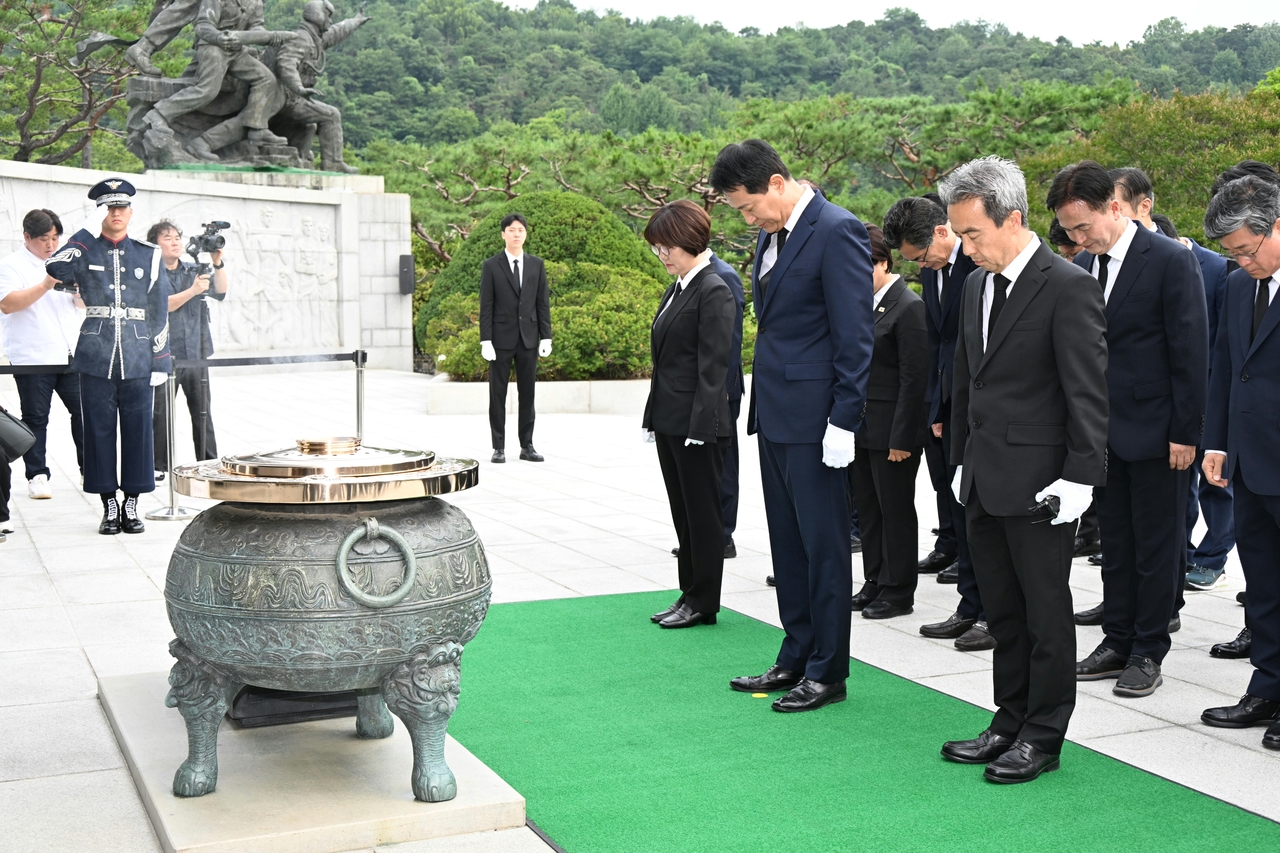
The historic ninth elected term of local government has begun.
More than 30 years have passed since local autonomy was restored in 1995 and the first elected term launched in 1998. South Korea's system of local self-governance now enters its ninth chapter.
With this new start, one hopes Korean local democracy will mature further and come into full bloom.
Congratulations are in order for Seoul Mayor Oh Se-hoon and the 25 district mayors who took office Wednesday after hard-fought campaigns.
Local autonomy in South Korea has now come of age. Seoul's residents, too, have demonstrated a civic consciousness and sense of self-governance to match.
Particularly through last year's emergency martial law crisis and the political turmoil that followed, the Korean public again showed a democratic awareness and civic maturity that rank among the finest in the world.
In the June 3 local elections as well, voters cast their ballots according to their own judgment and conscience, undeterred by political slogans or propaganda.
The election reaffirmed, once again, that the true owners of local government are the citizens themselves.
These remarkable citizens watch their leaders with sharper eyes than any mayor or district mayor possesses. That fact must be kept close to heart each day as city and district administration unfolds.
"Power is not mine — it has been entrusted to me for a time." Keep that in mind, and never forget humility.
The authority granted to the mayor and district mayors is something citizens have temporarily placed in their hands for four years.
They must therefore never lose the humble conviction that "this power is not mine."
Above all, they must serve residents as if serving something sacred. The starting point of governance, and its final destination, must ultimately be the citizen.
In addition, the city and district officials who work alongside them must be respected as valued partners.
No mayor or district mayor can accomplish anything alone. Policy becomes reality only through the dedication and passion of public servants, and it is through them that citizens' well-being is achieved. A warm Seoul and a thriving district can be built only when leaders respect their staff and lead together.
Ultimately, whether a leader succeeds depends on how they treat people. Leaders who value citizens and respect their staff are the ones who earn public trust and are remembered as successful.
Oh and Seoul's 25 district mayors made a wide range of promises to voters during the campaign. From their first day in office, they have been out in the field, beginning in earnest to deliver on those campaign pledges.
A significant number of district mayors have pledged to swiftly advance redevelopment and reconstruction projects to address Seoul's most pressing challenge: housing. Creating a Seoul where residents can live with stability and peace of mind will be one of the defining tasks of the ninth elected term.
Yet no matter how sound a policy may be, it cannot endure if it is not directed toward people.
The resolve expressed on inauguration day — "to serve residents as something sacred" — should be upheld through the very last day of the term.
Ultimately, governance, politics and local autonomy all come down, in the end, to people.
May the ninth elected term of Seoul and its 25 autonomous districts — one that places people at its center — become a new model for local democracy in South Korea.
seouldream01@heraldcorp.com