Era of 140,000 residents begins
Five development priorities set: transportation, healthcare, jobs, tourism and administration
'Focus on administrative stability and tangible results, not a grand launch'
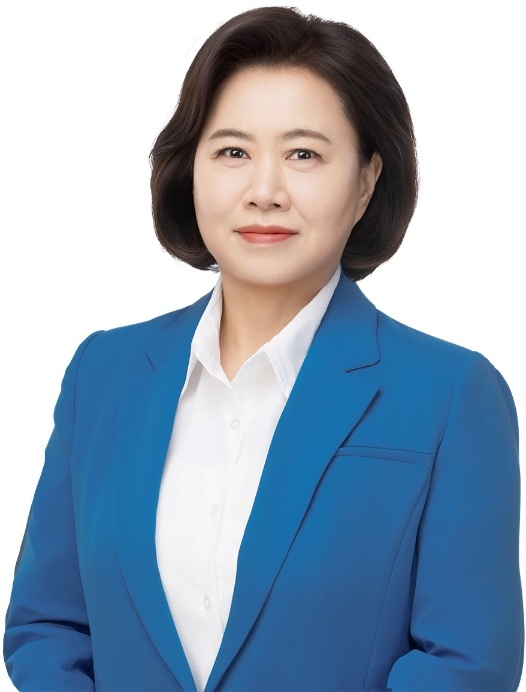
Son Hwa-jung was inaugurated Tuesday as the first district mayor of Incheon's newly established Yeongjong District, laying out a governing blueprint aimed at realizing her vision of Yeongjong as South Korea's "airport economy capital."
Speaking at an inauguration ceremony at the Yeongjong Complex Cultural Center, Son said she would work alongside the district's 140,000 residents to fulfill that vision. "I will carry out the wishes of residents who have asked me to design the next 100 years of Yeongjong," she said, "and together with 140,000 residents, complete South Korea's airport economy capital."
The ceremony was held on a modest scale, with about 200 people in attendance, including residents, city and district lawmakers, representatives from civic organizations and public officials. Son chose a low-key event over a large-scale celebration, judging that administrative stability was the top priority in the district's early days.
The decision reflected her intention to concentrate the district's administrative resources on building a stable organizational structure and reliable public services from the outset.
Son said addressing residents' everyday hardships would be the district's foremost task. "The most common concerns residents raised during the campaign — inconvenient commutes and a shortage of medical facilities — are the problems Yeongjong District must solve first," she said. "I will deliver an administration where residents can feel the change."
The five core priorities Son outlined for the district's first elected term are transportation, healthcare, industry, tourism and administrative infrastructure.
Key initiatives include building a wide-area transit network through the GTX-D and GTX-E lines, expanding public hospital and healthcare welfare infrastructure, creating future jobs linked to the airport economy zone, developing Yeongjong into a destination-style international tourism city, and constructing a resident-centered multipurpose administrative town.
The push to expand transportation and healthcare infrastructure is particularly urgent. Despite Yeongjong's status as an international city anchored by Incheon International Airport, the basic living environment for residents remains underdeveloped — a challenge the inaugural district mayor will be expected to tackle head-on.
Son stressed that change in Yeongjong could not come from any single leader. "It cannot be done by the district mayor alone," she said. "The 140,000 residents, more than 700 public officials, Incheon city government and the central government must all work together as one team." She added that she intended to be judged by results — through "responsible administration, sincere administration, and administration where action comes before words."
Yeongjong District was newly established as part of a broader administrative restructuring. Under its first district mayor, the district faces the dual challenge of building a stable organization while at the same time strengthening the foundations of residents' daily lives.
Attention will now turn to whether Son's vision — "a Yeongjong District that connects the sky, opens the future and embraces its people" — can translate into real improvements in residents' lives.
gilbert@heraldcorp.com