FOC verification advances amid stronger South Korea-US consensus
AI- and drone-based 'smart military' transformation underway
![Defense Minister Ahn Gyu-baek chairs back-to-back meetings at the Ministry of National Defense in Yongsan-gu, Seoul, on Wednesday — the second-quarter OPCON recovery evaluation meeting and the all-forces senior commanders conference — to review first-half policy results and set the direction for the second half of the year. [Ministry of National Defense]](https://wimg.heraldcorp.com/news/cms/2026/07/01/news-p.v1.20260701.63ba98fcdb99402ca53658a6900c546b_P1.jpg)
South Korea's Ministry of National Defense is pressing ahead with second-half defense reforms centered on accelerating the transfer of wartime operational control and making the combined component commands permanent. A parallel shift toward AI- and drone-based force capabilities and a restructuring of the military's personnel composition are also planned.
Defense Minister Ahn Gyu-baek convened back-to-back sessions at the ministry's main conference room in Yongsan-gu on Wednesday — the 2026 Second-Quarter OPCON Recovery Evaluation Meeting and the all-forces senior commanders conference — to assess first-half policy achievements and chart the course for the remainder of the year.
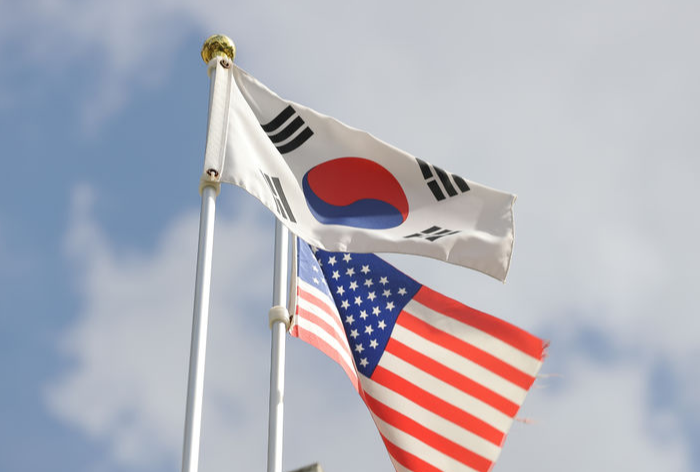
At the OPCON recovery evaluation meeting, Ahn said the South Korea-US consensus on recovering wartime operational control had grown considerably stronger.
"Close communication between the two countries has continued at every level, from working-level officials to senior leadership," he said. "The two countries have achieved meaningful results, including solidifying a shared commitment to recovering OPCON as soon as possible."
Ahn said this year is a critical juncture requiring completion of the Full Operational Capability verification of the Future Combined Forces Command and a decision on the timing of the transfer, and called on all forces to concentrate their capabilities toward that goal.
Making the combined component commands permanent was also a major agenda item.
Ahn received a briefing on progress toward making the Combined Special Operations Component Command permanent and commended the successful conduct of its full mission capability assessment. "After OPCON is recovered, we will pursue the permanentization of the combined component commands so that all six can weave a tight, interlocking combined defense posture," he said.
The meetings also included in-depth discussions on tasks needed to strengthen the integrity of a South Korea-led combined defense system following the OPCON transfer. Ahn said he would closely track and manage the "integrity enhancement tasks" for the post-transfer combined defense framework to further reinforce the South Korea-US alliance and combined defense readiness.
At the all-forces commanders conference, Ahn outlined plans to build a "smart military" centered on advanced capabilities including AI, drones and robots, alongside a restructuring of the force's personnel composition. First-half achievements highlighted included the development of a defense-specific AI model through collaboration among the Ministry of National Defense, the Ministry of Science and ICT and the private sector, an expansion of open access to defense data, and the introduction of drones built with domestically produced components. For the second half, the ministry plans to pilot-test the AI model and expand dedicated units for field-testing commercial drones.
The personnel structure will shift toward reducing overall troop numbers while increasing the proportion of career noncommissioned officers and other professional cadre. The plan envisions maintaining and strengthening combat power despite the troop reduction through a unit restructuring built around manned-unmanned combined forces. The "Second Defense Reform Master Plan," which incorporates these measures, is set to go before the Defense Reform Committee for deliberation in the second half of the year.
"Reform is harder than revolution, but every drop of sweat shed today will become the foundation that protects the lives of our service members and the safety of our people," Ahn said. "We must complete the defense reform of the people's sovereignty government with one heart and one mind."
He added: "Let us together build a proud Republic of Korea Armed Forces — one that the people trust and the enemy fears — by realizing a stronger South Korea and an evolving South Korea-US alliance through the recovery of OPCON, nurturing national talent to lead the future battlefield, and establishing a military intelligence system with political neutrality and professional integrity."
rimsclub@heraldcorp.com