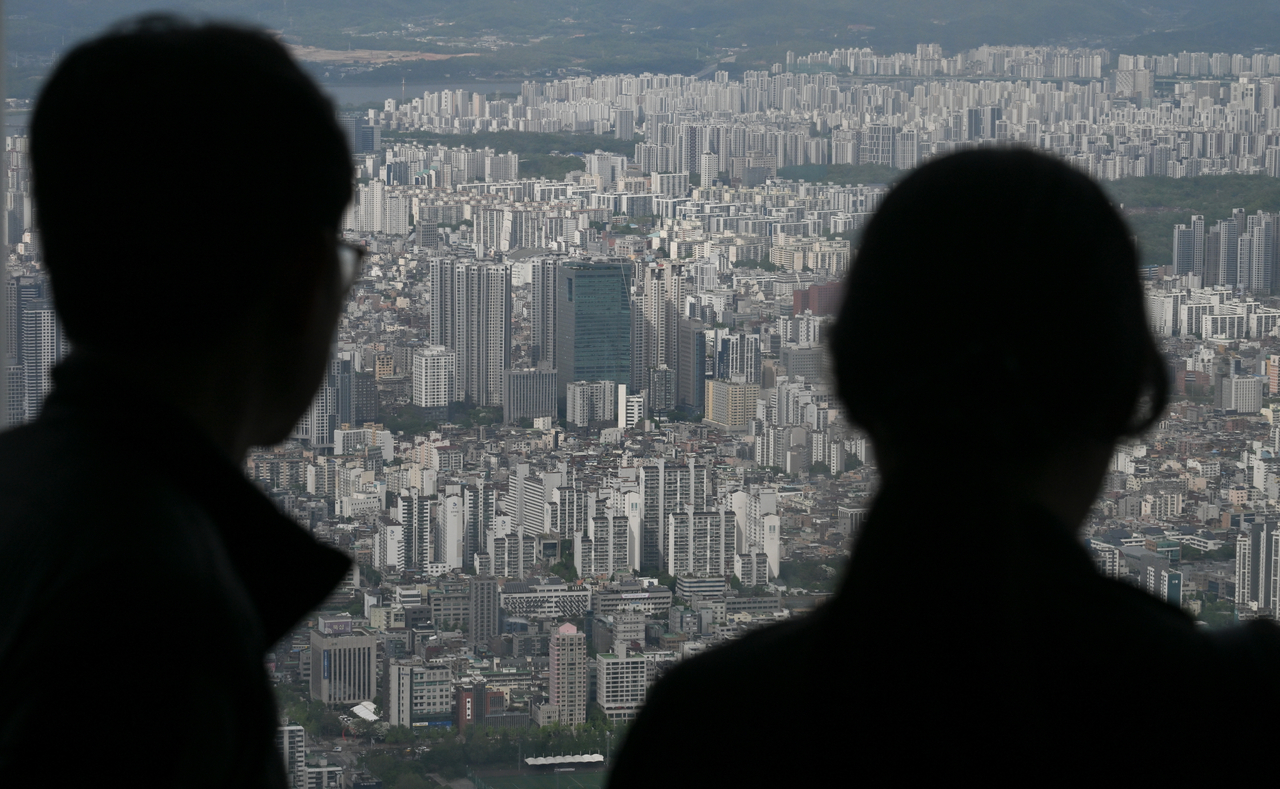
A 49-square-meter unit on a prime floor in an apartment complex in Dongdaemun-gu, Seoul, briefly appeared on the market before being pulled within days. A nearby real estate agent said the seller never once showed the unit despite receiving dozens of inquiries from prospective buyers. "They decided to wait until the July tax reform is done before reconsidering, and ultimately pulled the listing," the agent said.
The number of apartments listed for sale in Seoul has plunged. Since the reinstatement of the capital gains tax surcharge on multi-home owners, sellers have had less incentive to offload properties — and with a sweeping tax overhaul on the horizon, many are holding their breath and pulling listings from the market.
According to Asil, a real estate big data platform, Seoul had 61,432 apartment units listed for sale as of Sunday, down 12.8% from 70,403 two months ago. Nearly 10,000 listings have disappeared since early May, when multi-home owners had briefly been putting properties up for sale.
The decline looks even steeper compared with a year ago. Sunday's listing count was down 15,588 units, or 20%, from 77,020 a year earlier. By district, Gangbuk-gu saw the sharpest drop — listings there plunged 53.9%, from 1,719 to 794. Seongbuk-gu, Jungnang-gu, Guro-gu and Gangseo-gu followed, with declines of 53.3%, 52.4%, 47.6% and 47.3%, respectively.
The primary driver is that multi-home owners are simply refusing to sell after the capital gains tax surcharge was reinstated. With the heavier tax burden now in effect, owners who have held properties for more than a decade are delaying long-planned sales and withdrawing their listings.
Since May 9, the surcharge has been back in force: owners of two homes face an additional 20 percentage points on top of the standard capital gains tax rate, while those with three or more homes face an extra 30 percentage points.
On top of that, a growing number of sellers are choosing to wait and see how far the government's tax reform goes before making a decision. The government is reviewing plans to encourage existing homeowners to list their properties by revising the property holding tax and the special long-term ownership deduction.
What makes the situation notable is that if the reforms succeed in drawing out more listings and accelerating transactions, a real estate frenzy could take hold in the mid-to-low price segment. For sellers, there is an underlying anxiety that moving too quickly could mean leaving money on the table.
"There's a view that price gains in the mid-to-low apartment market are 'just getting started,'" said a real estate agent in Seodaemun-gu, Seoul. "If more listings come out and transactions pick up again, demand could concentrate in certain price brackets and push prices even higher."
For now, the most widely discussed options ahead of the government's expected announcement later this month include adjusting the comprehensive real estate tax rate and tax base brackets, or revising the fair market value ratio — the proportion of a home's publicly assessed price used to calculate the actual tax base. The higher the ratio, the heavier the tax burden. Adjusting the fair market value ratio is seen as a particularly practical tool because it can be done through a revision to enforcement decrees rather than requiring a change in law.
The fair market value ratio was introduced in 2009 and held at around 80% through 2018, before being raised to 95% in 2021. It was then lowered back to 60% under the Yoon Suk Yeol administration. However, because the property tax assessment date of June 1 has already passed, any decree revision would be difficult to apply this year. There is speculation that the government may instead reflect a planned increase in the July tax law amendment bill, then pursue a phased increase to the 80 to 100 percent range starting next year through a second-half decree revision.

hss@heraldcorp.com