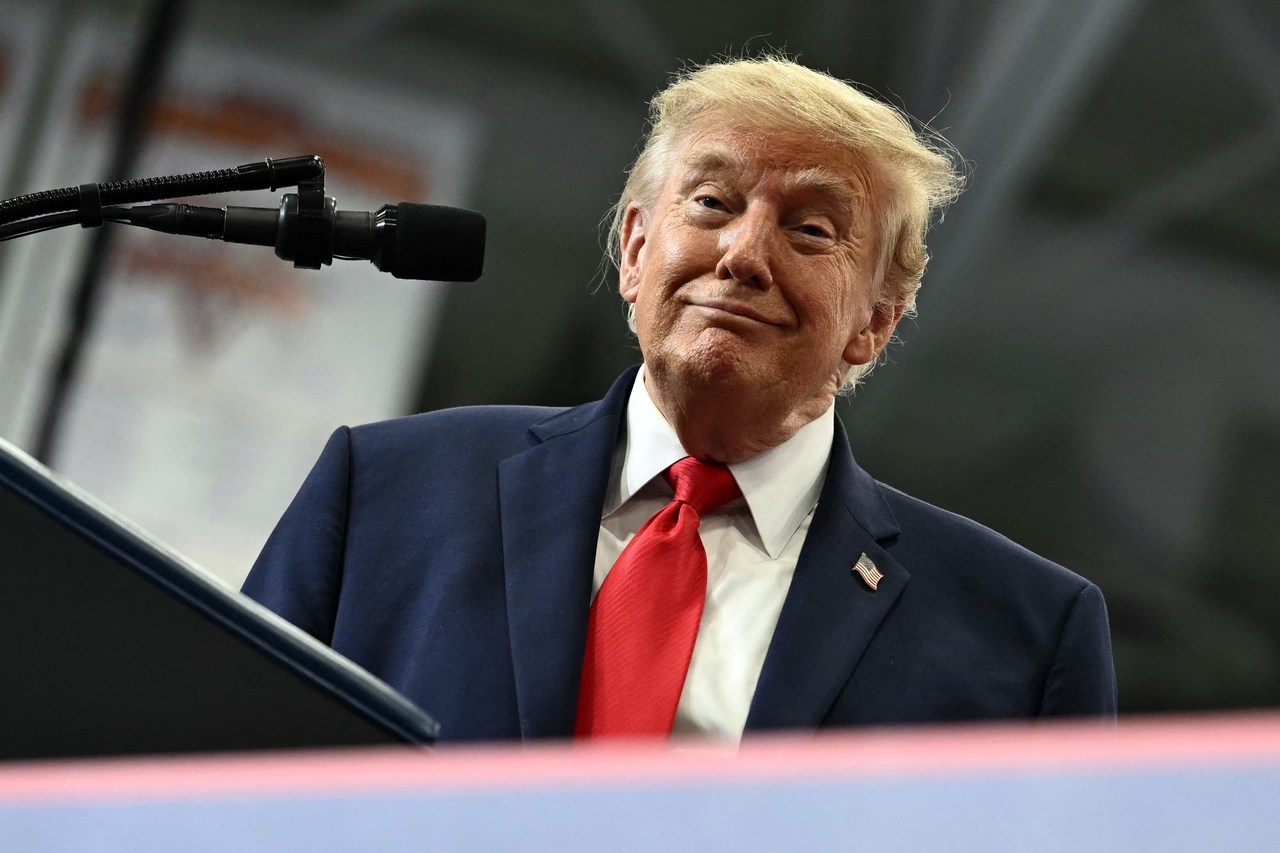
![US President Donald Trump (front row, from left), NATO Secretary General Mark Rutte and Turkish President Recep Tayyip Erdogan take a brief break during the summit on Wednesday (local time). [UPI]](https://wimg.heraldcorp.com/news/cms/2026/07/09/news-p.v1.20260709.90fa0261f87a4313a54cca1bc9e420ef_P1.jpg)
NATO leaders reaffirmed their commitment to boosting defense spending at the alliance's summit, adopting a plan to launch more than $50 billion in new procurement.
In the Ankara Summit Declaration adopted Wednesday (local time), alliance leaders announced they would "launch more than $50 billion in new procurement commitments" and pledged to accelerate innovation through expanded joint production capacity and industry cooperation.
The declaration also said allies would continue working to remove defense trade barriers among member states and maximize defense industry depth and cooperation through NATO partnerships. Leaders added that allies are implementing the "Hague Defense Pledge" — adopted at last year's NATO summit — to counter Russia's long-term threat to Euro-Atlantic security and the persistent threat of terrorism. The pledge commits member states to raising defense spending to a total of 5 percent of gross domestic product by 2035. It was a direct response to President Donald Trump's sweeping criticism that NATO allies have been free-riding on the United States rather than investing adequately in their own defense and security.
In the declaration, leaders said they had gathered in Ankara "to reaffirm our ironclad commitment to collective defense and the transatlantic bond," noting that European allies and Canada are taking on greater responsibility for the alliance's defense in cooperation with the United States. The document also stated that NATO's deterrence and defense capabilities rest on an appropriate mix of nuclear, conventional and missile defense assets, augmented by space and cyber capabilities, and that development of an interoperable transatlantic battle cloud and the adoption of robust AI models are underway.
On the war between the United States and Iran that has been ongoing since February, the declaration reaffirmed that "Iran must never acquire nuclear weapons" and called for full respect for freedom of navigation through the Strait of Hormuz.
On the Russia-Ukraine war — one of the summit's central agenda items — the declaration stated that "Ukraine is contributing to Euro-Atlantic security" and confirmed that allies have pledged to provide 70 billion euros ($79.8 billion) in military equipment, support and training this year, with a sovereign commitment to maintain at least the same level in 2027.
NATO Secretary General Mark Rutte said at a closing news conference that "the message of this summit is simple: NATO delivers," adding that "we are rebalancing security in a better direction, and that is the essence of NATO 3.0."
NATO 3.0 is a concept Elbridge Colby, the US Defense Department's undersecretary of defense for policy, put forward in February at a meeting of NATO defense ministers. It envisions the United States focusing on homeland defense and deterring China in the Indo-Pacific while Europe builds a partnership that does not depend on the US for its security.
Rutte also unveiled several weapons acquisition plans at the summit, including "NATO Drone Edge," a blueprint to strengthen the alliance's counter-unmanned aerial vehicle capabilities. He announced a 27 billion euro fuel infrastructure modernization project — one of the initiatives championed by Turkey, this year's summit host — to build new pipelines and related infrastructure extending toward NATO's eastern flank.
kate01@heraldcorp.com