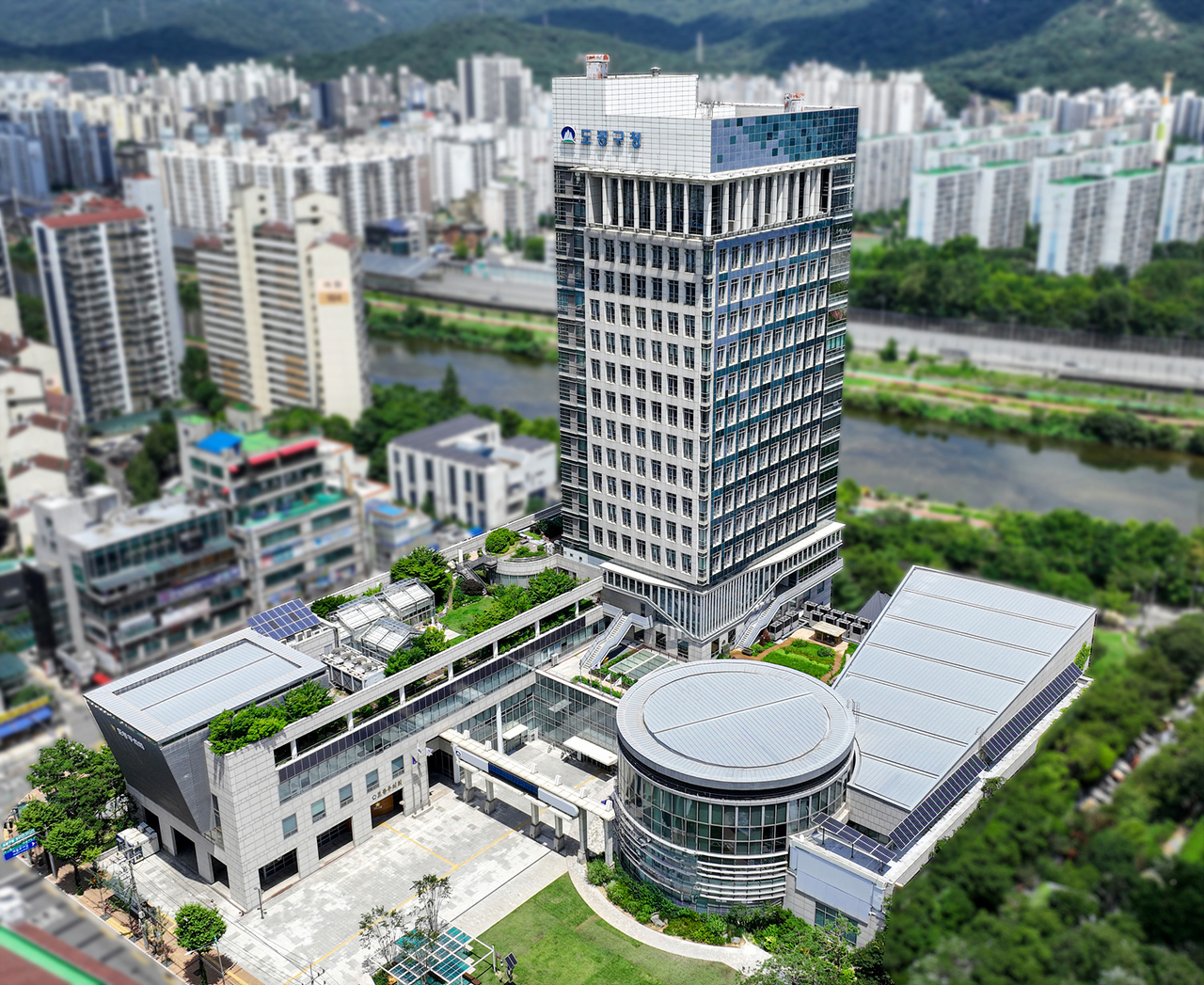
[Senior Reporter Park Jong-il] Seoul's Dobong-gu, led by District Mayor Kim Dong-wook, has launched a public awareness campaign to inform residents of updated disposal rules for byproducts from food waste reducers, which took effect this year.
"It has been half a year since the relevant ordinance was amended and took effect, yet many residents still do not know about the changed disposal standards," a district official said. "We plan to actively promote the new rules so residents can easily understand and follow them."
The district amended its ordinance on food waste generation suppression, collection, transport and recycling — formally titled the "Dobong-gu, Seoul Metropolitan City Ordinance on Food Waste Generation Suppression, Collection, Transport and Recycling" — on Dec. 31 last year.
Under the revised rules, byproducts generated by certified home drying-type small food waste reducers may now be disposed of in standard household waste volume-rate garbage bags. However, this applies only to byproducts that have been sufficiently dried by a home drying-type small reducer that has received quality and safety certification.
Unprocessed food waste and byproducts that do not meet the eligibility criteria must still be disposed of as food waste, as before.
The ordinance amendment is a proactive measure to promote wider adoption of food waste reducers and to make disposal more convenient for residents.
Dobong-gu and Eunpyeong-gu are currently the only two of Seoul's 25 autonomous districts to have amended their ordinances to allow byproducts from home drying-type small food waste reducers to be disposed of in standard volume-rate garbage bags.
Previously, byproducts from food waste reducers were classified as food waste, meaning residents who dried food scraps using a reducer still had to dispose of the resulting byproducts in designated food waste collection containers — an inconvenience that drew repeated complaints.
Critics had long argued that this requirement was an obstacle to the wider adoption of food waste reducers.
In response, the district amended the ordinance to ease the burden on residents and encourage greater use of food waste reducers.
Under the revised ordinance, residents using a certified home drying-type small reducer with a daily processing capacity of 1 to 5 kilograms may place sufficiently dried byproducts in standard household waste volume-rate garbage bags for disposal.
Alongside the ordinance amendment, the district secured approval from the Seoul Metropolitan Government to allow dried byproducts to be accepted at its resource recovery facilities. Without that approval, the practical effect of the new disposal rules would have been limited, since the byproducts ultimately need to be processed at Seoul's resource recovery facilities even when placed in standard garbage bags.
The district had repeatedly petitioned for revised intake standards, citing the high incineration efficiency and hygienic properties of dried byproducts. As a result, dried byproducts from food waste reducers are now accepted at resource recovery facilities, laying the groundwork for the new system to deliver real-world results.
"As more households adopt food waste reducers, it is important that residents know the updated disposal rules and can use them conveniently," District Mayor Kim said. "We will continue to strengthen outreach tailored to residents' needs and work to spread a culture of resource circulation in everyday life while reducing food waste."
seouldream01@heraldcorp.com