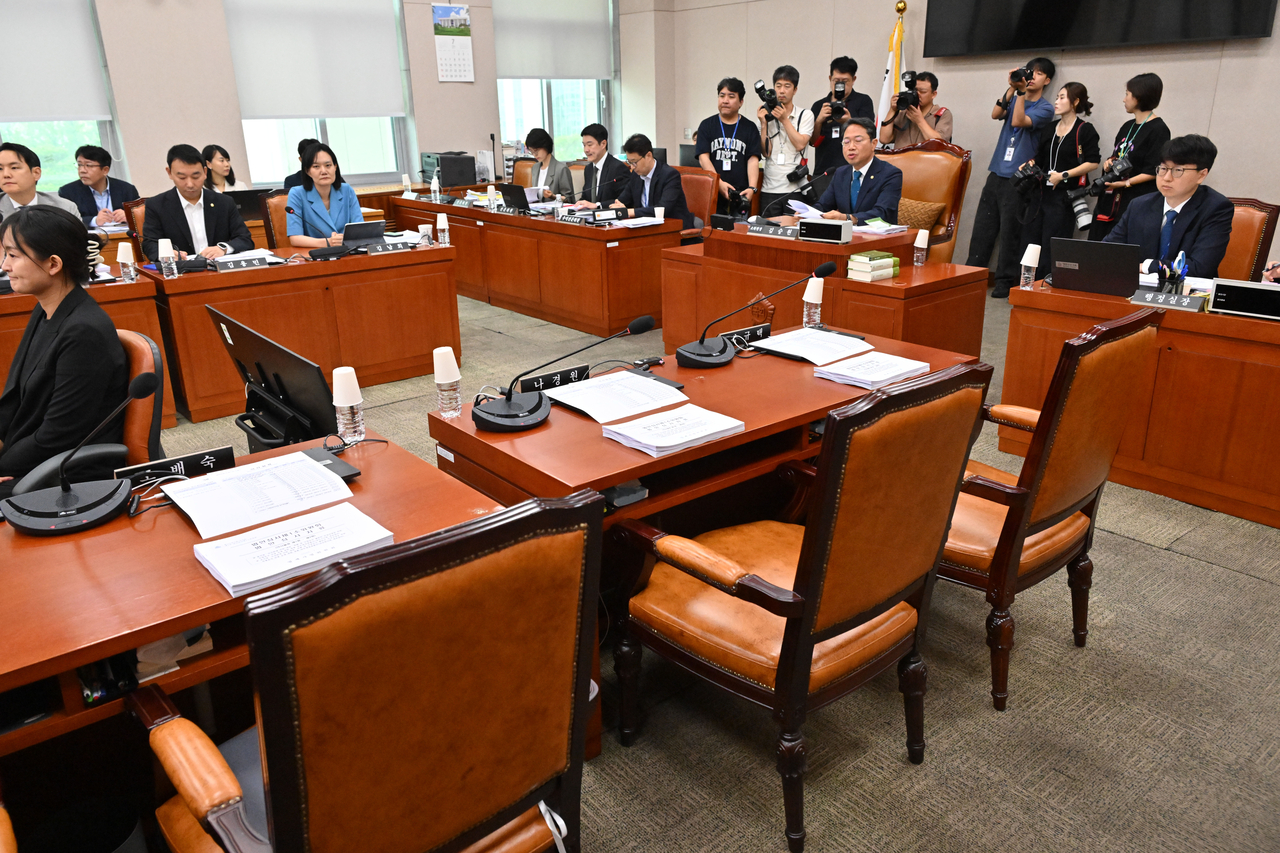
The Democratic Party of Korea pressed ahead Friday with a bill to abolish prosecutors' supplementary investigation powers, formally introducing an amendment to the Criminal Procedure Act over opposition objections and launching full legislative review the same day. The People Power Party sharpened its counterattack by putting the so-called Jang Yun-gi case at the center of its criticism, deepening the standoff between the two sides.
Han Byung-do, the Democratic Party's acting leader and floor leader, told a Supreme Council meeting at the National Assembly on Friday that the bill was expected to bring about "the complete abolition of supplementary investigation powers, along with a clearer division of roles among investigative agencies and stronger specialization."
Addressing concerns raised over the Jang Yun-gi case and similar matters, Han said the Democratic Party was "aware of the concerns being raised in some quarters" and pledged to "draw up robust safeguard measures during the Legislation and Judiciary Committee review process."
The Democratic Party's Criminal Procedure Act reform task force introduced the bill on Thursday, proposing a full separation of investigation and indictment while strengthening and making more concrete prosecutors' existing rights to request supplementary investigations, demand corrective action and call for re-investigations. The bill removes the word "prosecutor" from all provisions in the current law — including Article 196 — that designate prosecutors as investigative subjects.
Under the bill, prosecutors would lose their supplementary investigation powers entirely. Instead, they would serve in an advisory role on police investigations — offering legal judgments and assessments of evidence-gathering — while the bill also includes provisions to strengthen prosecutors' authority to request supplementary investigations.
The Democratic Party has set a target of passing the bill, which is widely regarded as reflecting the party's official position, by mid-August, ahead of the Aug. 17 party leadership election. Kim Han-gyu, the floor policy deputy leader and a task force member, said the legislation "goes beyond adjusting investigative authority — it strengthens the rights of victims, complainants and accusers," adding that it was designed to allow for "an accurate assessment of the facts of investigative procedures and the ability to raise problems."
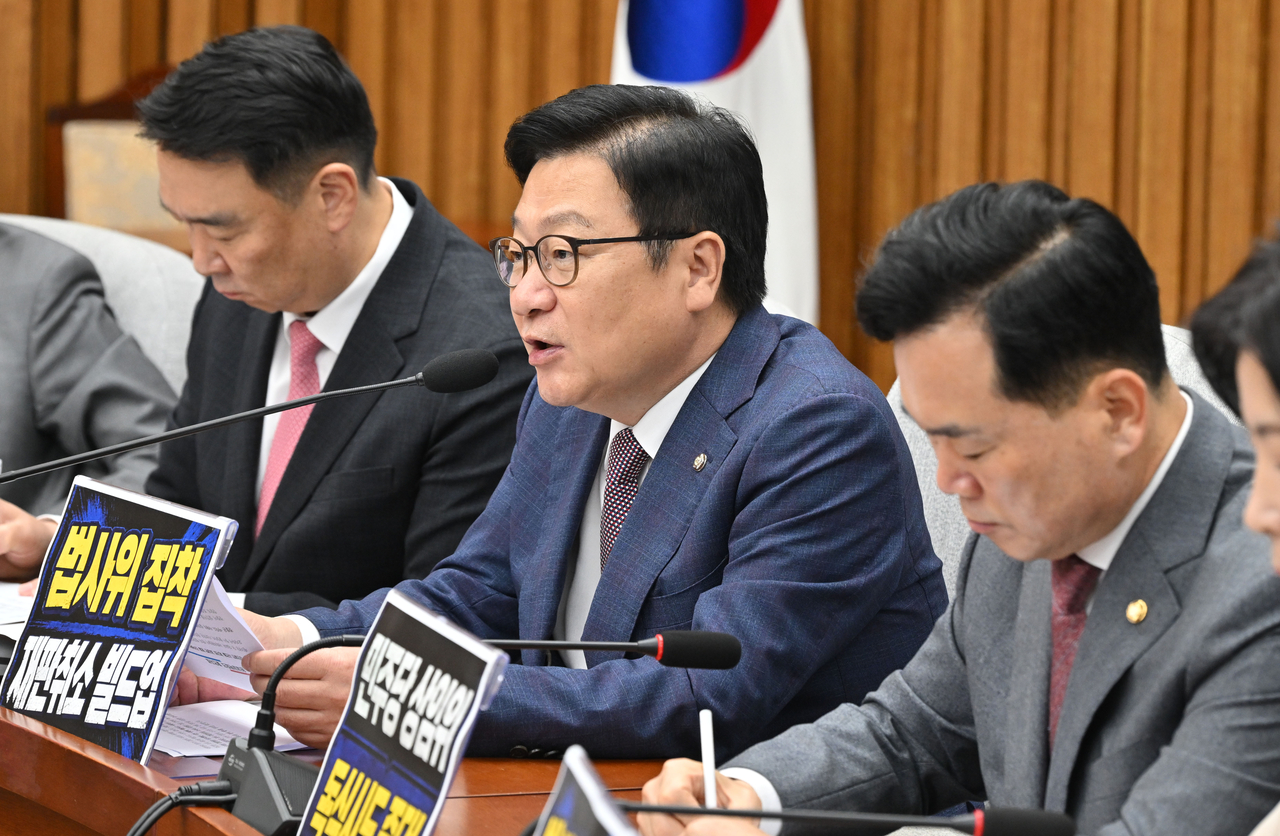
The People Power Party, meanwhile, made clear its opposition to abolishing supplementary investigation powers. The party said it plans to introduce its own Criminal Procedure Act amendment that would either preserve those powers or establish a comparable alternative.
Floor leader Jeong Jeom-sik told a party floor strategy meeting Friday that "retaining supplementary investigation powers to check a police monopoly on investigations is only natural, and extraordinary measures are needed to restore public trust in the police" following the Jang Yun-gi case. He proposed convening a cross-party consultative forum — involving the ruling and opposition parties and the government — to discuss "measures to check a complete police monopoly on investigative authority and reform investigative agencies."
Park Sung-hoon, the People Power Party's chief spokesperson, said in a statement that President Lee Jae Myung had himself acknowledged that "at least a minimum level of supplementary investigation powers is necessary," yet was now "keeping his mouth firmly shut — not out of concern for public safety, but with an eye on the so-called hardcore 'Gaeddal' support base" ahead of the Aug. 17 party convention. Park called on Lee and the Democratic Party to "immediately reconsider the bill to abolish supplementary investigation powers, which could threaten the lives and safety of the people."
Independent lawmaker Han Dong-hoon also weighed in on Facebook, saying it was "comedy" that former lawmaker Choi Kang-wook had suggested that "if the police don't comply with a request for supplementary investigation, prosecutors can just leak it to the media." Han said the Democratic Party should "stop siding with murderers and turning the people into enemies."
Concern also surfaced within the Democratic Party itself over the bill. Democratic Party lawmaker Hong Ki-won appeared on KBS Radio on Friday and said the bill "cannot fundamentally resolve the problems that would arise from abolishing supplementary investigation powers," adding that he was "preparing his own bill that would retain some supplementary investigation powers."
bigroot@heraldcorp.com
addressh@heraldcorp.com