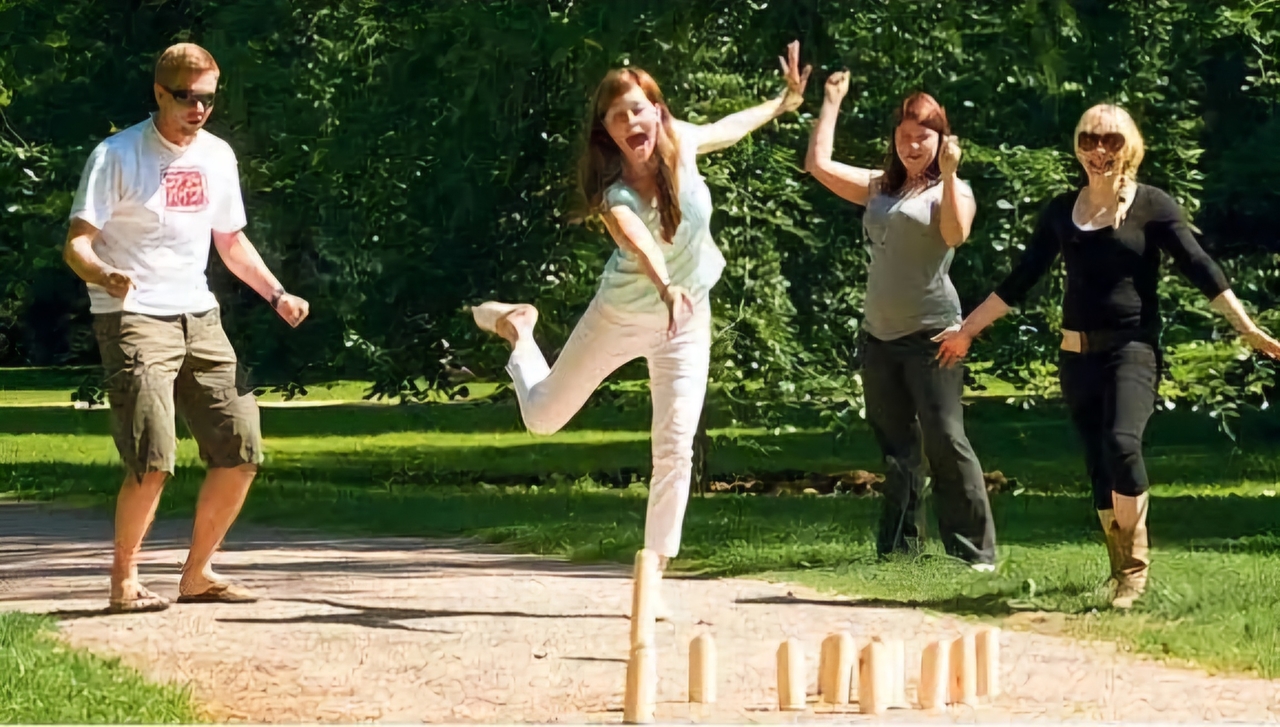
Mölkky is a traditional Finnish outdoor game. Players set up numbered wooden pins and take turns throwing a wooden baton — also called a mölkky — to knock them over, scoring points equal to the number on each fallen pin.
The pins, known as skittles, are numbered 1 through 12. Players stand behind a line drawn roughly 3 to 4 meters away and toss the baton to knock them down.
The first player or team to reach exactly 50 points wins. Going over 50 — landing on 51 or 52, for instance — sends the score back down to 25. Miss all the pins three turns in a row, and a player is immediately eliminated.
Swap the stones for wooden pins and add numbers, and the game looks remarkably like biseoktchigi, the Korean folk pastime of toppling stone markers.
Finnish, as is well known, shares the same word order as Korean — an unusual trait among Nordic languages. Scholars who trace the ancient Baedal people of Gojoseon note that member groups of that federated realm — among them the Gori (Goryeo), Buriyat (Buyeo), Turk (Doljueol), Mongol, Xiongnu (Hun) and Malgal peoples — pushed steadily westward over the centuries.
The Germanic tribes, driven west and south after defeats at the hands of Xiongnu and Mongol forces, went on to topple the Western Roman Empire with relative ease. The Göktürks, close allies of Goguryeo, subdued the Eastern Roman Empire and founded a new one in its place. Asian cultural and linguistic traces still linger in the Basque Country and other parts of northeastern Spain, long ruled by Eastern peoples. The Mongols' conquest and governance of the vast majority of the Eurasian continent stands as testament to the formidable military power of the East.
The Baedal (Baatar: hero) people of Gojoseon, with each warrior commanding 10 to 20 horses, are said to have pushed into the western regions at remarkable speed. Some trace the word "Asia" to "As," meaning city or capital, said to be the root of Gojoseon's capital name.
Lithuania, Hungary, Turkey, Azerbaijan, Uzbekistan, Kazakhstan and Kyrgyzstan — all waypoints on the road to Spain and Finland at the far western end — are regarded as either migration corridors or settlement sites of the Asdal Korean people, and most of these languages share the same word order as Korean.
Lithuanian culinary culture, shaped by the great empire it once formed with Poland along the route to Finland, still carries traces of an Eastern fermentation tradition — white kimchi and gochujang-like condiments among them.
Finland has at times sought to distance itself from its Asian heritage, given a history of marginalization by both Europe and Russia over centuries, partly on account of its distinct appearance from neighboring peoples.
Tracing the similarities between Mölkky and biseoktchigi to the migration routes of the Asdal people is, in the end, a historical thought experiment — a reasoned inference drawn from synthesizing records across multiple national histories. Whatever one makes of the theory, the game has now made its way to Jeongseon, and that alone is cause for a warm welcome.
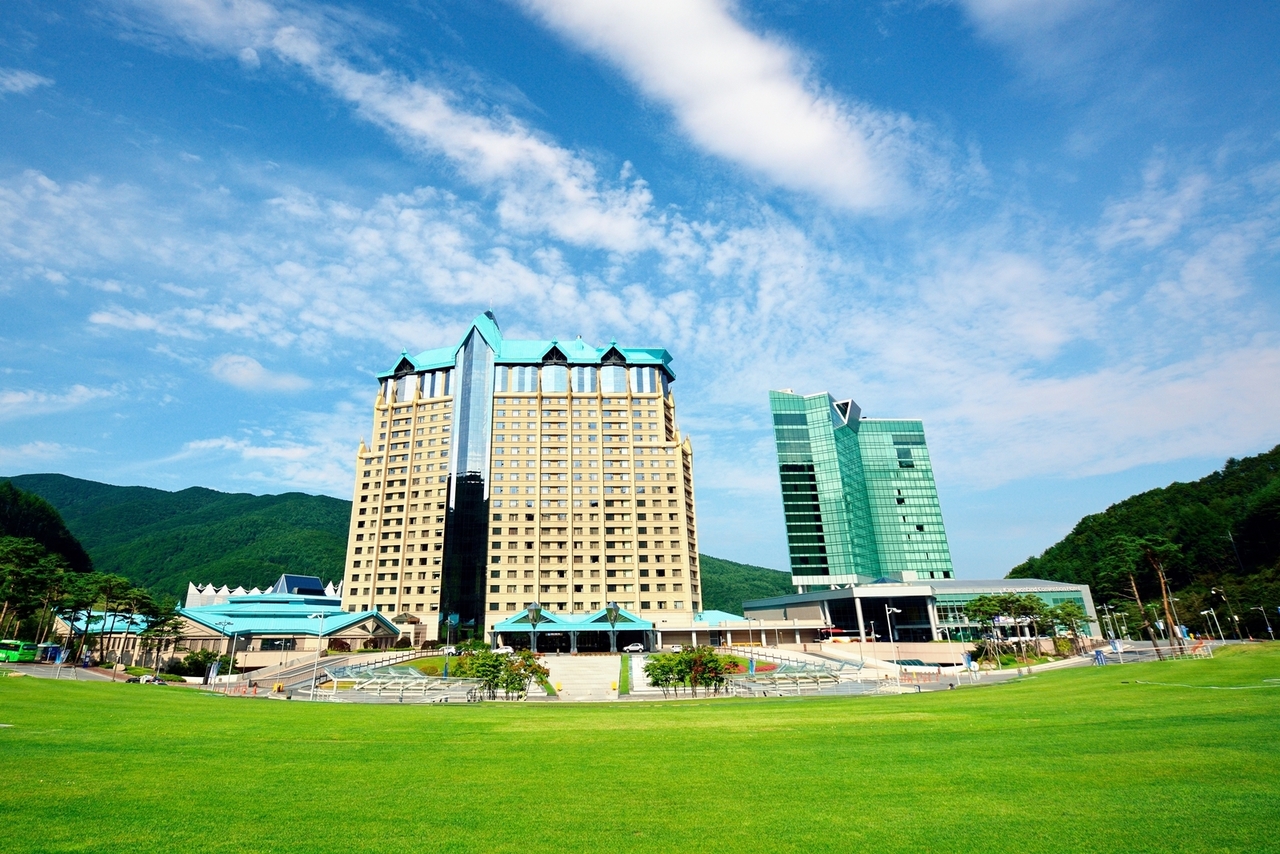
Jeongseon-gun is hosting the 2nd Branch Chairman's Cup Mölkky Tournament at the Jeongseon National Sports Center on Thursday, organized to promote the health of senior residents, spread a wholesome recreational culture and revitalize local senior centers.
The event, organized by the Jeongseon chapter of the Korea Senior Citizens Association and sponsored by the Kangwon Land Social Contribution Foundation, drew about 160 participants, including Jeongseon County Chief Choi Seung-jun, Jeongseon County Council Speaker Bae Wang-seop and members of local senior centers.
The tournament was designed to encourage healthy leisure activity among older residents through Mölkky, a recreational sport accessible to all ages, while fostering communication and community spirit through team-based competition. The game is also considered beneficial for concentration and cognitive function, making it a useful tool in dementia prevention.
Jeongseon-gun plans to continue promoting Mölkky as an activity anyone can enjoy, supporting its spread as a means of boosting physical activity, improving cognitive function and helping prevent dementia among senior residents.
The tournament also served as a forum for County Chief Choi to gather opinions directly from elderly residents.
abc@heraldcorp.com