![Health and Welfare Minister Jeong Eun-kyung (second from right) holds a pre-briefing on the ministry's second-half work plan at Government Complex Sejong on Wednesday. [Ministry of Health and Welfare]](https://wimg.heraldcorp.com/news/cms/2026/07/16/news-p.v1.20260716.9cd9e70ddadc4c45ac1db2cab761c628_P1.jpg)
The Ministry of Health and Welfare will strengthen the welfare safety net to ease polarization — including establishing an emergency referral system for victims of illegal private lending and overhauling the emergency welfare system — in pursuit of its vision of "a life-respecting welfare state and a Korea that leaps forward together."
The ministry will also reform the public healthcare system, encompassing national university hospitals, regional medical centers and public health centers, and make transformative investments in regional and essential medical care to support the government's five-hub, three-special-zone national balanced growth strategy.
The Ministry of Health and Welfare announced its second-half work plan for 2026 on Thursday, under the vision of "a life-respecting welfare state and a Korea that leaps forward together."
New emergency referral system for illegal lending victims; severe maternal care centers to expand to 6 nationwide
To detect financial crises more quickly, the ministry will conduct intensive investigations of households in financial distress, link new crisis information sources and establish an emergency referral system for victims of illegal private lending.
Child allowances, parental benefits and first-meeting vouchers — currently provided to all eligible recipients upon birth registration — will be paid automatically using only minimal information such as initial bank account details, with no separate application required.
The government also plans to improve the process for means-tested benefits such as the basic pension and disability pension, which require income and asset assessments, by making maximum use of data already held by the government so that assessments and payments can proceed without a separate application.
To strengthen the minimum livelihood guarantee for low-income households, the government will decide on an increase to the 2027 standard median income. It will abolish the family support obligation requirement for livelihood benefits targeting people with severe disabilities, and ease the same requirement for medical benefits, starting with those who have the greatest medical and care needs.
To consolidate the downward trend in suicide rates, the ministry will continue expanding inter-agency and system linkages to address suicide risk factors such as debt. It will nearly double the staffing of the suicide prevention hotline 109 — from 103 to 200 counselors — to improve response rates, and will strengthen joint dispatch and 24-hour response by the ministry, police and fire department for suicide attempts and fatalities.
The medical system for high-risk pregnant women and newborns will also be expanded.
The regional cooperation network centered on the nine existing regional maternal and child medical centers will be extended nationwide, and the number of severe maternal and child medical centers — currently two, both in Seoul — will be increased in stages to six across the country, centered on the five major hubs.
The ministry will pursue a phased reduction in the patient co-payment rate for rare and intractable diseases, currently set at 10 percent under the special cost-sharing exemption, and will shorten the national health insurance listing period for rare disease treatments from 240 days to 100 days to allow earlier patient access.
Integrated care extended to people with disabilities and mental illness; disability pension eligibility broadened
The government will expand integrated medical, long-term care and daily-living support services that help older adults, people with disabilities and others maintain healthy lives in their communities, extending services currently centered on older adults to people with disabilities and those with mental illness.
The current 30 service types covering home medical care, long-term care and daily living will be expanded to 60, covering the full life cycle, and the ministry will pilot hub-based home medical centers that provide specialized services such as home rehabilitation.
Round-the-clock emergency care for people with the most severe developmental disabilities will be expanded to handle emergencies such as a caregiver's hospitalization. To protect freedom of choice, people with disabilities who have been using personal assistance services will be able to continue receiving those services after turning 65.
The disability pension will be extended to cover people with a single third-grade disability, and public employment opportunities for people with disabilities will continue to expand. A full-scale community independence support program will be launched to provide integrated housing and services, enabling people with disabilities living in institutions who wish to live independently — as well as those with disabilities who have experienced abuse while living at home — to live as independent members of their communities.
The basic pension, currently paid at a flat rate of 350,000 won ($235) to all recipients, will be restructured to provide more support to lower-income recipients. The government will also pursue changes to the eligibility criteria — currently covering the bottom 70 percent of older adults by income — to reflect the higher income levels of recent retirees, including the baby boom generation.
The government will also address longstanding inequities in the current system.
Under the current basic pension rules, couples who both receive the pension each have their payment reduced by 20 percent, and recipients of occupational pensions and their spouses are excluded from eligibility regardless of how low their income or assets may be.
The government plans to reform these inequitable provisions through broad social deliberation — including through the National Assembly's special pension committee — to strengthen retirement income security for low-income groups.
![[123RF]](https://wimg.heraldcorp.com/news/cms/2026/07/16/news-p.v1.20260716.ebc122b6a5a74c40bb0a9e422fd88d7a_P1.jpg)
First national pension premium subsidized for youth; employment and startup support extended from 6 to 12 months
To help young people build up national pension contribution periods in preparation for a 100-year lifespan, the government will subsidize their first premium payment. It will also pursue expanded pension credit for military service and childbirth.
The ministry plans to research and design various income security measures for young people facing structural risks such as job loss, income gaps and social isolation, and will actively identify health and welfare employment opportunities for youth.
To strengthen support for low-income young people seeking independence, the ministry will extend the employment and startup skills development support period from six months to 12 months.
The government also plans to examine a scheme to pay livelihood benefits directly to low-income young people living apart from their parents, calculated on an individual rather than household basis.
The ministry will expand nationwide the system for identifying, counseling and case-managing young people who are caregivers or who are isolated and withdrawn, to more smoothly provide 2 million won in self-care allowances and family care linkage services.
Public healthcare system restructured around five hubs and three special zones
National university hospitals will be developed into final-referral institutions for severe and complex conditions through intensive investment across all areas — infrastructure, personnel and AI transformation.
To strengthen final-treatment capacity, the government will concentrate the designation of government-designated centers for emergency, cardiovascular, cerebrovascular and maternal care. To enhance teaching functions, it will pursue an expansion of full-time faculty and the establishment of training systems linked to regional medical institutions.
In the short term, public health centers and other regional public health institutions will expand integrated community health sub-centers staffed by dedicated public health officials to address medical gaps in rural and fishing communities, and will promote remote consultations with physicians.
To enable local governments to build self-sufficient regional healthcare systems, the ministry will establish a special regional essential medical account worth 1.2 trillion won annually, overhaul the fee structure for the first time in 25 years to channel 3.6 trillion won per year into regional and essential medical care, and simultaneously achieve annual savings of 2.6 trillion won by restructuring excessive spending on imaging and laboratory tests.
To secure a stable supply of regional, essential and public physicians, the government will in the short term expand the contract-based regional essential physician program — currently operating in 11 cities and provinces this year — nationwide. Over the medium to long term, it will lay the groundwork for a stable physician supply pipeline through the introduction of a regional physician system, the establishment of a new national medical graduate school and the creation of new regional medical schools.
![[123RF]](https://wimg.heraldcorp.com/news/cms/2026/07/16/news-p.v1.20260716.474585cfd705433ba19ac0f628e9da04_P1.jpg)
Biotech and AI to drive South Korea's rise as a global biohealth power
To propel South Korea into the top five in global pharmaceuticals and biotech, the government will build a mega-fund of up to 1 trillion won. It will also select 30 nationally representative health and medical technologies for intensive support to prepare for future societal changes and secure a decisive competitive edge.
Targeting 3 million foreign patients, the ministry will build a K-Healthcare integrated hub to manage the full patient journey from pre-consultation to post-treatment follow-up, and will introduce telemedicine for foreign patients with short stays in Korea.
To push cosmetics exports past $20 billion, the ministry will provide full-scale logistics and distribution support for a concentrated push into the United States — the world's largest market — and will expand local retail outlets to diversify export destinations.
The ministry will establish an "AI Basic Healthcare Strategy" to drive AI-based innovation across the full cycle of prevention, treatment and emergency care, and will push forward with AI transformation of the medical ecosystem.
The government will also broaden access to health and medical data. Genomic and biotech big data compiled through the National Bio Big Data project will be opened to domestic researchers, and clinical data from three national university hospitals — Chonnam National University, Kyungpook National University and Pusan National University — will be added to the data already available from the National Health Insurance Service and nine other public institutions.
To address the problem of patients having to undergo repeat CT and MRI scans every time they visit a different hospital, the ministry will promote greater sharing of medical imaging information.
To prevent cases in which consumers cannot recover prepayments or deposits when a postpartum care center closes or suspends operations, such centers will be required to notify local governments at least 30 days in advance and to inform current and prospective users ahead of any closure or suspension.
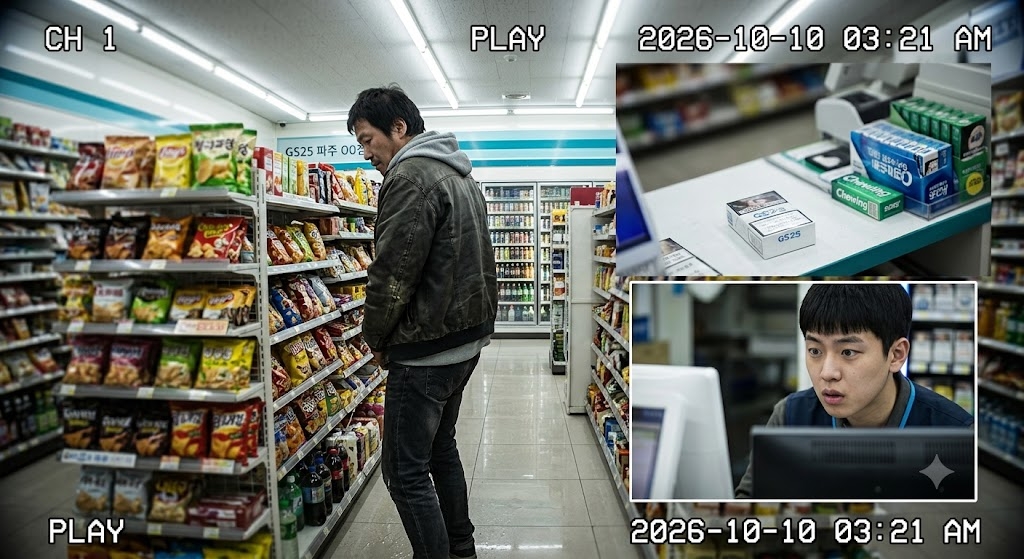
To improve access to medicines, the government will expand the range of over-the-counter drugs available at 24-hour convenience stores and ease the criteria for approved retail outlets. Currently, only 11 non-prescription items — including fever reducers, cold medicines and digestive aids — may be sold at round-the-clock convenience stores. By year-end, the number of over-the-counter items available at convenience stores will be expanded to up to 20, and in areas without a pharmacy or 24-hour retailer, non-24-hour stores will also be permitted to sell over-the-counter medicines.
If you or someone you know is struggling with thoughts of suicide or self-harm, contact the Ministry of Health and Welfare's crisis counseling hotline at 1393, available 24 hours a day, seven days a week. Please request a translator for English-language services.
thlee@heraldcorp.com