Blueprint still murky a year after government launch
Planning unit considers nationwide officer survey
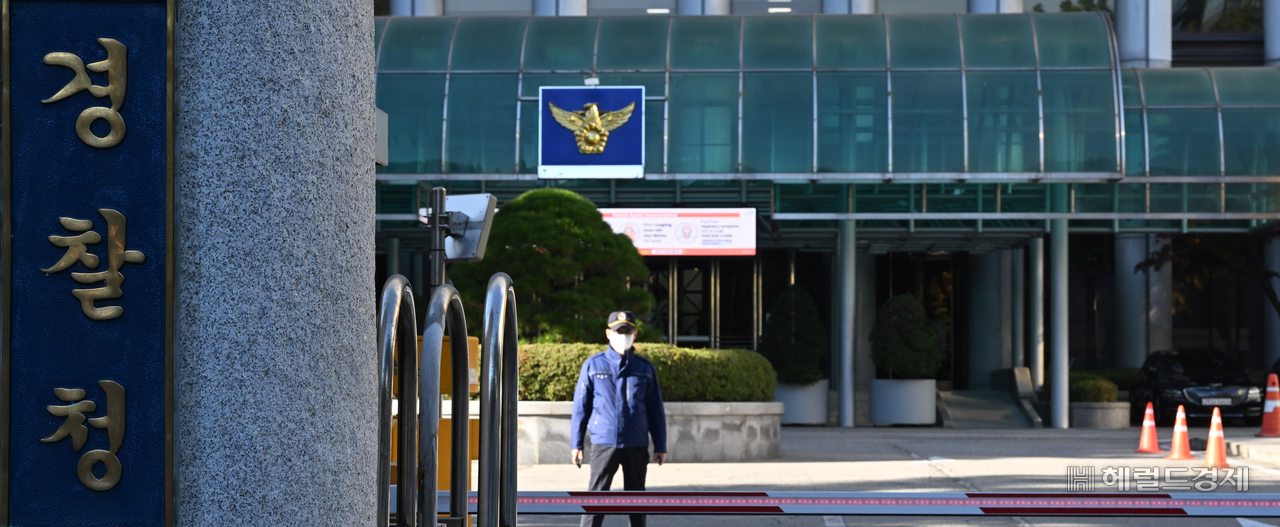
South Korea's autonomous police system, introduced under the Moon Jae-in administration, is once again at a crossroads. Five years after its launch, debate over its effectiveness has never fully subsided — and now President Lee Jae Myung has made strengthening the system a national policy priority. On the ground, however, skepticism runs deep.
Front-line officers have been posting concerns and complaints about the direction of the reform on a community policing discussion board set up by the Korean National Police Agency's Autonomous Police Planning Unit on the internal police network, Polnet, according to reporting published Sunday.
"Employees are just getting worn out by a situation that is neither moving forward nor standing still," wrote one officer stationed at a rural police box, adding: "Is the autonomous police push actually going anywhere?" Another officer raised concerns about coordination, saying colleagues at the Jeju agency had told him there was almost no communication between national and autonomous police units. "I worry that when the autonomous police system is fully rolled out, there will be problems with receiving and handling reports," the officer wrote. Jeju Island was the first region in the country to adopt the autonomous police system.
An officer at a regional police agency said the full rollout was proceeding in the dark. "For such a significant policy, there is far too little guidance or public communication," the officer wrote, calling on the agency to explain what the government is discussing and where the Korean National Police Agency stands. The officer also said the planning unit appeared to be going through the motions of holding field consultations just to claim it had listened, before pushing ahead regardless.
According to the planning unit, the process is still at the stage of reviewing directions and gathering opinions. In a reply on the board, the unit said it was "reviewing various models of a dual-track autonomous police system" and would continue to collect field opinions through multiple channels, promising to provide updates "at an appropriate time when the direction of the reform becomes more concrete."
More than a year into the new government, a concrete blueprint for expanding the autonomous police system remains elusive, and officers directly affected by the policy are growing impatient. One police official said the new government had revived the autonomous police push as a check on police power while pursuing prosecution reform, but that the lack of specifics was frustrating. "There is considerable fatigue on the ground from policies that drift every time a new government comes in," the official said.
The government views expanding the autonomous police system as a way to address concerns about an overly powerful police force following the abolition of the Prosecution Service, and to strengthen democratic oversight of police. The plan calls for a pan-government consultative body to develop detailed measures, followed by a pilot program before a full rollout.
Yun Chang-ryeol, head of the Office for Government Policy Coordination, said at the first meeting of the pan-government consultative body for the full implementation of the autonomous police system on July 2 that "the successful establishment of the autonomous police system is a critical task for providing locally tailored public safety services and securing democratic accountability in police administration." A support team headed by the vice minister of the Ministry of Interior and Safety will be set up within the ministry to assist the body, and an advisory committee of civilian experts is also set to be launched.
In the meantime, the planning unit and regional autonomous police committees held a series of regional field consultations from Nov. 13 to Nov. 25 last year, followed by a discussion forum for officers handling autonomous police affairs from Dec. 18 to Dec. 19. The planning unit is also considering conducting a nationwide survey of all police officers on the reform.
The autonomous police system was first introduced as part of the Moon administration's prosecution reform drive. At the time, an adjustment of investigative authority between prosecutors and police abolished the prosecution's power to direct investigations and granted police the right to close cases at the first instance — raising concerns that police power could grow unchecked. The autonomous police system was pursued as a way to distribute that power between national and local police.
arin@heraldcorp.com