Global investment bank Citi has cut its recommendation on the Korean stock market while upgrading China, fueling expectations that emerging-market funds could rotate out of Korea and into Chinese equities.
According to the financial investment industry on Tuesday, Citi recently downgraded Korea from "overweight" to "neutral" in its emerging-market asset allocation report, while raising China from "neutral" to "overweight."
Citi said global investors remain underweight in Chinese stocks and that valuations are not overly stretched, leaving room for further upside. The bank judged that the AI-driven rally led by Korea and Taiwan is likely to broaden into China.
Citi strategist David Groman said China offers ample upside potential given low investor positioning and undemanding valuations. He said the downgrade on Korea reflected heightened volatility risk following a sharp short-term rally.
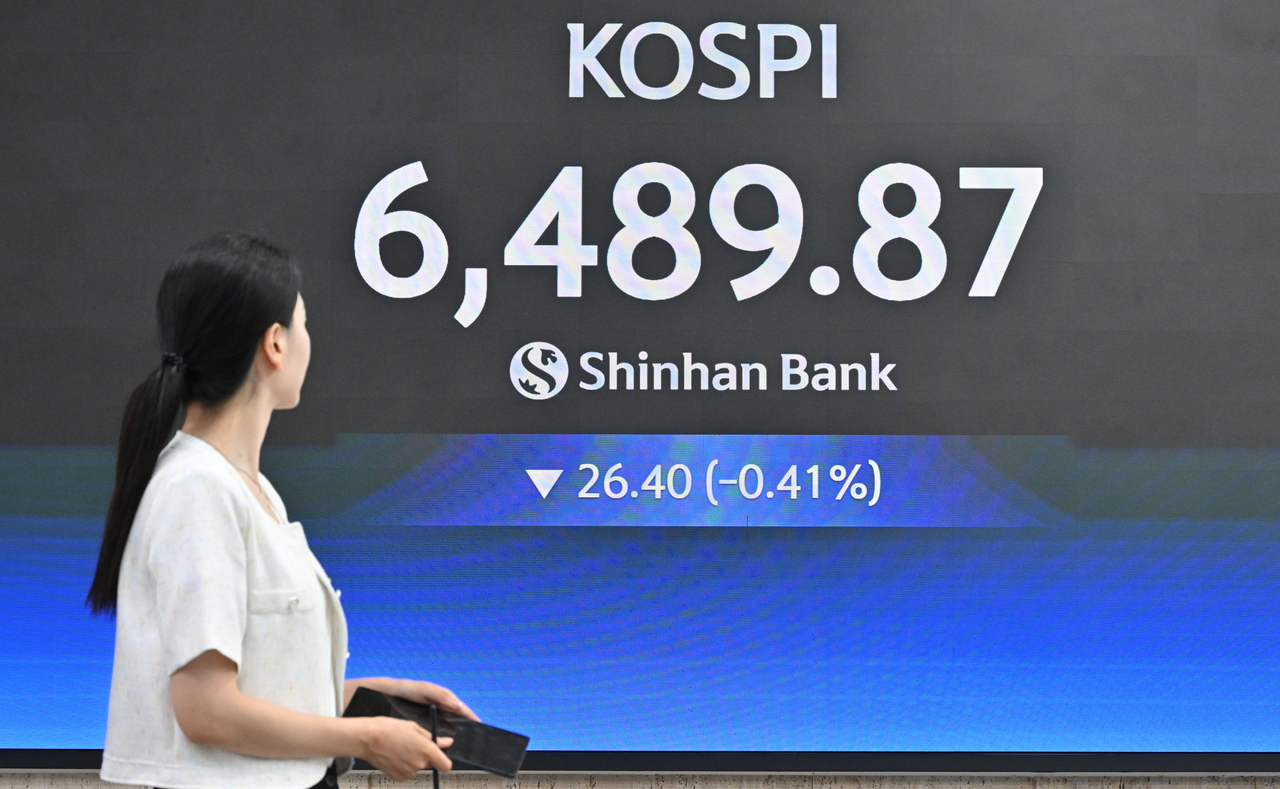
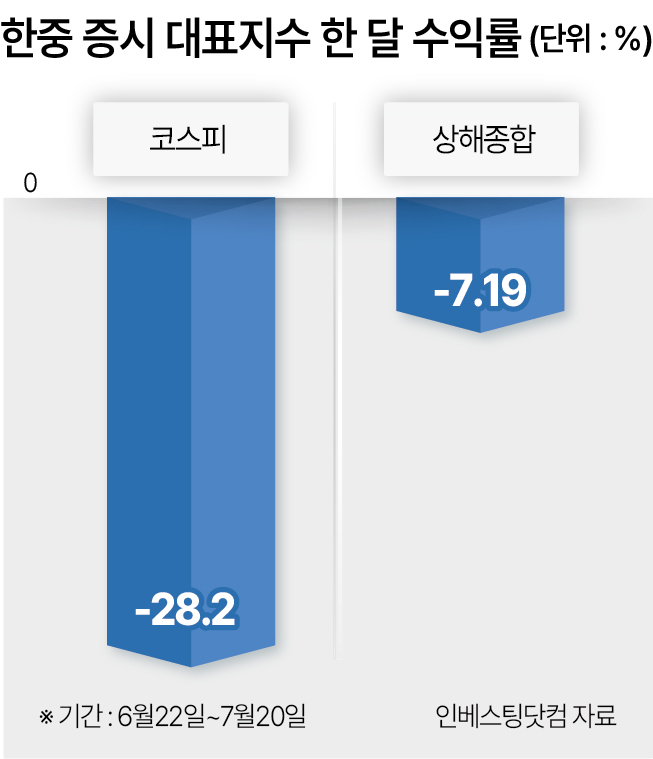
The Kospi has surged about 51 percent since the start of the year, the strongest gain among major global markets. The steep run-up has also meant sharper pullbacks during recent corrections. According to Investing.com, the Kospi has fallen 28 percent over the past month, while the Shanghai Composite dropped just 7 percent over the same period.
Analysts expect the favorable backdrop for Chinese markets to persist. Citi said that while recent Chinese economic data came in below market expectations, additional stimulus measures should drive a recovery.
Domestic brokerages also lean toward continued capital inflows into Chinese markets in the second half. Kim Gyeong-hwan, a researcher at Hana Securities, said "the trend of capital flowing into Chinese markets is likely to continue in the second half, given the relative expected returns of Chinese assets, the movement of excess liquidity, and the policy stance."
The rise of Chinese technology companies is also seen as a key factor boosting the investment appeal of Chinese equities. The rapidly growing competitiveness of Chinese tech firms, particularly in AI, has added pressure on the domestic market as well.
Last week, Chinese AI startup Moonshot AI unveiled its AI model Kimi K3, triggering a broad selloff in global semiconductor stocks. Park Jae-hwan, a researcher at Eugene Investment & Securities, said "the market interpreted K3 as a 'DeepSeek moment 2.0' — a low-cost challenger to US models — reigniting concerns about overinvestment in AI infrastructure."
As competition among Chinese big-tech firms intensifies, a wave of major IPOs is also in the pipeline. CXMT, the world's fourth-largest DRAM maker, and humanoid robot company Unitree are both pursuing listings on China's STAR Market in July or August. AI startup DeepSeek is targeting a STAR Market IPO in the second quarter of next year. Moonshot AI has also said it plans to list on the Hong Kong Stock Exchange within six months.
Park Su-jin, a researcher at Mirae Asset Securities, said "the long-term investment appeal of the semiconductor and AI infrastructure value chain on China's mainland market, and of big-tech companies with AI agent and application service ecosystems on the Hong Kong market, will become increasingly prominent."

moon@heraldcorp.com