![Flutist Cho Seong-hyeon and pianist Moon Jae-won [The House Concert]](https://wimg.heraldcorp.com/news/cms/2026/07/21/news-p.v1.20260721.bdc0f409cdbf477b95d06b54d3037889_P1.jpg)
A melancholic melody traces a downward arc, singing of lyrical stillness in a wistful timbre. Daehangno has quietly become the heart of a Paris at dusk. The moment that somber opening phrase sounds, a tinge of sorrowful murkiness seeps into a clear, milky tone — and the audience holds its breath. It was Poulenc's Sonata for Flute and Piano, performed by Cho Seong-hyeon and pianist Moon Jae-won.
The distance between stage and audience is barely a meter. The vibration of the instruments travels through the wooden floor; even the players' exhaled breath is absorbed by the body. With only a little exaggeration, this is the most charged chamber music scene in South Korea.
"Wind instruments require a lot more attention to detail," Cho said. "Because the audience is so close, I was mindful from rehearsals onward that my breathing wouldn't interfere with the listening experience."
For flutist Cho Seong-hyeon, The House Concert feels like a second home. He served as a resident musician there in 2021, meeting audiences through solo and chamber recitals. He had taken the stage there many times, but this year marked his first appearance at the July Festival — the venue's signature summer event.
Meeting recently in Daehangno, Seoul, Cho said the July Festival had somehow always eluded him despite his long association with the venue. "I was a resident musician, and I've played many concerts there, but the July Festival and I just never seemed to connect," he said. "The House Concert stage always feels special — and nerve-racking."
'Chamber music is music you listen to' — brothers share a stage for the first time
From backstage comes the sound of wind players tending to their instruments — a place where every raw, unpolished sound coexists. That fleeting rustle only deepens the audience's anticipation for what comes next. The final, long-awaited set: Poulenc's Sextet.
Among the musicians walking out at an unhurried pace, two faces stand out for their striking resemblance. One is Cho Seong-hyeon's younger brother, bassoonist Cho Gwang-hyeon. Cho Seong-hyeon had in fact assembled the ensemble himself.
The month-long July Festival features between 200 and 250 performers each year — from duos and trios to orchestras of 50 to 60 — not counting solo recitals. Kang Seon-ae, artistic director of The House Concert, said festival preparations begin a full year in advance, starting with choosing a theme. "For chamber music, we tend to leave the lineup to the lead performer," she said. It is, in a sense, one of the privileges the July Festival extends to its musicians.
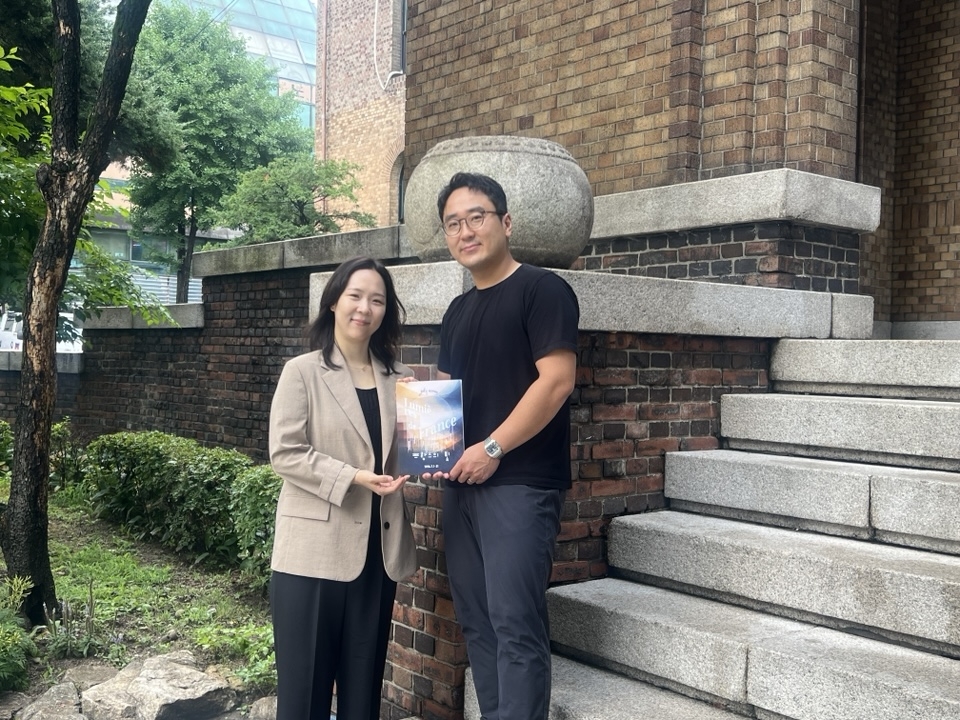
Cho described the ensemble as a group of close friends — junior musicians he had known since his student days abroad, along with members of the Going Home Orchestra. "In chamber music, you can't just push your own ideas and expect great music to come out," he said. "We know each other's playing so well that I'm genuinely excited." His younger brother is among the musicians he trusts most. "Honestly, my brother didn't want to do it with me," Cho said with a laugh. "I think it's because I've been giving him lessons — unofficial ones — since we were kids, and he was a bit reluctant."
This year's July Festival theme is France. After several years of a composer-focused series, the festival has returned to its "country journey" format.
"Poulenc is the composer who shows the colors of French music most compellingly," Cho said. "The flute has no reed, so the sound spreads freely — it's the instrument best suited to expressing the palette and texture of French music."
Cho's flute renders Poulenc's nuances with a dreamlike chiaroscuro, like frost settling softly on a clear pane of glass. His Poulenc is never overstated. "In the past, I used to exaggerate my gestures and phrasing to make it sound more French," he said. "Now it's the opposite. I've come to understand that the hallmark of French music isn't forcing a French atmosphere — it's a naturalness that follows the flow of harmony and color." Perhaps for that reason, even dissonance becomes beautiful harmony in his playing, and wit coexists with sadness and shadow.
The July Festival — and The House Concert more broadly — is an unforgiving stage for performers. Every momentary slip, every small habit, is caught. That is part of what Cho means when he says the stage always makes him nervous. The same note must be played differently each time; the same dynamic must be recalculated. Because even the sound of breathing reaches the audience, every breath becomes part of the music.
"I thought a lot about how to create a sound that fills the space rather than one that pierces the listener," Cho said.
![Flutist Cho Seong-hyeon (left) and his younger brother, bassoonist Cho Gwang-hyeon (second from right), at their first chamber music performance together [The House Concert]](https://wimg.heraldcorp.com/news/cms/2026/07/21/news-p.v1.20260721.de2add2be37a4a47be50c98572779a78_P1.jpg)
'We have to do it even if tickets don't sell' — a gathering place devoted to music alone
Every summer brings a wave of music festivals. There are prestigious events headlined by star soloists, top-tier orchestras and celebrated conductors — but the July Festival is different from all of them. Kang calls it an "exploratory festival."
The July Festival is not simply a showcase that books famous performers around a theme. It unearths little-known repertoire and matches each work with the musician best suited to play it — which is why preparation takes so long. "Once we settle on a country, we comb through its composers and works exhaustively," Kang said. "We look for the unknown, then find the ideal performer to match."
Until last year, the festival ran a composer series. In its final year before the theme shift, it spotlighted Stravinsky and Shostakovich. Unfamiliar performers, programs and composers are a tough sell at any music festival — and ticket sales swung wildly as a result.
"When we focused on 20th-century music, audiences found it difficult, and ticket sales fell by more than half compared to the years we centered on Schumann and Schubert," Kang said. "But we can't just stick to the familiar." She added that The House Concert's identity lies not in repeating popular miniatures that can be heard anywhere, but in broadening the musical horizons of both performers and audiences by unearthing unfamiliar yet compelling repertoire.
Cho said he deeply identified with Kang's words. As a leader of the Going Home Project — a musician-led orchestra that includes pianist Son Yeol-eum and cellist Kim Du-min — he knows the dynamic well. "Depending on the program, ticket sales can swing anywhere from zero to a hundred," he said with a laugh.
"Sometimes I want to program something new, but then I think nobody will come, and I end up changing direction," Cho said. "I'm not really in a position to judge, but I do wonder whether audiences here are still a little unfamiliar with embracing something new."
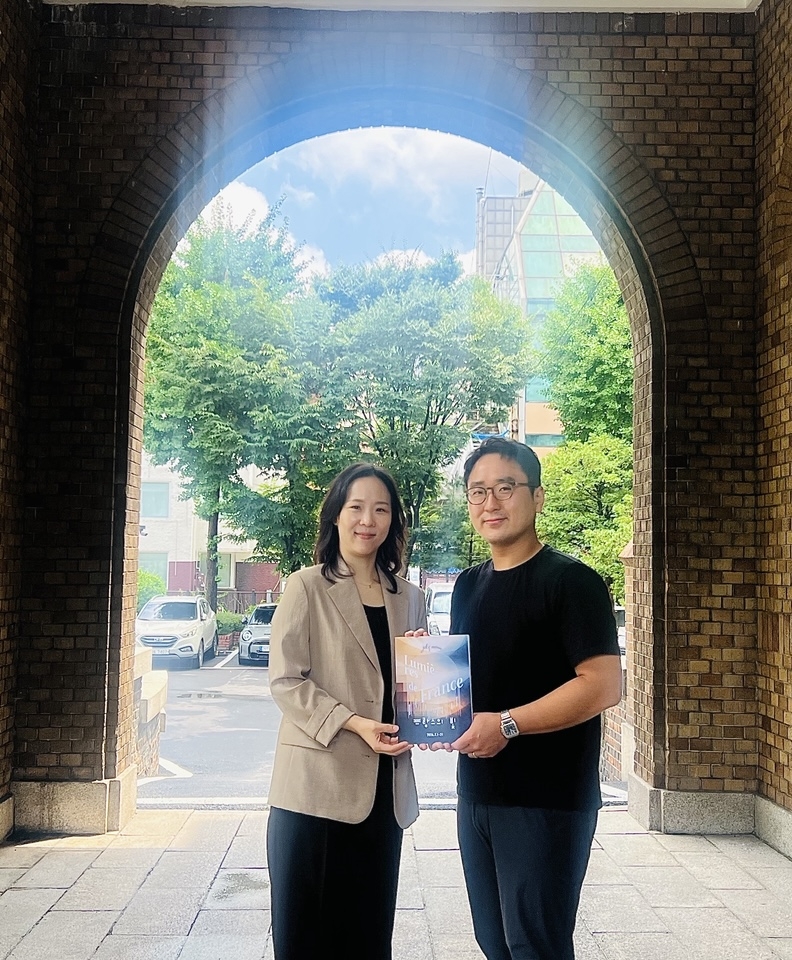
The greatest thing this stage offers performers, Cho said, is the ability to focus entirely on the music. "One of the most important things a musician can do is discover and perform new repertoire, and every time I look at The House Concert's program, I'm struck by how much genuinely new material there is," he said. "Performers share a backstage space and end up listening to each other play — it's a real learning experience."
This year's July Festival features a total of 220 performers. Kang said more than 30 percent are emerging musicians in their teens and 20s — and the pool of relative newcomers grows even larger when those in their 30s who have yet to make a name for themselves are included.
"If we were thinking purely about ticket sales and audience numbers, it would be safer to fill the lineup with established names," Kang said. "But we deliberately mix emerging and established performers. We hope there are moments when an audience member comes to hear a particular artist or piece and then encounters someone they've never seen before and thinks, 'Wow, they're really good.'"
Listening to Kang, Cho noted that South Korea's classical music market is largely fandom-driven — audiences actively seek out concerts by performers they follow, which is a strength, but the tilt toward star musicians and famous works is a shame. "I hope there will be more stages dedicated to discovering new music and young performers," he said.
Here, audiences encounter an unfamiliar kind of pleasure. In a space where breath and tension are transmuted into music, there is no barrier between an unknown piece and an unknown face — only the music remains. Having witnessed this countless times, Cho believes audiences do not dislike new music; they simply have not met it yet. The two share the same hope. The July Festival is not only about discovering new works and unheralded performers — it is also about waiting for ears that have not yet opened.
"I hope people will approach things with a little more curiosity — whether it's new repertoire or an emerging performer," Kang said. "Rather than judging a musician by competition results, I'd love to see a culture where people become curious about someone's music from an early age, follow them, and watch them grow. That naturally leads to more audiences open to new things, and I think that's ultimately a step forward. In that sense, The House Concert wants to be a kind of gathering place — a salon where that can happen."
shee@heraldcorp.com