![[Generated with ChatGPT]](https://wimg.heraldcorp.com/news/cms/2026/07/22/news-p.v1.20260722.10136cfcc16c4549aadea4765c803210_P1.png)
— This rice, I mean.
— What about it?
— This precious rice given to us. I think we need to get permission before we eat it. Pastor Joo.
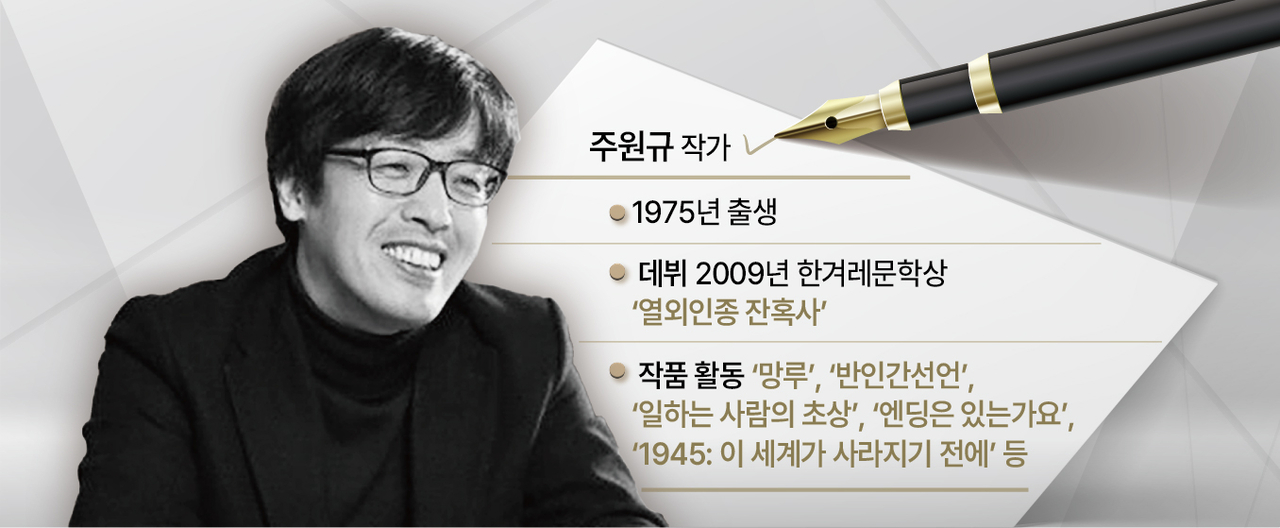
Pastor Kim had gotten along just fine for seven years before he came to me one day with this subject. He and I shared a peculiar bond. We were the same age — that alone made us unusual. We also both came from relatively small, minority denominations in a landscape dominated by large Methodist and Presbyterian churches. We had been ordained at the same time, and neither of us ran anything resembling a growing congregation.
After that, our paths diverged. Pastor Kim declared, as if making a proclamation, that a minister must devote himself solely to the sacred calling of ministry — a remark that seemed like a quiet rebuke of me for continuing to work as a writer on the side. He went on to run a micro-congregation of fewer than 20 members for 16 years. I earned a living through writing while running a similarly tiny church for the same stretch of time.
Neither life nor the path of ministry had been without fault. Religion — Christianity and the church in particular — was clearly on a downward slope as AI spread and humanities programs multiplied. Pastor Kim and I, irreverent as it may sound, had to wrestle with questions of survival: whether to keep our churches going, whether to shut them down, and if so, what we would do to get by — how to lift the rhythm of the years ahead so they would not feel simply sad. It was against that weighty backdrop that Pastor Kim's remark about needing permission to eat felt, in its timing, strangely apt.
What made it all the more striking was where the conversation happened: an early evening at a restaurant, the two of us having worked up a decent hunger. A steaming stone-pot rice bowl sat in front of us, and Pastor Kim launched into his meditation on rice without even pausing for grace — skipping the religious ritual entirely. In moments like that, the writer's instinct in me tends to sharpen. Sixteen years, after all. They say a decade is enough to change the landscape; surely 16 years of ministry, even in a small church, had built up some depth of spiritual insight. That was my assumption.
But the conversation that followed took on an entirely different character. The opening exchange, unfiltered, went something like this.
— You know what, Pastor Joo?
— What?
— The fact that we eat three meals a day. That is something profoundly sublime.
— Eating three meals a day is sublime?
— The reason our bodies can hold on, day after day, is this profoundly sublime daily bread.
— Are you talking about gratitude toward God?
— I didn't say that. I'm talking about something very ordinary.
— All right. It is something to be genuinely grateful for in everyday life. But —
— But what?
— Calling it sublime goes too far.
— No, I don't think it goes too far at all.
— If you're not talking about gratitude toward God, how is it not too far? It is. And even from the perspective of gratitude toward God, it still goes too far.
— Why do you think that?
— Pastor Kim. Listen. Saying that eating — eating three meals a day — is sublime feels like it casts our entire lives in, I don't know, too religious a light.
— No. Sublime doesn't have to mean religious.
— It doesn't have to be religious, but it can certainly come across that way. Quite easily.
— So it feels like too much? Fine. Even if you think it's too much, I can't help it.
![[Generated with ChatGPT]](https://wimg.heraldcorp.com/news/cms/2026/07/22/news-p.v1.20260722.5bfb1c2ad72845d1853dd3a876cae6d8_P1.png)
— Of course, since we're both ministers, maybe we can't afford to say it feels like too much. But still — calling it sublime seems a step too far.
— And yet, Pastor Joo. However you look at it, eating three meals a day, our daily bread — it is sublime. Profoundly so. Which is why I have a proposal.
— All right. Fine. So what is this proposal?
— This rice, I mean.
— What about it?
— This precious rice given to us. I think we need to get permission before we eat it. Pastor Joo.
"Get permission?" I turned the phrase over in my mind for a brief moment. I tried to recall whether our religious tradition used the language of seeking permission as an expression of gratitude — toward God, or toward the meal itself. But either my knowledge of theology was too thin, or no such expression existed; nothing came to me. I wanted to ask whether Pastor Kim was proposing some kind of new religious program. But the conversation drifted, against my wishes, in a completely different direction — something closer to a rudderless drift, a conflict without a clear destination, unable to find its footing.
— Because it is sublime, from now on, even if it's just one meal, we should get permission before we eat.
— Permission? From whom? From God?
— No, I told you, I'm not talking about religion.
— Then … from whom? Symbolically, from the farmers who produced this rice? Or from the state, for making it possible for us to eat in peace?
— Pastor Joo. The point I'm trying to make is somewhere else.
— And what is that point?
— Who you need to get permission from isn't the important part.
— Then what is? You're saying that only by getting permission can this sublime feeling be minimally resolved or addressed?
— Two questions come to mind.
— Two whole questions? Go ahead.
— First, I still don't understand why we need to get permission at all. Second, if this isn't about getting permission from God, I want to know who we're supposed to get it from.
— …
— Pastor Kim. Why aren't you answering? Why are you just staring at me?
— Those two questions of yours, Pastor Joo, are rude.
— What's rude about them? How are they rude?
— In the face of something sublime, those two questions are far too reductive.
— I don't see what's reductive about them. So I'm just not supposed to ask questions?
— No, Pastor Joo. Don't react like that.
— I'm not reacting emotionally at all. I'm simply asking why I need to get permission to eat three meals a day, and who exactly I'm supposed to get that permission from. Is that wrong?
— You're right, you're right. But what doesn't change is that permission must be obtained before the three meals can be eaten.
— That's exactly what I'm asking. Who is it that we need to get this permission from?
The fresh vitality of the stone-pot rice had long since faded. In the quiet restaurant, the owner watched us with a look that seemed to ask what on earth we were talking about — two men who hadn't lifted a single spoonful. Sixteen years ago, a conversation like this between Pastor Kim and me would have had a clear purpose and direction. It would have been religious, attuned to the so-called sublimity of what we each did, and it would have unfolded as a fairly spirited debate on that very theme.
But after 16 years of ministry, the exchange between us — though it had the outward appearance of a Zen riddle — left no lasting resonance. It was like a steamed bun with no filling: the substance was missing, or perhaps both of us were trying to sidestep it. We both knew it, clearly. And yet the conversation continued, and the stone-pot rice grew colder with every passing minute. The weight of 16 years of religious life, of living itself, seemed to be cooling just as quickly.
carrier@heraldcorp.com