![A scene from the drama series "Severance." After undergoing the severance procedure, a person's work memories and personal memories are completely separated — during office hours, they become an entirely different self with no access to their everyday memories or emotions. [CJ ENM]](https://wimg.heraldcorp.com/news/cms/2026/07/23/news-p.v1.20260723.88baa2e2a4df4b69ade4b63cc7d2a334_P1.jpg)
Mark, consumed by grief after losing his wife, undergoes the "severance" procedure offered by Lumon Industries to escape his sorrow. The operation completely separates his work memories from his personal life. The moment he steps into the elevator and descends to the office floor, he becomes a different self — his "innie" — and for the duration of the workday, he has no memory of his wife's death. During those hours, grief and loss belong to someone else entirely.
Another man seeks to erase the memory of someone he loved. Joel discovers by chance that his ex-girlfriend Clementine has had every memory of him wiped through a procedure. Shattered, he decides to do the same — to remove Clementine from his mind. But as the process unfolds, he finds not only the painful moments but also the blindingly happy ones. Ultimately, Joel reaches for Clementine's hand inside his own memory and tries to run, desperate to hold on to the time they spent loving each other.

"Severance," which swept eight Primetime Emmy Awards last year, and the classic romance "Eternal Sunshine of the Spotless Mind" (2004) use different methods but share the same premise: that memories can be manipulated. The idea of erasing or altering memories is a recurring device in Hollywood blockbusters — from "Total Recall" (1990) and "Men in Black" (1997) to "Inception" (2010). What matters now is that this kind of memory manipulation is no longer confined to science fiction or fantasy.
In his book "How to Change a Memory," world-renowned neuroscientist Steve Ramirez argues that the memory manipulation Hollywood has long imagined is being realized in real life with far greater precision. His exploration spans from the "engram" hypothesis — proposed a century ago by German zoologist Richard Semon, who argued that memories leave physical traces in the brain — to the present state of neuroscience, where tools such as optogenetics are used to actually alter memories.
After being accepted into MIT's doctoral program, the author joined the laboratory of Nobel Prize-winning physiologist Susumu Tonegawa, who studies the biological basis of memory. There he met his mentor, Xu Liu, and gradually became involved in memory manipulation research. Drawing on the work of 20th-century scientists and neuroscientific tools that control brain cell activity, the two successfully completed "Project X" in 2012 — reactivating fear memories in mice placed in a safe environment.
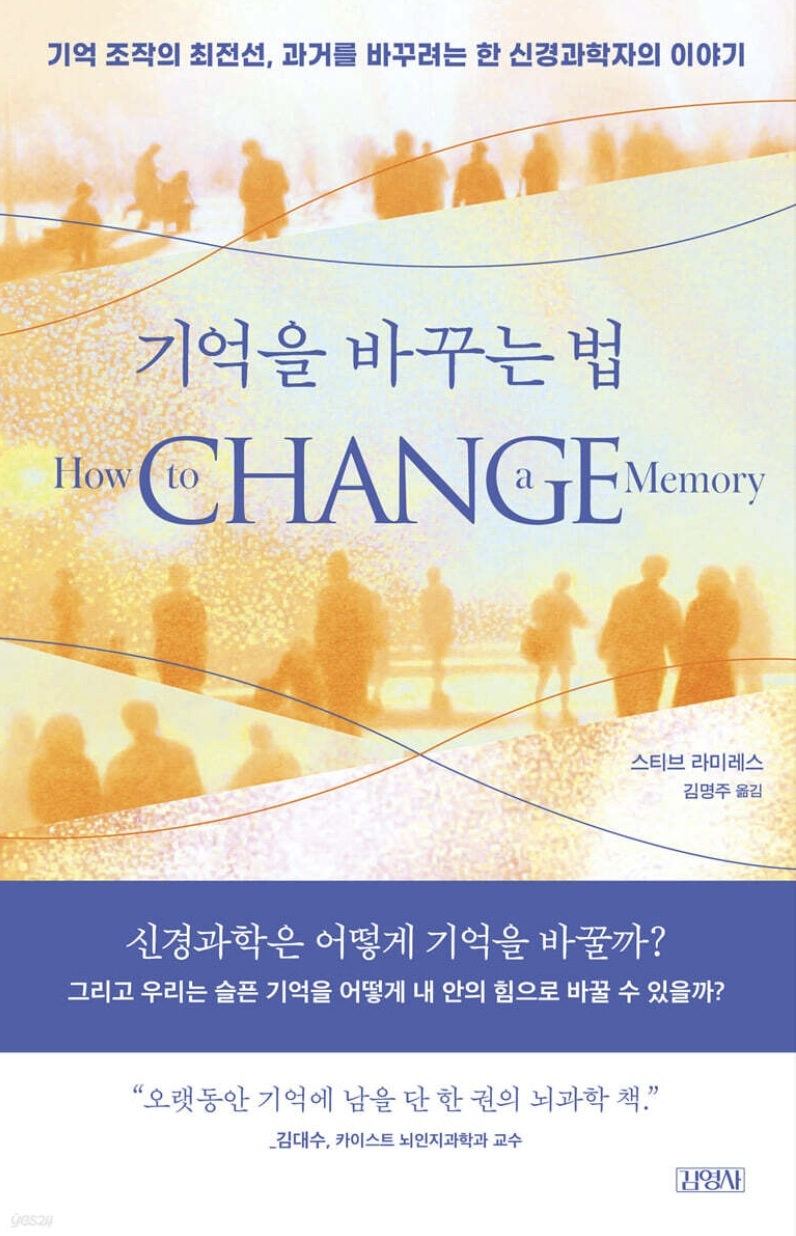
They then succeeded in "Project Inception" — implanting false memories in mice — followed by a series of projects that activated positive memories to reduce depression and anxiety, cementing Ramirez's standing as a leading researcher in memory manipulation. "The neuroscientist's toolkit has become so sophisticated," he writes, "that the question is no longer whether we can manipulate memories, but what kinds of memories we can manipulate and for how long."
Memory is not merely a record of the past. Even when imagining something that has not yet happened, we draw on past memories to picture how events might unfold. In the author's words, "The grains of memory are used not only to build the world of the past, but to construct every possible sandcastle for tomorrow." That raises a question: when a future we believed was certain suddenly becomes impossible, how does the brain respond?
Integrating the fact of someone's death into the world as we understand it is not a simple process. The brain struggles to let go of its previous hopes, creating a dissonance with reality. It takes time to fit the real world back into the mind's expectations.
The author experienced this dissonance firsthand when his mentor died suddenly. After more than a decade of struggling with alcohol addiction and surviving a near-death experience, he chose to redraw the map of his life not around the grief of loss but around the precious memories they had shared. He recalls something Xu Liu once said during a conversation about memories one might wish to erase: "Both the good memories and the bad — they are all me."

"What matters is not deleting a memory, but forming a new relationship with it," the author writes, adding that "when we transform the memory of a negative experience into an opportunity to reclaim a sense of agency, profound change becomes possible." Because memory is in constant flux, even a wounded memory can become the key to recovery.
The author also grapples with the ethical implications of memory manipulation technology. "If we know memory has the power to change lives, that power must be used for good — to make human life better," he writes. While countless science fiction works have depicted dystopian futures born of memory manipulation, he believes a future in which the technology treats depression, anxiety and dementia is entirely within reach.
"Memory editing is an inevitable tide, and this technology can be put to beneficial use in society," the author writes. "Just like medication administered responsibly, memory-editing treatment should be tailored to the individual and exist in a way that puts human beings first."
"How to Change a Memory" by Steve Ramirez, translated by Kim Myung-ju, published by Gimm-Young Publishers
balme@heraldcorp.com