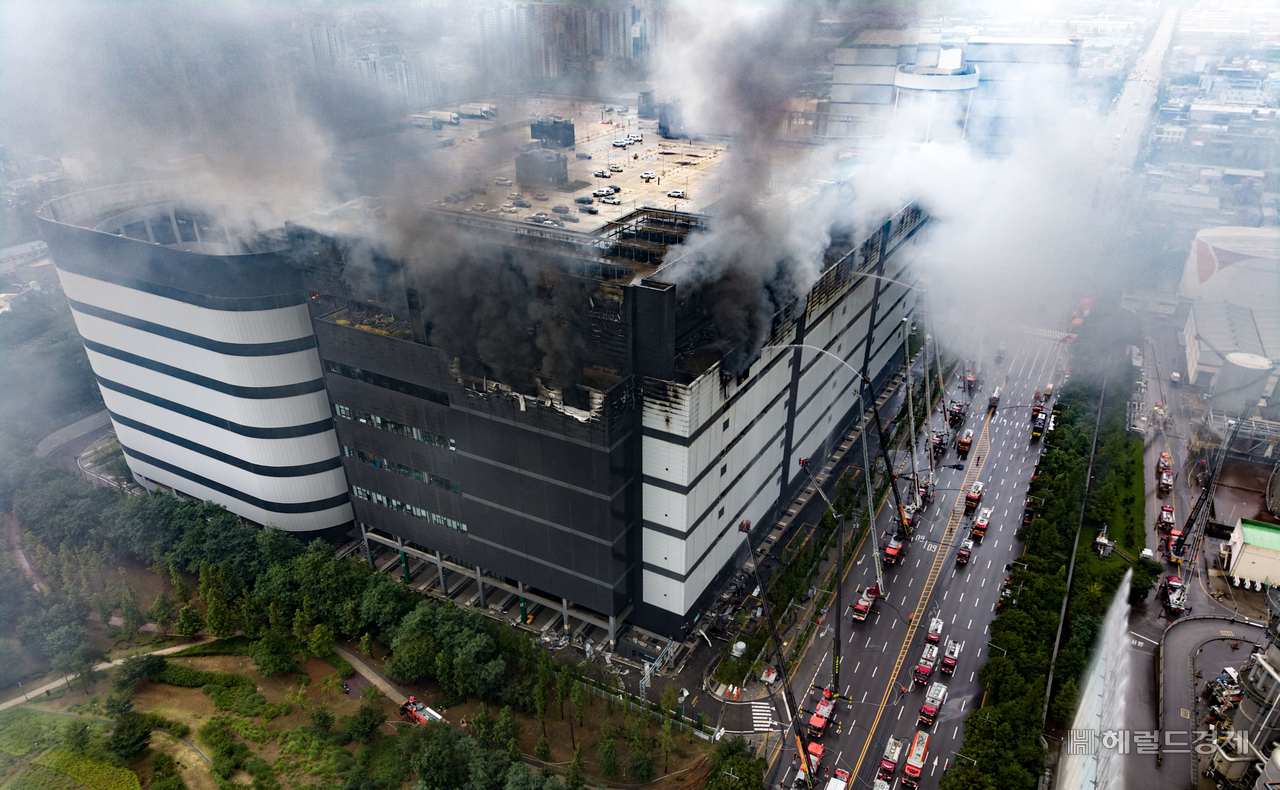
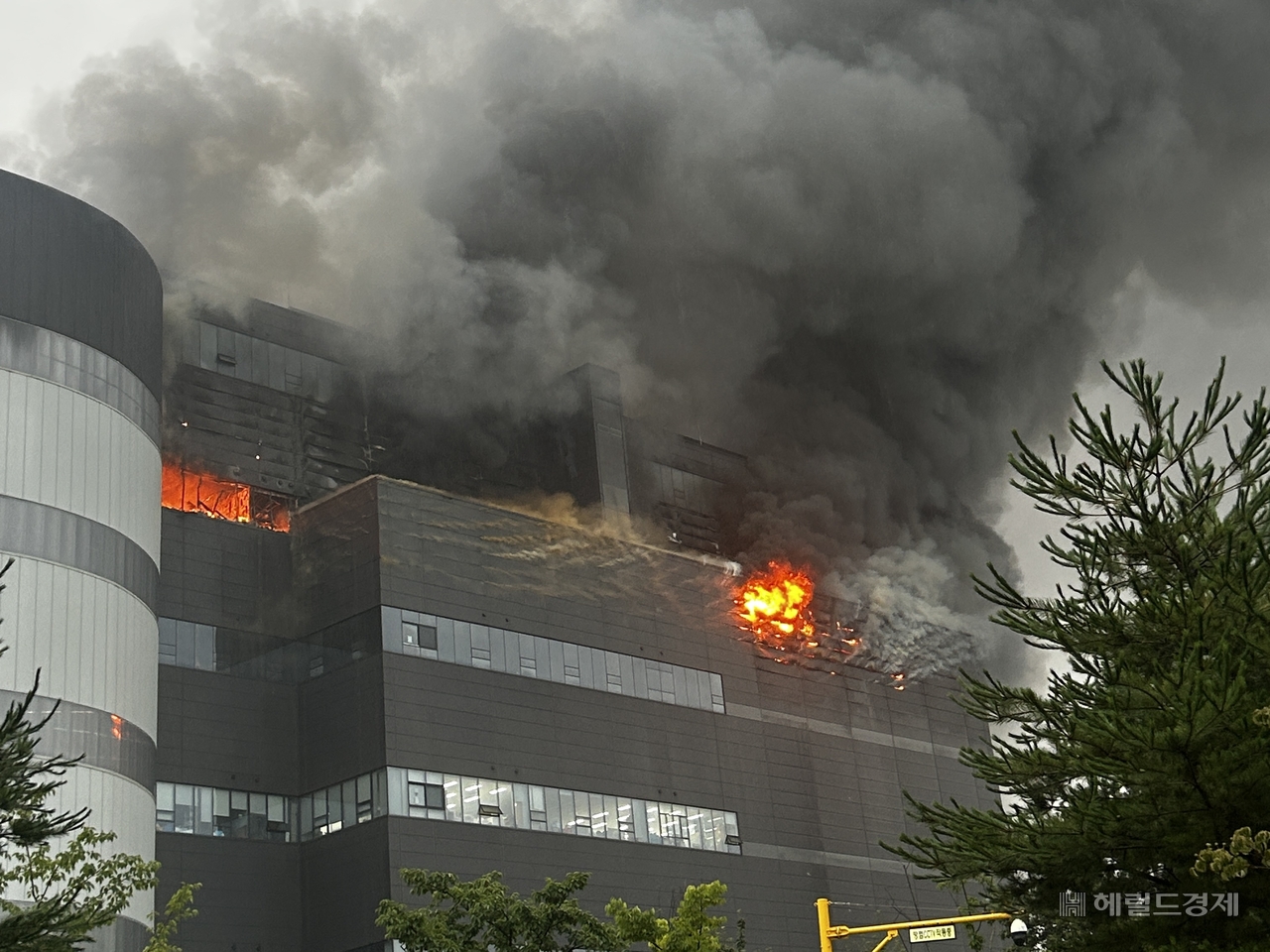
A fire at a Coupang Inc logistics center has been fully extinguished after burning for roughly 110 hours. The blaze ignited household goods stored on the sixth floor of the eight-story building, generating thick smoke and intense heat that made it nearly impossible for firefighters to enter.
The absence of large-drop sprinklers — now mandatory in warehouse facilities — was also cited as a factor that allowed the fire to spread. Fire authorities have begun preliminary work ahead of a joint investigation. An expert warned that the structural characteristics of logistics centers make fires easy to spread but hard to fight, underscoring the need for stronger fire prevention measures.
Fire out after 110 hours; joint investigation begins
An Incheon Fire Department official said Thursday that authorities plan to hold a preliminary meeting to discuss the schedule and methodology for the joint investigation. "We will coordinate schedules among the relevant agencies and discuss the process for technical review," the official said.
The fire broke out at 6:54 a.m. Saturday and was fully extinguished roughly 110 hours later. Fire authorities declared the blaze at Coupang Inc's Logistics Center No. 32 in Seohaegu, Incheon, fully contained at 8:35 p.m. Wednesday.
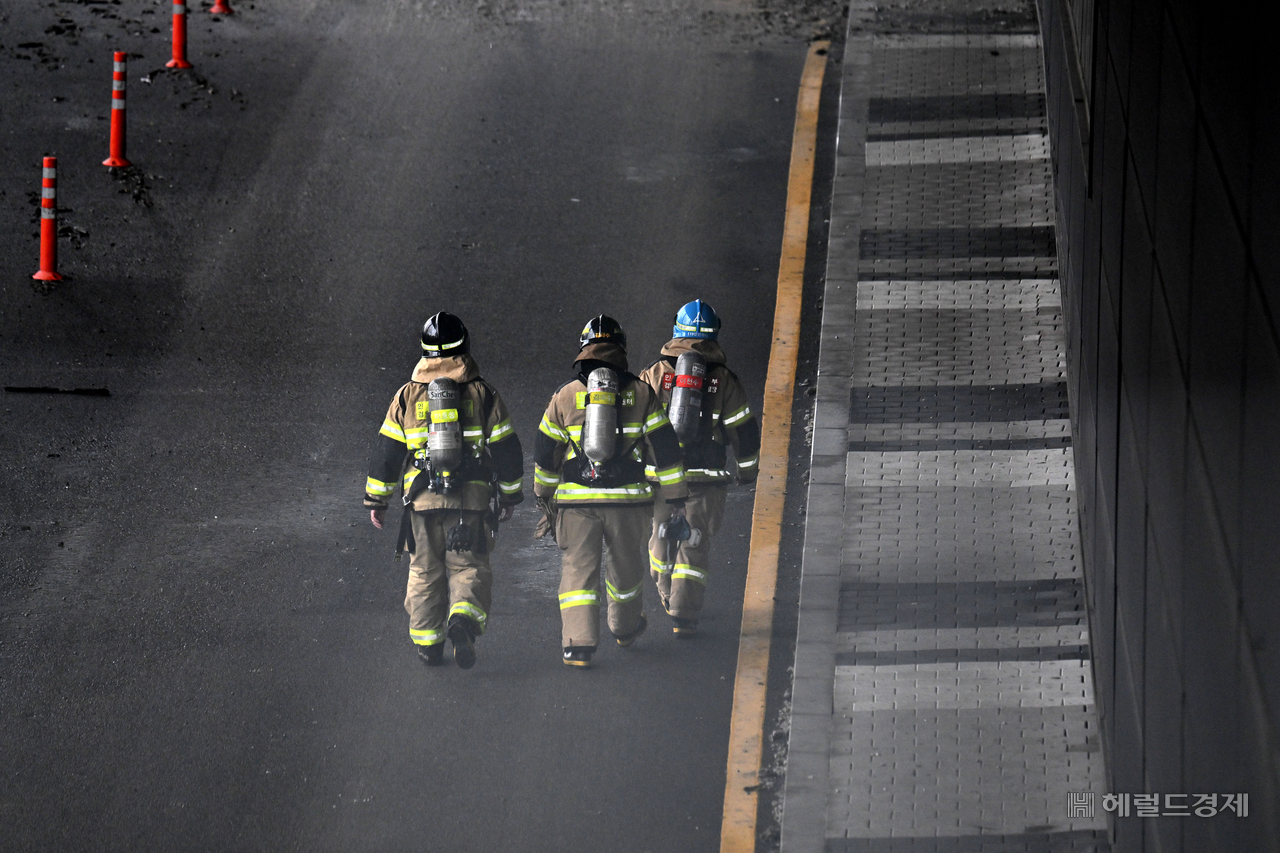
After initial suppression was completed around 8 p.m. Monday, firefighters entered the building to extinguish remaining flames. Once the main fire was brought under control, authorities conducted a safety assessment and a situation review before deploying firefighters inside the sixth floor from around 6 p.m. Tuesday.
Teams of four firefighters rotated in shifts — 16 in total — to locate and extinguish hot spots on the sixth floor, fully containing the fire after 109 hours and 40 minutes.
Fire authorities plan to form a joint investigation team with the National Fire Agency, the National Fire Research Institute and the Korea Electrical Safety Corporation to determine the exact cause of the fire and the extent of the damage.
The Incheon Metropolitan Police Agency has also formed a 35-officer dedicated task force for the Seongnam-dong Coupang Inc warehouse fire to examine the cause of the blaze and how it spread.
Fire covers area four times a soccer field; residents evacuated, schools closed
Over four days, a total of 845 personnel — including firefighters — and 239 pieces of equipment such as pump trucks were deployed to fight the blaze at the Coupang Inc logistics center.
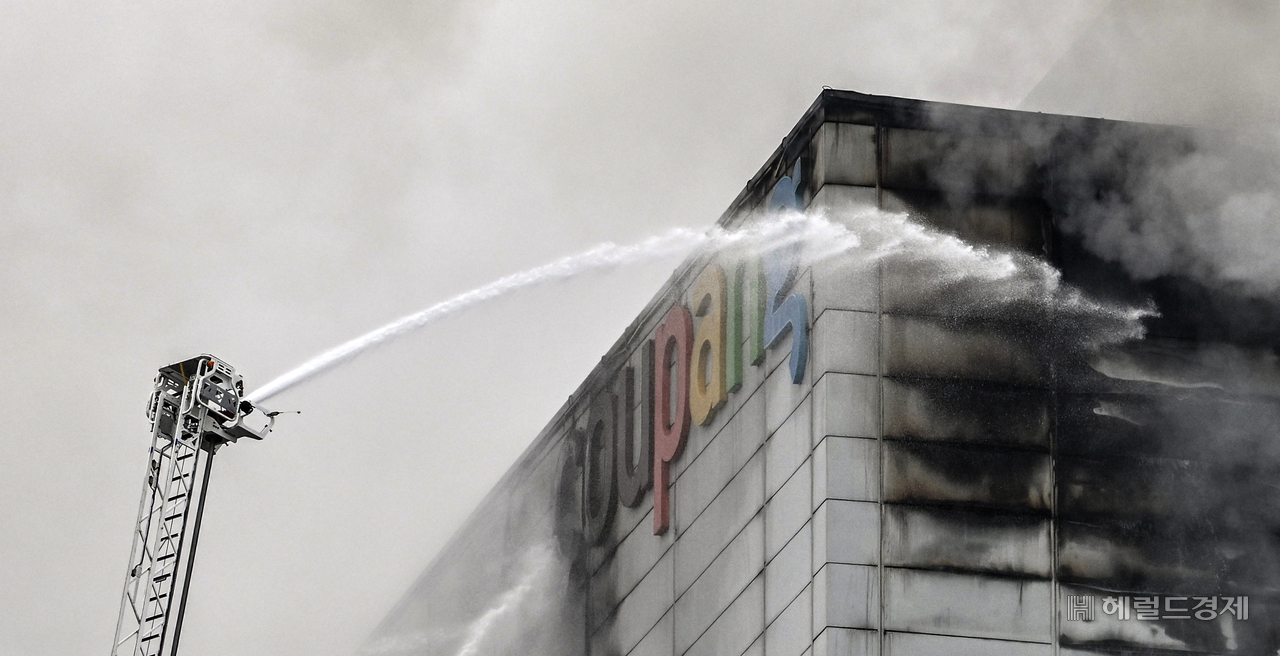
Logistics Center No. 32 has a total interior area of 28,000 square meters — roughly four times the size of a soccer field. Household goods and other items stacked three tiers high acted as fuel, producing thick, sustained smoke that severely limited visibility and access inside the building.
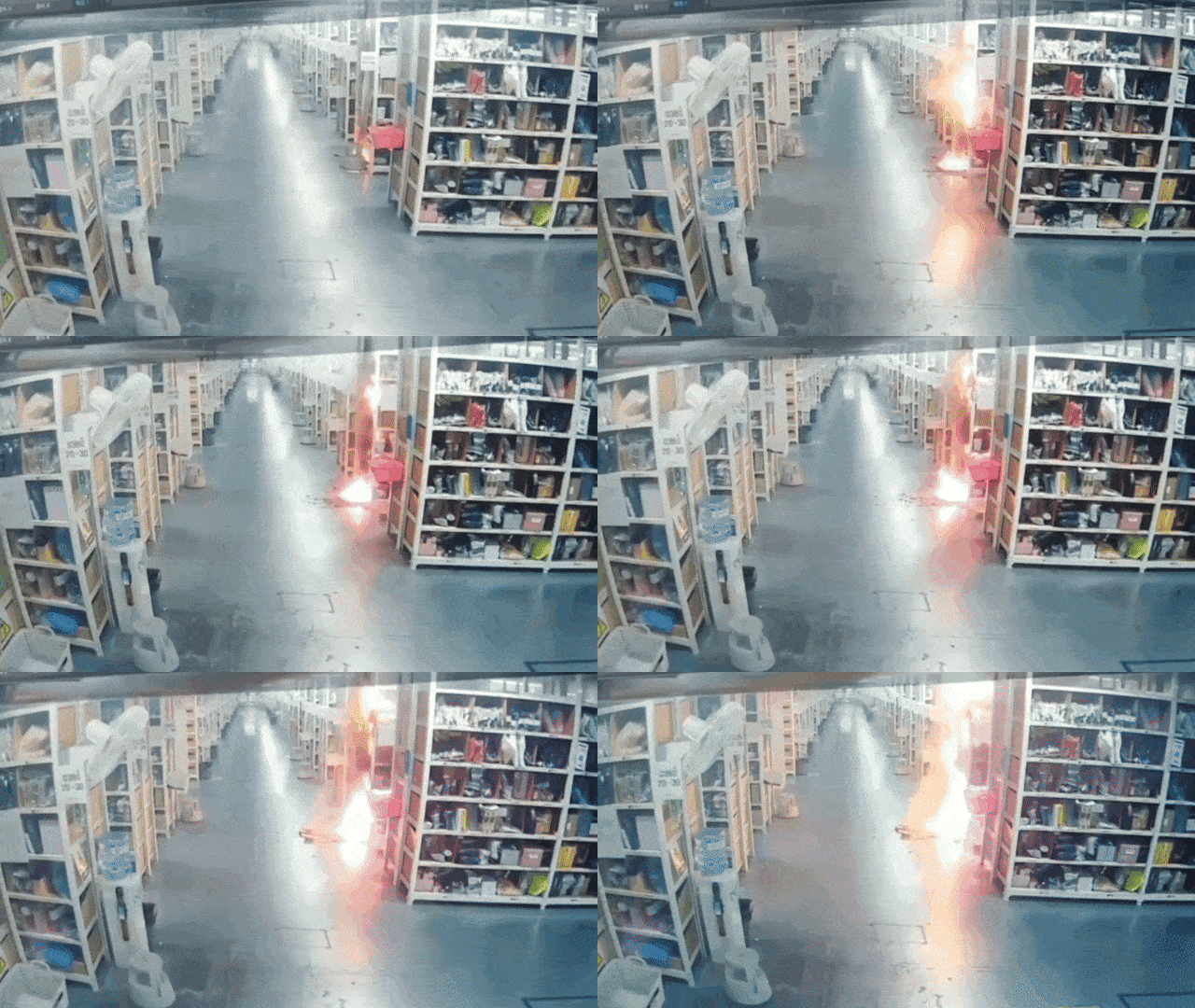
Experts said the structural characteristics of the facility made interior access extremely difficult. Kong Ha-seong, a professor in the fire and disaster prevention department at Woosuk University, said large quantities of combustible materials — cardboard boxes, plastic packaging, plastic products and textiles — are stacked on shelves inside logistics warehouses. "When a fire breaks out, the flames spread both vertically and horizontally along the shelving at rapid speed," he said.
Kong added that high ceilings and narrow aisles between shelves make it hard for firefighters to get close. "If a fire starts inside the shelving, the stored goods can block the water, making it likely that sprinkler heads mounted at the ceiling or at a fixed height cannot deliver enough water to reach the seat of the fire," he said.
Because interior access was impossible, firefighters fought the fire from outside until initial suppression was achieved, using aerial ladder trucks to approach the building and spray water from a distance.
Smoke from inside the warehouse poured out of the building. The acrid fumes were strong enough to irritate the throat, eyes and nose within 50 meters of the facility.
Authorities issued an evacuation order due to smoke hazards and the risk of the fire spreading. Residents within a 116-meter radius of the scene were required to leave their homes and take shelter at nearby schools. A total of 215 people from 141 households sought refuge at Sinhyeon Elementary School, Sinhyeon Buk Elementary School and Sinhyeon Girls' Middle School.
Nearby schools and daycare centers were also affected. The Seohaegu district office of Incheon said it recommended 31 daycare centers close on Monday, of which 14 did so, and that one nearby elementary school also suspended classes.
No large-drop sprinklers installed; experts urge circuit-breaker upgrades and sprinkler reform
The absence of large-drop sprinklers — now required by law for warehouse facilities — was identified as another factor that allowed the fire to spread. Sprinklers at Logistics Center No. 32 did activate during the blaze, but authorities believe the volume of water discharged was insufficient.
Following a series of major warehouse fires — including the blaze at Coupang Inc's Deokpyeong logistics center — fire authorities introduced new fire safety performance standards for warehouse facilities starting in 2024. The standards require the installation of large-drop sprinklers with higher water discharge capacity and additional sprinkler heads at intervals of no more than 3 meters along shelving height.
However, Coupang Inc's Incheon Logistics Center No. 32 received its building permit in 2020 and is therefore not subject to the mandatory new requirements.
Kong said improvements to sprinkler systems are urgently needed. "In large logistics centers with extensive shelving, stored goods can obstruct water flow, preventing sprinkler heads installed at the ceiling or at a set height from delivering enough water to reach the point of ignition," he said. "Depending on the type and height of stored goods, the shelf structure and the fire risk level, sprinkler heads should also be installed inside the shelving itself."
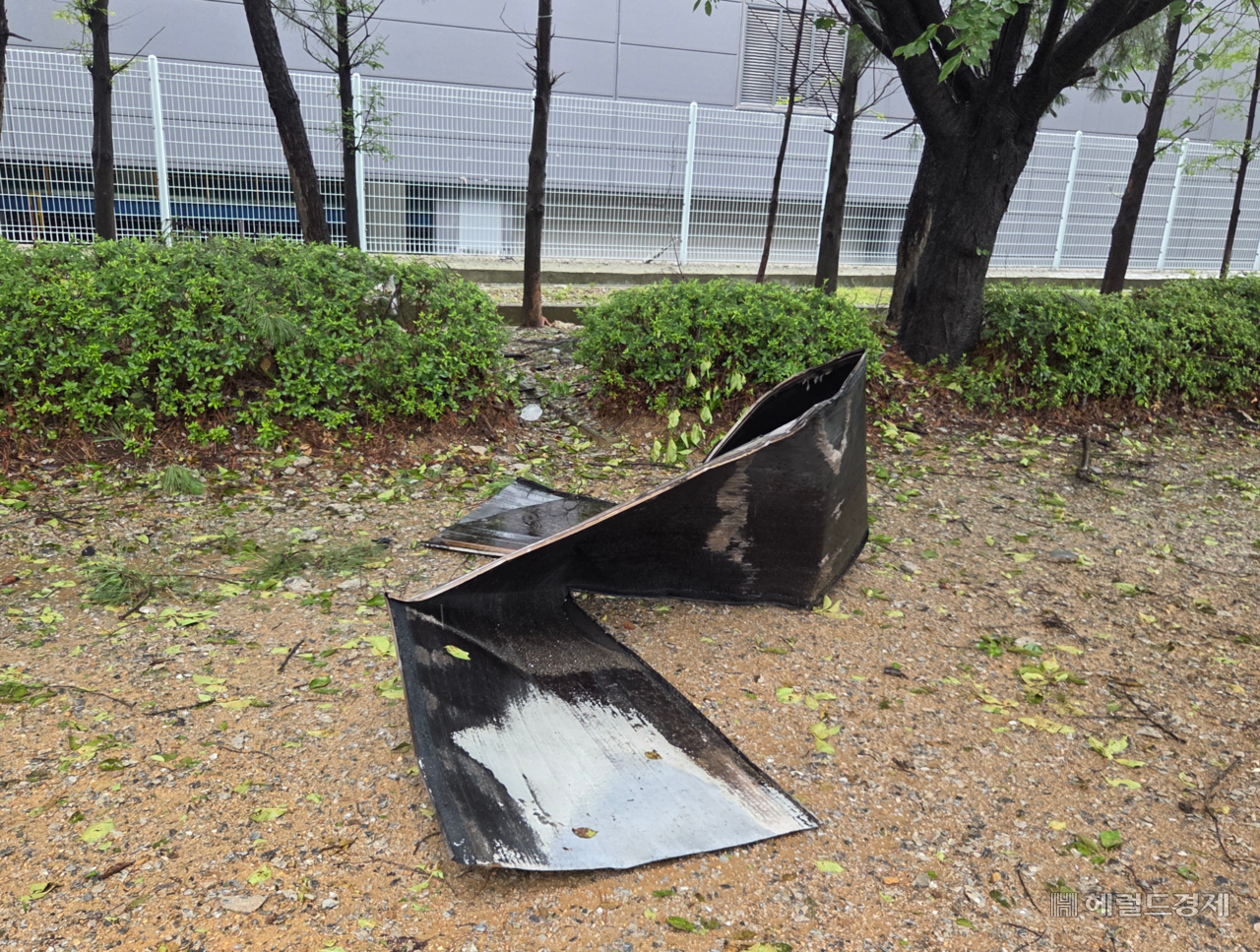
Kong also noted that the United States requires a comprehensive assessment — covering the hazard level of stored goods, stacking height, shelf arrangement and structure, ceiling height and the protective capacity of ceiling-mounted sprinklers — before determining the appropriate fire suppression method.
Kong said cutting off the source of ignition is equally important. "Logistics centers run automated sorters, conveyor belts, refrigeration and freezing equipment, delivery robots and various charging systems around the clock, making them prone to overloads, poor contact, insulation degradation and electrical arcing," he said. "Preventive measures for electrical systems must be strengthened first. Arc-fault circuit interrupters should be installed, and fire-suppression patches capable of containing early-stage fires should be attached to electrical outlets."
Coupang Inc pledges full compensation for sellers
Coupang Inc announced measures to address the fallout from the fire, pledging to fully compensate sellers whose inventory was lost. Coupang Fulfillment Services (CFS) said Wednesday it would proactively cover all seller inventory losses on its own account, without waiting for the fire investigation or insurance process to conclude.
The compensation covers not only inventory in the area directly affected by the fire but also goods stored in sections the flames did not reach — a measure CFS said accounts for the risk of secondary damage from delayed stock removal or soot contamination.
CFS said it plans to notify each seller individually of their compensation amount and expected payment date around mid-August, once the inventory count is complete. The company is also operating a dedicated Rocket Growth seller consultation channel and offering one-on-one support to handle inquiries.
"We are truly sorry to the sellers who have been caused anxiety by this unexpected accident," a CFS official said. "We will do our utmost to manage the situation on the ground and support residents, and we will take full responsibility to ensure our valued partners do not face business difficulties as a result of this incident."
20ki@heraldcorp.com