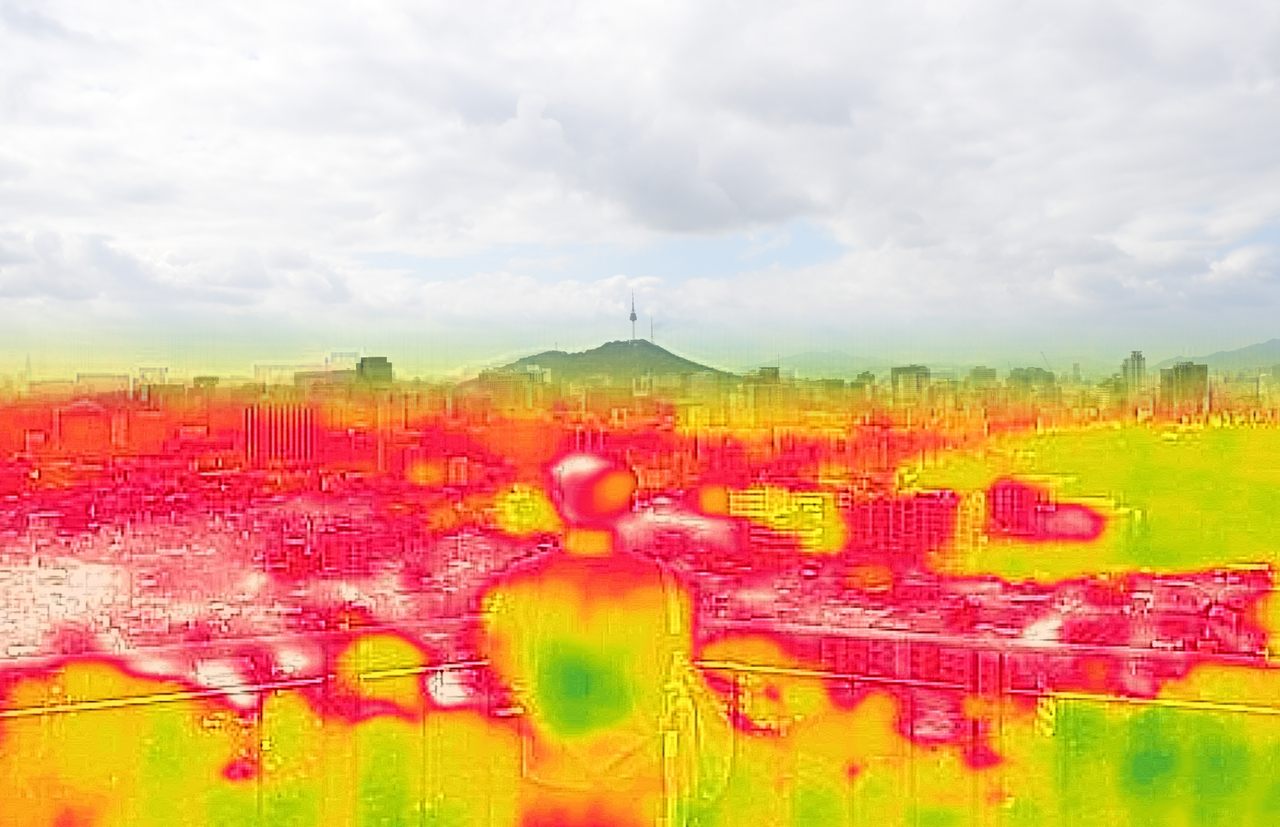
Heat waves in South Korea are now starting up to a month earlier than in the past, and tropical nights — when temperatures stay above 25 degrees Celsius — are stretching into early September, marking a significant lengthening of the sweltering summer season.
The Korea Meteorological Administration on Friday released a report analyzing temperature data from 66 observation stations nationwide covering 1973 to 2025, titled "Changes in the Characteristics of Heat Wave and Tropical Night Occurrence in South Korea."
The analysis found that South Korea's average summer temperature — measured from June through August — rose 0.28 degrees Celsius per decade over the past 53 years. The average summer temperature in 2025 reached 25.7 degrees Celsius, surpassing the previous record of 25.6 degrees set in 2024.
The most striking shift involves when heat waves and tropical nights begin and end.
In most parts of the country, heat waves over the past decade (2016–2025) started between 10 and 30 days earlier than they did in the first decade of the study period (1973–1982). In inland central regions including Seoul, Chuncheon and Cheongju, heat waves that once began in early to mid-July now arrive in late June or even early June — nearly a full month sooner. At the other end of the season, heat waves are ending about 10 days later on average across most of the country.
Tropical nights followed a similar pattern. Their onset shifted earlier by roughly five to 15 days while their end date moved later by 10 to 20 days. In Gangneung, the first tropical night of the year now arrives on average around June 21, compared with July 17 in the earlier period — 26 days sooner — while the last tropical night has shifted from Aug. 12 to Aug. 28, extending the season by about 40 days. Along the southern coast and on Jeju, tropical nights increasingly persist into early September even after heat waves have subsided.
Last year illustrated the trend vividly: Gangneung recorded its first tropical night of the season on June 18, while Gwangju and Daejeon both logged their earliest-ever tropical nights in mid-June. In Seogwipo, tropical nights continued through Oct. 13 last year, the latest on record.
The Korea Meteorological Administration said the findings align with the widespread public perception that summers have been growing longer in recent years.
Heat waves and tropical nights both becoming more frequent
![A chart showing the annual number of heat wave days and tropical night days nationwide by month (May–September) from 1973 to 2025. Values and shading within each cell indicate the number of days recorded; figures in parentheses on the vertical axis represent the monthly climatological normal (1991–2020). [Provided by Korea Meteorological Administration]](https://wimg.heraldcorp.com/news/cms/2026/07/24/news-p.v1.20260724.6ccbd7be66ca4e3f8ab6d55c5e6e4e03_P1.png)
The frequency of heat waves and tropical nights has also risen sharply.
Over the past decade, South Korea averaged 18.3 heat wave days per year — about 2.2 times the 8.3-day average recorded in the earliest decade of the study. Tropical nights averaged 12.2 days per year, roughly three times the earlier figure of 4.1 days. Seven of the 10 years with the most tropical nights on record fall within the past decade. The 24.5 tropical nights logged in 2024 were about 1.5 times the previous record of 16.8 days set in 1994.
By month, August still sees the most heat wave days, but June has shown a clear upward trend, confirming that intense heat is now arriving at the start of summer. Tropical nights have increased most sharply in July and August, and September tropical night counts in both 2024 and 2025 ranked first and second all time.
The Korea Meteorological Administration attributed the changes to rising temperatures combined with an earlier expansion of the North Pacific High pressure system. In recent years, the high has been pushing northward to cover the southern part of the Korean Peninsula as early as June, drawing in hot, humid air and advancing the onset of heat waves. The high's influence has also been persisting through late August, and rising sea surface temperatures in surrounding waters have created conditions that sustain tropical nights along the southern coast and Jeju well into September.
The agency warned that earlier heat waves and later tropical nights raise the risk of heat-related illness and are likely to drive up cooling demand while causing damage to agriculture, livestock and fisheries. It said heat wave response policy needs to be updated to reflect the shift in when extreme heat now occurs.
"The Korea Meteorological Administration has been strengthening public-facing disaster weather services, including introducing a new severe heat wave alert level and a tropical night advisory," KMA chief Lee Mi-seon said. "We will continue to actively support national climate crisis adaptation and response policy based on rigorous scientific analysis."
newday@heraldcorp.com