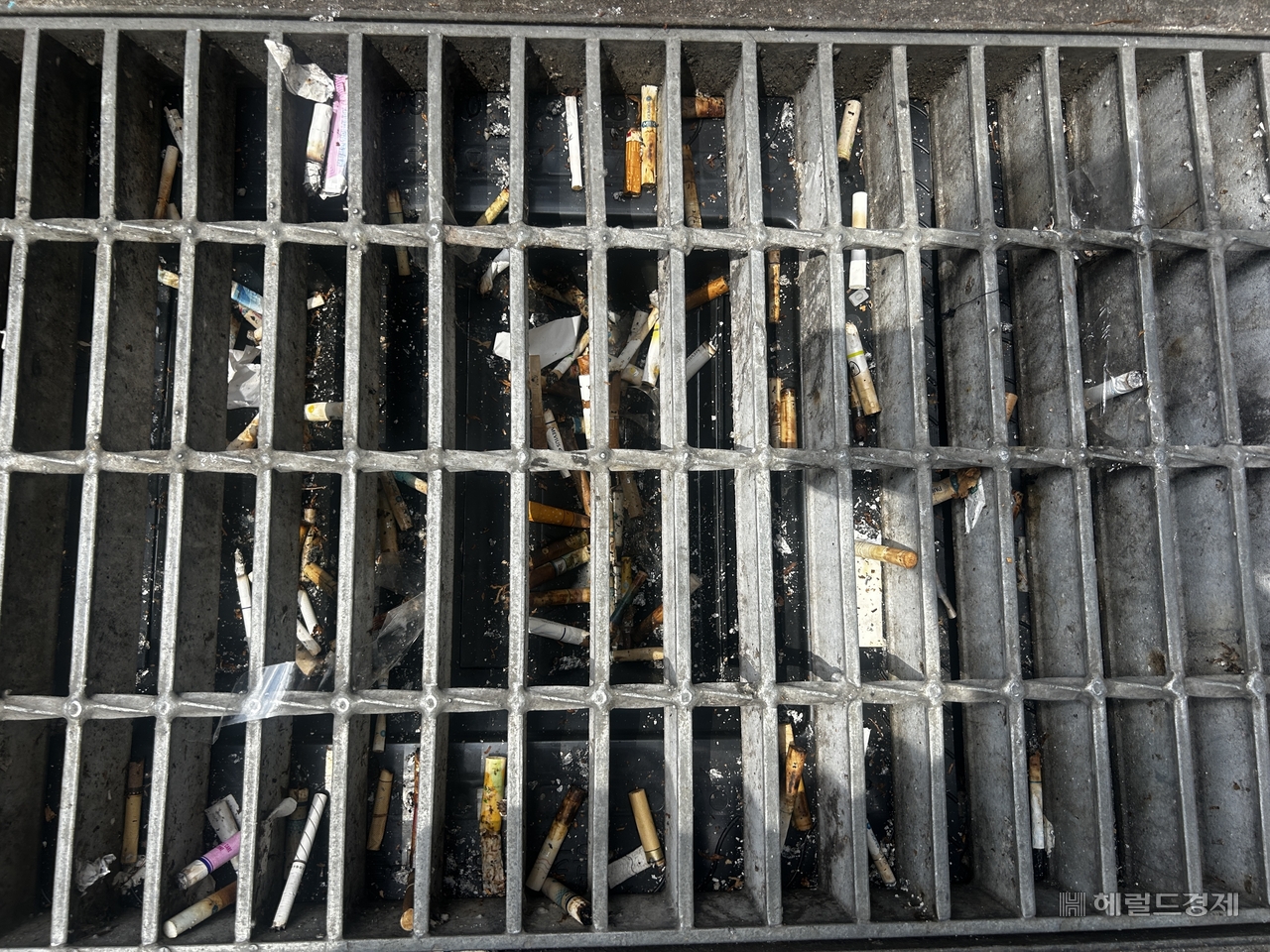
Storm drains are the unsung backbone of urban drainage — but when they fail during heavy downpours, the consequences can be catastrophic. Blocked drains halt water flow, flooding below-ground households and triggering large-scale disasters. In 2022, three people died when a semi-basement apartment in Sillim-dong, Gwanak-gu, Seoul was inundated. Yet despite their critical role, storm drains across the city are routinely reduced to overflowing ashtrays, or deliberately blocked by nearby businesses complaining of odors.
On Friday afternoon, a reporter surveyed 50 storm drains across Gangnam-gu and found that 20 were in no condition to function properly. Most were choked with cigarette butts.
Near Gangnam Station, one drain in a designated smoking zone was so packed with butts it could barely drain at all — a mockery of the "smoking area" sign posted nearby. In just five minutes, about 30 people smoked and discarded their butts in the area, some dropping them directly into the drain before walking away.
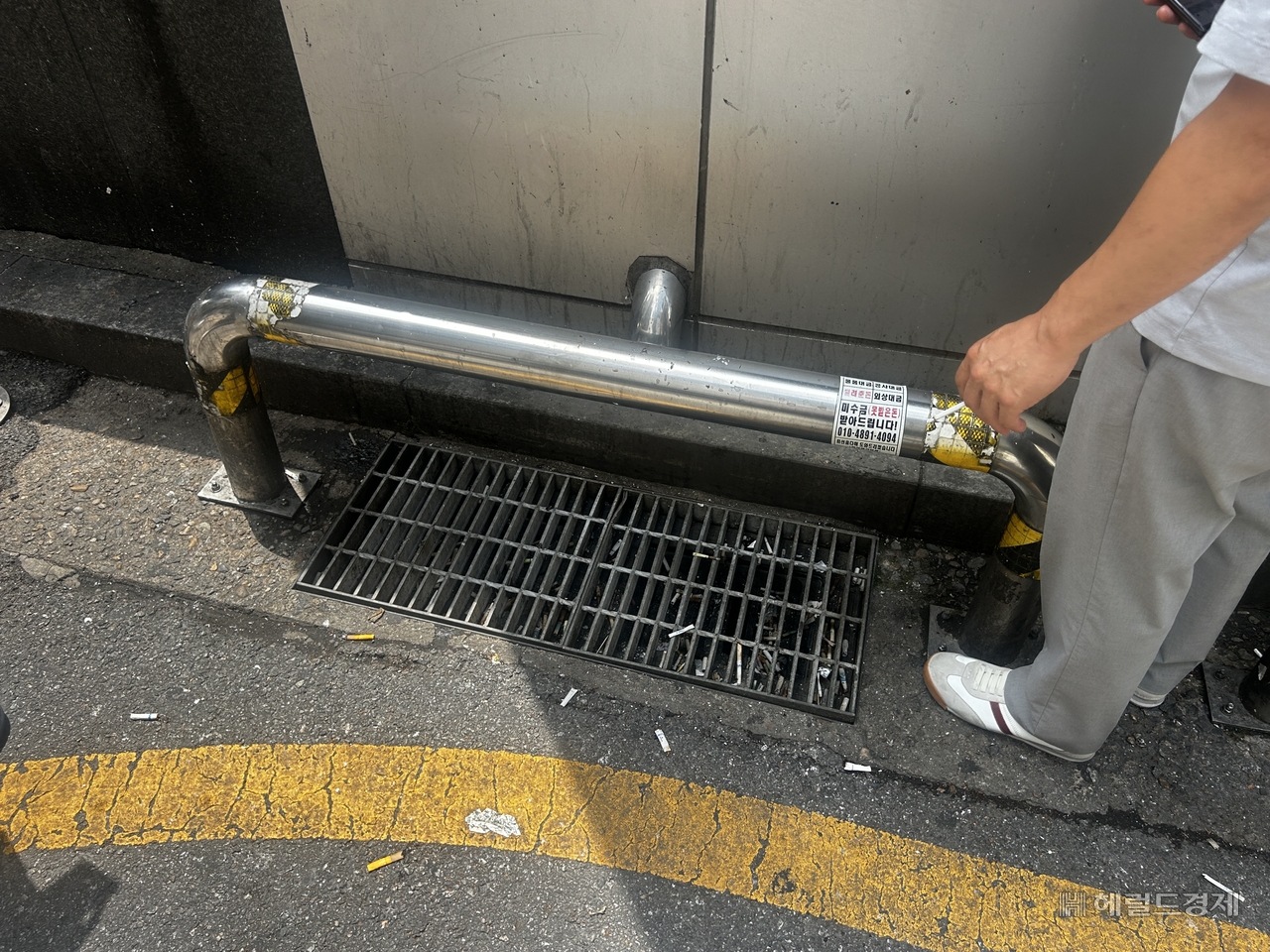
Kim, 30, who was seen tossing a butt into a drain, said there was simply nowhere else to put it. "There's no trash can around — not even a small tin for collecting butts," he said. "Throwing it on the ground feels rude, so dropping it in the drain feels like putting it in a bin. I guess it's become a habit."
Park, also in his 30s, said most people do it without thinking. "A lot of smokers just don't consider that it could clog the drain," he said.
Yoo, 35, offered a similar view. "I think people feel like they're throwing it somewhere out of sight," she said. "Most of them probably don't realize it could block drainage."
She added that the lack of disposal options was part of the problem. "Even if you bring the butt back to the office and toss it in a bin, people complain about the smell," she said.
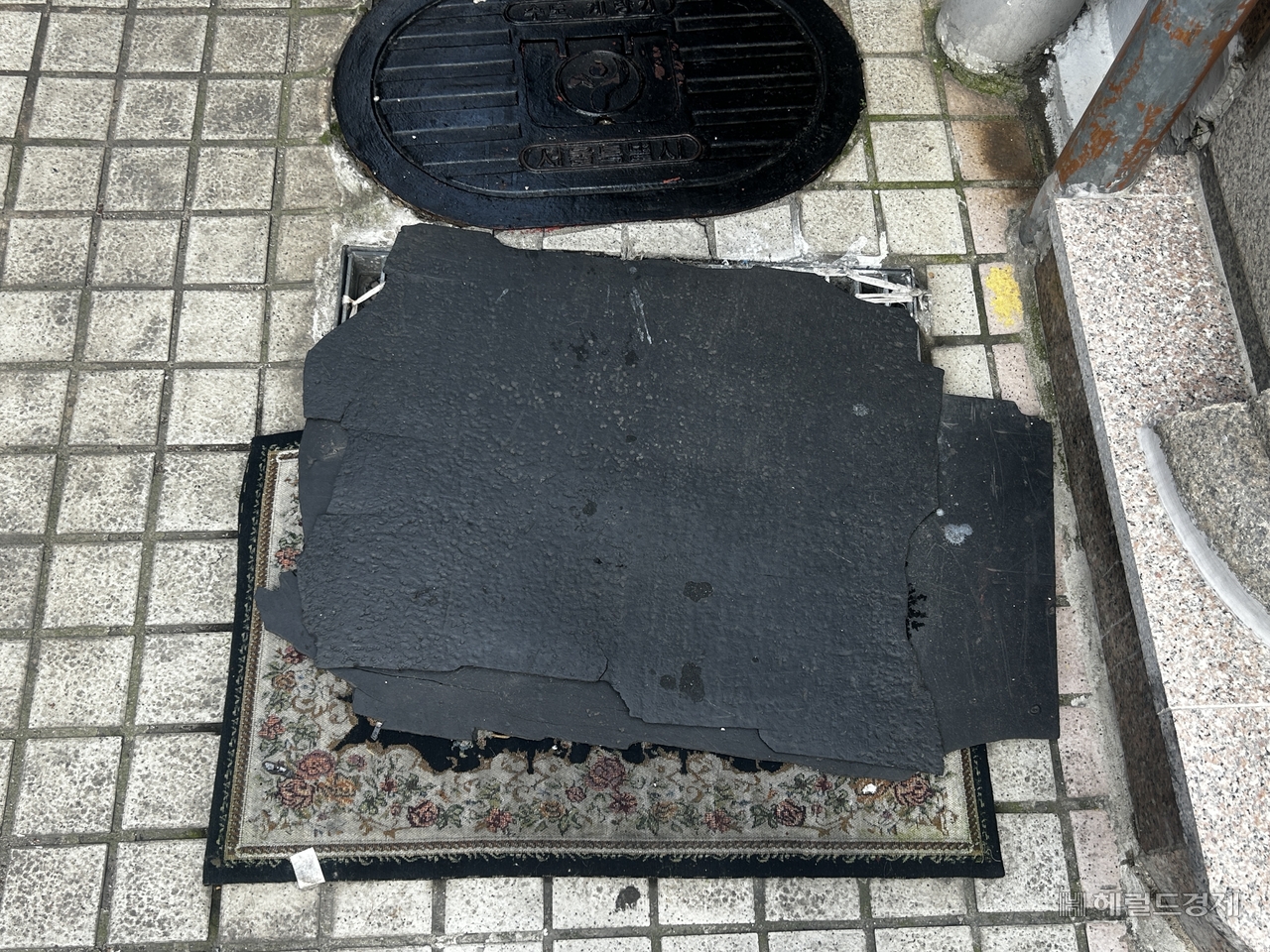
Cigarette butts and litter are not the only things blocking the drains. Some are covered entirely with mats or boards, rendering them useless. Restaurants in particular were found to be frequent offenders, covering nearby drains over odor and hygiene concerns.
The owner of a raw fish restaurant in Nonhyeon-dong said he covers the drain outside his establishment because of the smell. "It's a restaurant — customers are eating here, and if there's a bad odor coming up from the drain, they won't like it," he said.
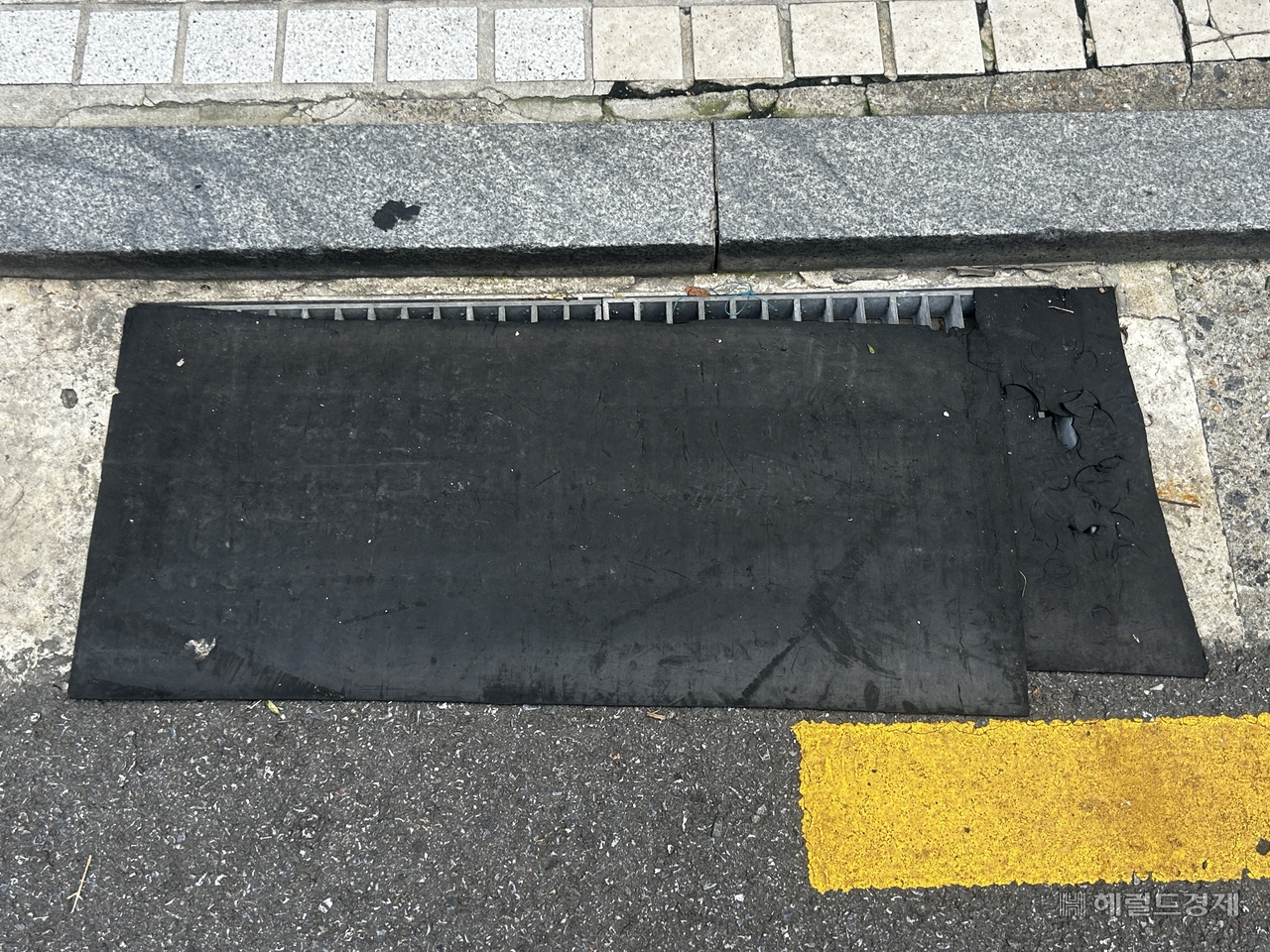
The owner of a nearby cafe said insects were the main concern. "There are a lot of flies and cockroaches coming up from the drain, on top of the smell, so we keep it covered," she said. "We have outdoor seating and customers who bring children — leaving it open doesn't seem hygienic."
The Seoul Metropolitan Government manages approximately 580,000 storm drains across the city's 25 districts to prevent flood damage. A city official said drains are cleaned an average of three times a year, including a round before the main rainy season. Areas that have flooded in the past or are considered at risk — including Gangnam, Seocho and Gwanghwamun — are designated as intensive management zones and cleaned more than 10 times a year on average, the official said.
20ki@heraldcorp.com
young2@heraldcorp.com