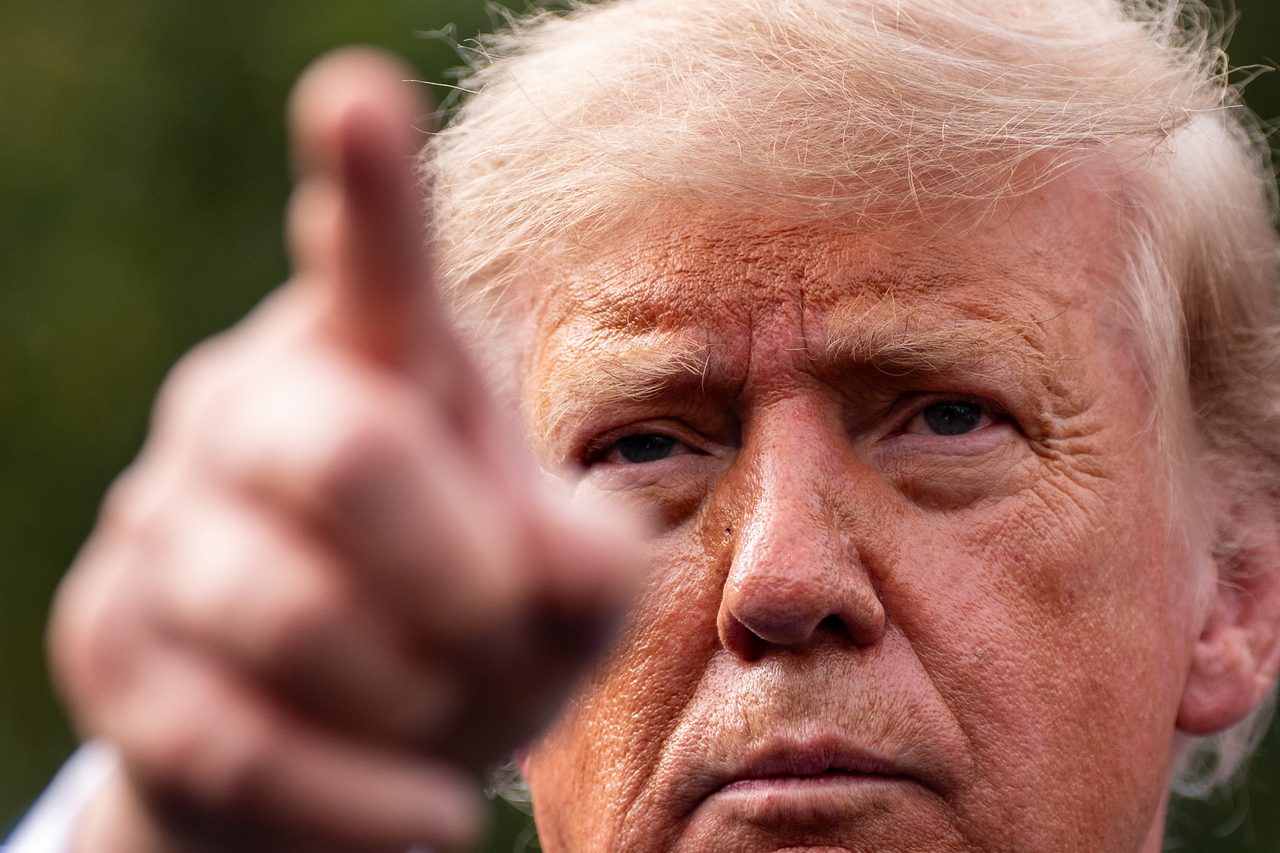
![Robert Kiyosaki. [Reuters]](https://wimg.heraldcorp.com/news/cms/2026/07/28/news-p.v1.20241223.0c4c34419c654d7bb64a70e7610dc355_P1.jpg)
Robert Kiyosaki, author of the global bestseller "Rich Dad Poor Dad," has warned that "the biggest economic crisis in history has begun," amid mounting concerns over a weakening dollar as US national debt surges. "The rich don't save money," he said, urging investors to buy gold, silver, bitcoin and ether — assets the government cannot control.
Kiyosaki recently took to social media to criticize the fragility of the fiat currency system, citing the rapid growth of US national debt.
According to US Treasury data, the national debt stood at $39.64 trillion as of Wednesday — more than four times the roughly $9.5 trillion recorded during the 2008 global financial crisis — and is closing in on the $40 trillion mark.
Kiyosaki said the current structure, in which the US government adds roughly $1 trillion in debt every 90 days, is unsustainable over the long term. He said investors should hold "hard assets" — those whose supply the government cannot freely expand — to guard against fiat currency depreciation and inflation.
"The rich don't save money," Kiyosaki said, urging people to reduce their dependence on the fiat currency system.
He said he has been accumulating silver since 1965, gold since 1971, bitcoin since 2012 and ether since 2022.
Kiyosaki said he particularly values bitcoin, whose total supply is capped at 21 million coins, and ether, which underpins the decentralized finance ecosystem.
He maintained his price outlook, saying that in the event of a large-scale financial system overhaul, gold could reach $35,000 per ounce, silver $200, bitcoin $750,000 and ether $95,000.
However, market observers have urged caution about his bold forecasts.
Kiyosaki has repeatedly warned of a Great Depression and market collapse for years, yet US stock markets have continued to climb — driven in part by an AI investment boom — leaving his predictions at odds with actual market performance on more than a few occasions.
Analysts also note that gold and silver generate no cash flow and that virtual assets carry extreme volatility, meaning any such strategy should be accompanied by sophisticated risk management rather than simple pessimism.
yeonjoo7@heraldcorp.com