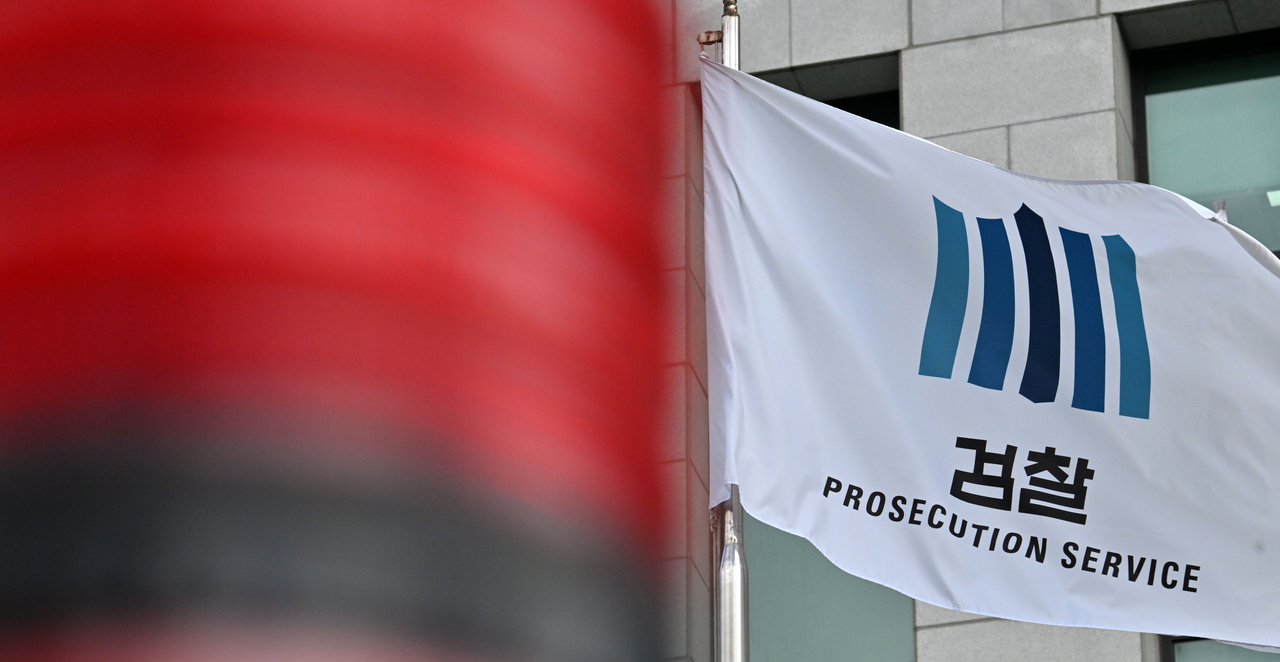
A Democratic Party of Korea-led bill to abolish prosecutors' supplementary investigation powers is on the verge of passing the National Assembly floor. Legal experts broadly warn that if the legislation is enacted as designed by the ruling party, oversight of shoddy police investigations will be further weakened. The controversy has deepened with reports that the bill also contains provisions expanding the grounds on which courts may dismiss indictments — a move the People Power Party and other opposition forces say is intended to widen the scope for courts to dismiss charges in the criminal cases against President Lee Jae Myung.
Legal professionals have condemned the Democratic Party-led bill as unconstitutional and warned that ordinary citizens, including crime victims, will ultimately bear the consequences. With a full Assembly vote imminent, questions about the futures of the justice minister and the acting prosecutor general have also surfaced, leaving the Ministry of Justice, the prosecution service and the broader legal community in turmoil on the eve of a sweeping overhaul of the criminal justice system.
▶ 'Abolishing prosecutors' supplementary investigation powers violates the Constitution' = Lee Seok-yeon, chairman of the Presidential Committee on National Integration, said in a phone interview Wednesday that the bill "has constitutional problems — my position on that has not changed." Lee had earlier stated on his SNS account on July 12 that "the complete abolition of prosecutors' supplementary investigation powers is unconstitutional." A former researcher at the Constitutional Court, Lee served as minister of government legislation under the Lee Myung-bak administration and was co-chair of the Democratic Party's joint election campaign committee during last year's presidential election.
The Democratic Party-led bill cleared the National Assembly's Legislation and Judiciary Committee on Wednesday afternoon. Only a full floor vote remains. The People Power Party has said it will launch a filibuster to block the bill, but the Democratic Party's commanding majority makes passage within days highly likely.
The bill's centerpiece is the abolition of prosecutors' supplementary investigation powers. Legal professionals, legal academics, women's groups, civic organizations and crime victim groups have repeatedly raised concerns, but the ruling party appears determined to push it through. Article 196 of the current Code of Criminal Procedure states that "a prosecutor who believes there are grounds to suspect a crime shall investigate the offender, the facts of the crime and the evidence." It also allows prosecutors to conduct investigations into referred cases within the scope that does not compromise the identity of the case. Under the bill, however, prosecutors' direct supplementary investigations would be abolished entirely.
▶ Supplementary investigation request power revised, but doubts over effectiveness = As criticism of the abolition mounted, the ruling party noted that the bill includes a revamped supplementary investigation request power. Legal experts, however, say it will be ineffective in practice. Under the bill, police would be required to complete supplementary investigations within one month of a prosecutor's request, with a one-month extension available if the deadline cannot be met. Yang Hong-seok, an attorney at law firm Igong, said the provision amounted to institutionalizing delays. "Right now there are countless cases where even three months isn't enough — do you think they'll do it in one month? This institutionalizes delayed compliance and encourages shoddy work," Yang said. "Having a remedy for non-compliance does not mean the supplementary investigation request will actually be effective. All you can do is hope the police do their job."
The bill does introduce a new provision allowing prosecutors to designate a higher-level investigative agency or a different investigative body to handle supplementary investigations when the original police unit cannot be expected to cooperate. The Supreme Prosecutors' Office, however, said that while officers who fail without justification to comply with a supplementary investigation request can be removed from duty or subject to a disciplinary request, and the designated agency can be changed, these measures are "after-the-fact and indirect" and "have limits when it comes to uncovering the truth in a case that has already been delayed and ensuring its swift resolution."
▶ Expanded dismissal grounds added — 'could be used to drop charges' = The controversy has grown further with reports that the bill also expands the grounds on which courts may dismiss indictments without ruling on the merits — a procedure that terminates a case outright. The current Code of Criminal Procedure specifies the circumstances under which courts must issue a dismissal ruling or decision; the bill would broaden those circumstances.
The bill adds two new grounds for dismissal of indictment: prosecution based on a seriously unlawful investigation and a case in which prosecutorial discretion was grossly exceeded. Opposition lawmakers have criticized the additions as a bid to increase the likelihood of courts dismissing charges in President Lee's criminal trials. People Power Party lawmaker Ju Jin-woo wrote on his SNS account that it was "an attempt to use legislative power to erase the president's personal criminal trials." A prosecution official said the language itself — terms such as "seriously" and "grossly" — was too vague for courts to apply as dismissal grounds, adding, "If anything, it could be used by politicians to push for withdrawal of charges."
As the bill's passage draws near, questions about the futures of the justice minister and the acting prosecutor general have also come to the fore. Justice Minister Jeong Seong-ho, responding Monday at a full meeting of the National Assembly's Legislation and Judiciary Committee to questions about whether he intended to resign, effectively reaffirmed his intention to step down, saying, "Shouldn't new wine go into new wineskins?" There is also speculation that Gu Ja-hyeon, the acting prosecutor general and deputy chief of the Supreme Prosecutors' Office, will announce his own position on his future once the bill clears the full Assembly floor.
bell@heraldcorp.com
dandy@heraldcorp.com