
![A fragment of a 2,000-year-old biblical Psalms scroll. [Source: Israel Antiquities Authority]](https://wimg.heraldcorp.com/news/cms/2026/08/02/news-p.v1.20260802.a659cbf416c94c9e86ecb3fa96128db2_P1.jpg)
The Dead Sea Scrolls — which include the oldest surviving Hebrew biblical manuscripts — rank among humanity's most significant cultural treasures, yet the place of origin and scribal communities behind many of the documents remain one of archaeology's most enduring unsolved puzzles.
The European Research Council (ERC) has selected a project to determine the origins and provenance of the Dead Sea Scrolls for its prestigious Advanced Grant program. The project involves the Israel Antiquities Authority (IAA) and the University of Groningen in the Netherlands, among other partners.
The IAA said it will receive 2.5 million euros ($2.88 million) in research funding to pursue the project in earnest, using AI and advanced scientific technology to identify where the scrolls were produced and trace their origins.
The research focuses on using AI to scientifically resolve these longstanding mysteries, according to the Israel Tourism Authority. Researchers plan to analyze the parchment, papyrus and ink of about 250 Dead Sea Scroll fragments held by the IAA, combining chemical analysis, paleography and codicology data with AI to examine the production environment and geographic origins of the documents.
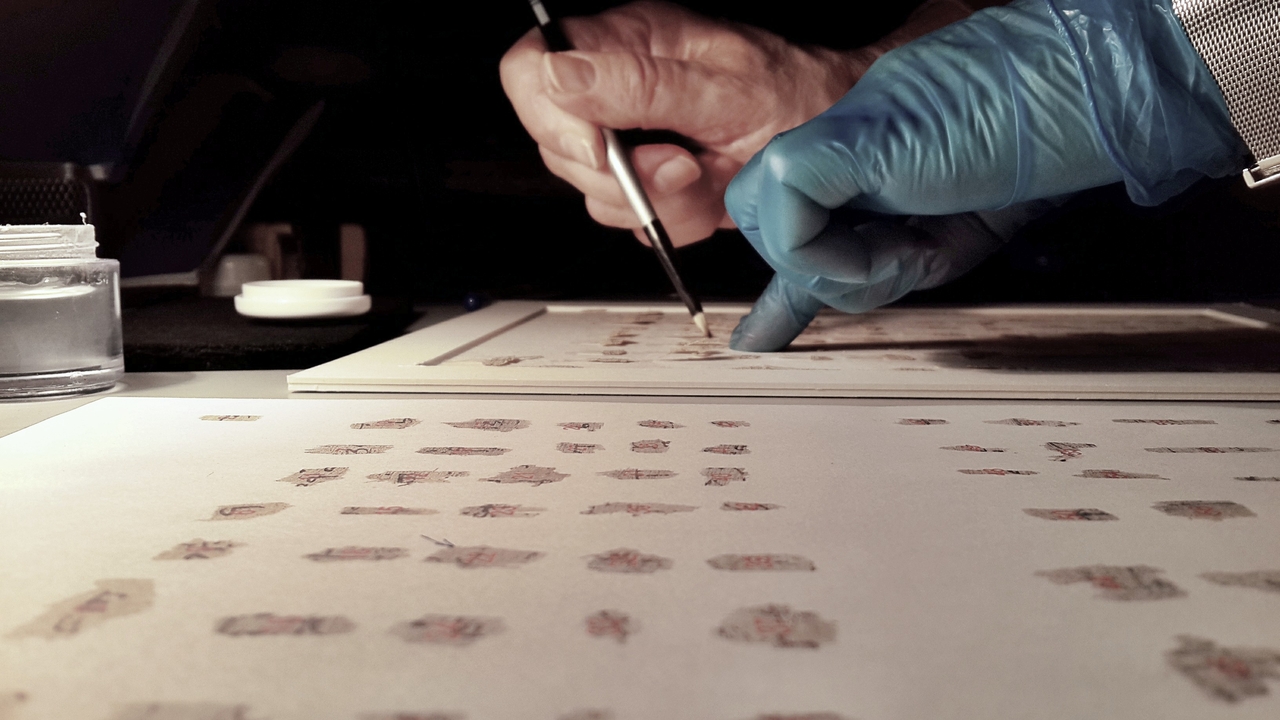
AI will be particularly central to the effort, analyzing minute chemical compositions and handwriting patterns that are difficult for the human eye to detect, tracing the provenance of materials used in the scrolls' production and identifying connections among individual scribes. Through this work, researchers aim to build the first integrated research model linking the roughly 25,000 Dead Sea Scroll fragments held by the IAA by period of production, region and scribal community.
The project also follows an earlier ERC-funded study, "The Hands That Wrote the Bible," which used AI to identify the scribes behind the Dead Sea Scrolls.
Where that earlier research focused on who wrote the documents, the new project expands the scope to ask where they were produced and how knowledge and texts were transmitted across generations.
By reexamining one of the world's great cultural heritage sites through the lens of cutting-edge AI, the project is expected to open new possibilities for research at the intersection of archaeology and artificial intelligence.
abc@heraldcorp.com





