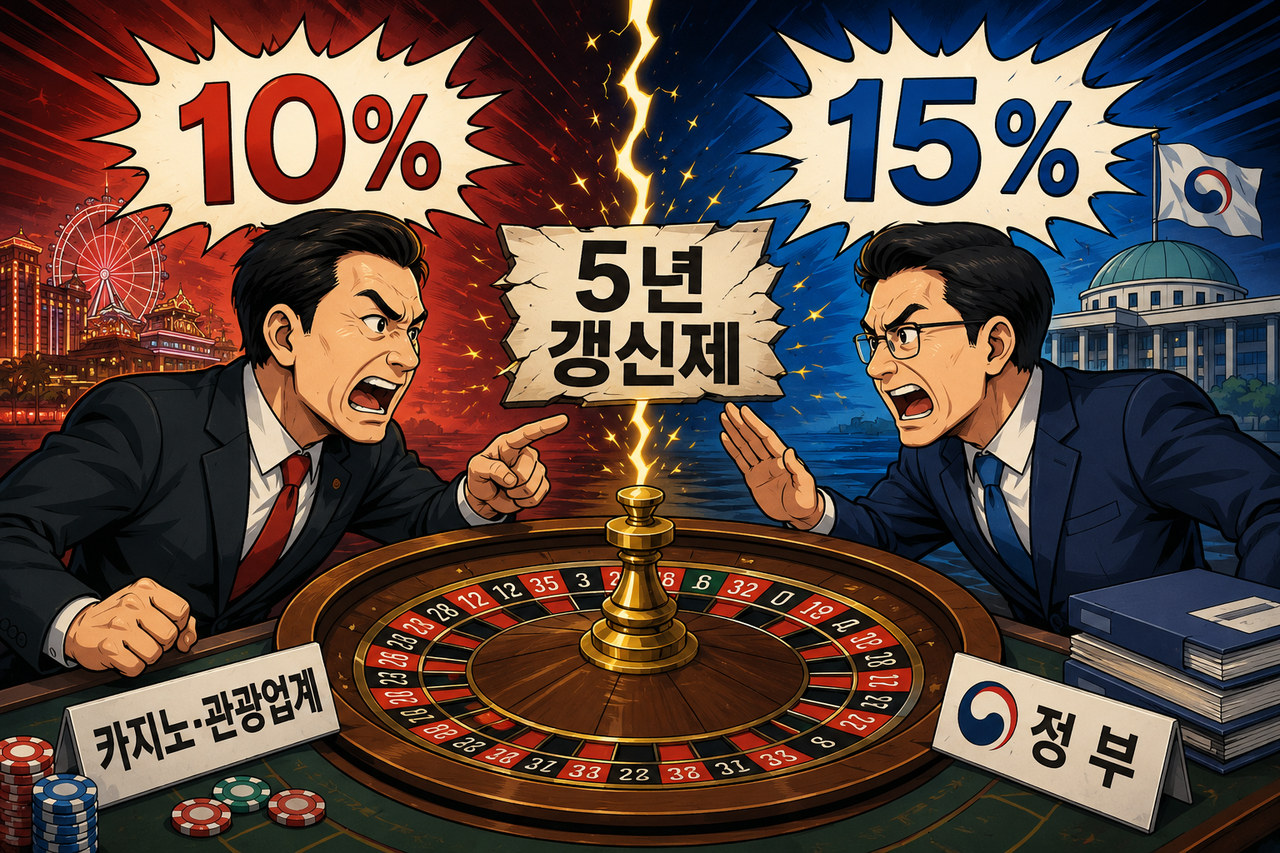
A government plan to overhaul South Korea's casino regulatory regime is heading toward an all-out confrontation between the industry and authorities. The casino and tourism sectors have raised alarms over what they call investment-chilling regulations — chiefly a proposed increase in the ceiling on contributions to the Tourism Promotion and Development Fund from 10 percent to 15 percent of sales, and the introduction of a five-year license renewal system. The Ministry of Culture, Sports and Tourism is pressing ahead, citing the need to normalize the regulatory framework and strengthen the public interest. The dispute is shaping up as a fundamental clash over the financial health and long-term sustainability of the tourism industry.
Industry pushes back against sales-based levy, calling it 'punitive'
Twelve tourism-related industry associations — including the Korea Casino Tourism Association, the Korea Tourism Association and the Korea MICE Association — issued a joint statement Monday demanding that the government immediately withdraw its plans to introduce a five-year casino license renewal system and raise the ceiling on Tourism Promotion and Development Fund contributions from the current 10 percent to 15 percent of sales.
The Ministry of Culture, Sports and Tourism announced last month that it intends to pursue legislative amendments to raise the maximum fund contribution rate for casino operators from 10 percent to 15 percent of sales, and to replace the existing open-ended license system with one requiring renewal every five years. The ministry said the move is aimed at modernizing the regulatory framework and increasing the industry's fiscal contribution — breaking with a structure in place since amendments to the Tourism Promotion Act in 1994, more than 30 years ago.
The industry characterized the reform package as a punitive regulatory blow that would dampen the entire tourism ecosystem. Operators said the casino industry pays its fund contributions based on gross sales rather than net profit for the period, and that roughly half of domestic casino operators have run operating losses over the past decade while still supporting national tourism finances. Raising the fund contribution ceiling — which applies even when operators are in the red — from 10 percent to 15 percent, they said, "would accelerate corporate bankruptcies and threaten the jobs of tens of thousands of workers."
The ministry rebuffed those claims the same day in a press release, countering point by point. It said most countries — including the United States, Singapore, Macao and Japan — levy casino taxes based on gross sales rather than operating profit. Because casinos are a speculative industry operating under a special government license, the ministry said, it is legitimate to impose different regulatory and fiscal obligations on them than on ordinary businesses.
The ministry also noted that the Constitutional Court unanimously ruled in 1999 that levying the fund contribution on a sales basis was constitutional.
76.3 billion won hit from 15% hike? Ministry says that figure is wrong
The ministry also drew a line against claims that raising the fund contribution ceiling for foreigner-only casino operators from 10 percent to 15 percent would cost the three major casino companies a combined 76.3 billion won ($53.2 million) more in contributions, saying the figure is inaccurate.
The ministry said the estimate was derived by simply applying the 15 percent rate to the entire existing 10 percent bracket. The actual reform proposal would not apply 15 percent across all sales above 10 billion won, it said, but would instead create a new high-revenue bracket and apply the 15 percent rate only to sales exceeding that threshold — a progressive structure that would result in a far smaller additional burden than the figure cited.
Under the current enforcement decree of the Tourism Promotion Act, casino operators' fund contribution rates are divided into three tiers based on annual gross sales: sales of up to 1 billion won are levied at 1 percent; sales between 1 billion won and 10 billion won at 5 percent; and sales above 10 billion won at the current top rate of 10 percent.
A ministry official said it is also untrue that the 15 percent rate would apply to annual sales of 300 billion won or more, adding that the specific progressive bracket structure would be finalized through extensive consultations with the casino industry, experts and academics when the enforcement decree is revised.
'Operators paying over half of operating profit' — ministry calls it an accounting error
![Jeju Dream Tower integrated resort [provided by Lotte Tour Development]](https://wimg.heraldcorp.com/news/cms/2026/08/03/news-p.v1.20260803.a92be665ef8b49b89fce9b29fe19b2f1_P1.jpg)
The ministry also took issue with claims by some that casino operators are paying 50 to 80 percent of their operating profit into the tourism fund, saying the argument reflects a confusion of accounting concepts. The fund contribution is not a tax deducted after operating profit is calculated, the ministry said — it is already recorded as a cost before operating profit is determined, making a direct comparison between the two figures inappropriate.
"The tourism fund contribution is an amount already deducted in calculating operating profit," a ministry official said. "Comparing it directly to operating profit is a confusion of accounting concepts."
5-year renewal plan draws industry warnings of investment freeze
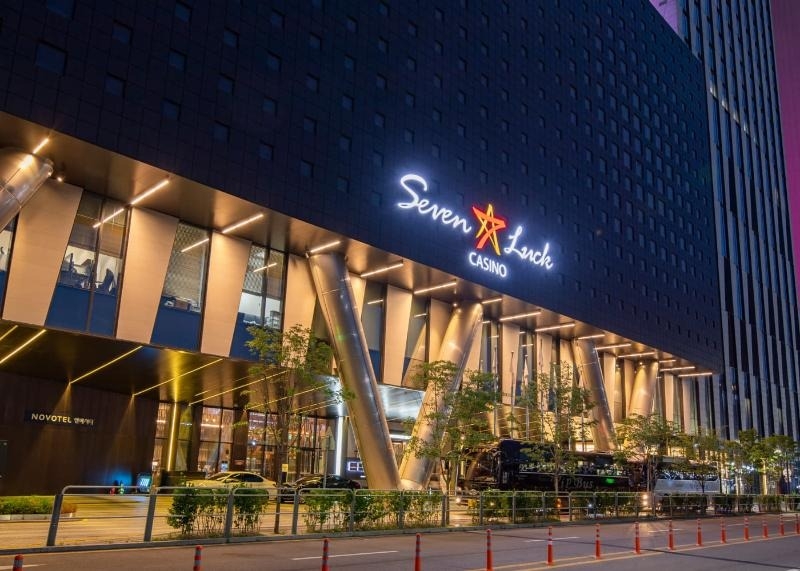
On the proposed five-year license renewal system, the industry said it would undermine the principle of legitimate expectations and halt large-scale investment. Operators argued that since the 1994 amendment to the Tourism Promotion Act, they had pursued long-term investment on the assumption of permanent licenses. Given that integrated resorts require hundreds of billions to trillions of won in capital, they said, exposing operators to the risk of license cancellation every five years would bring new large-scale investment and the attraction of global capital to a halt.
The ministry said the shift to time-limited licenses represents a normalization of the regulatory system for the casino industry, which operates as a licensed monopoly, and noted that all major countries conduct periodic reviews. Casinos had operated under a three-year re-licensing system before 1995, until a December 1994 legislative amendment removed the license expiry provision.
The ministry said the proposed system is distinct in terms of stability from Macao's re-licensing regime — which offers no protection for existing operators and selects licensees through an open re-tender process from scratch — as well as from South Korea's duty-free shop re-licensing system.
"The renewal system is an interim evaluation mechanism that periodically checks whether existing license conditions are being maintained," the ministry said. "The casino industry is a special sector where entry is not freely permitted and those who engage in similar activities without a license face criminal punishment. It is virtually unprecedented to grant licenses to specific private operators with no expiry date."
Global competitiveness concerns also surface
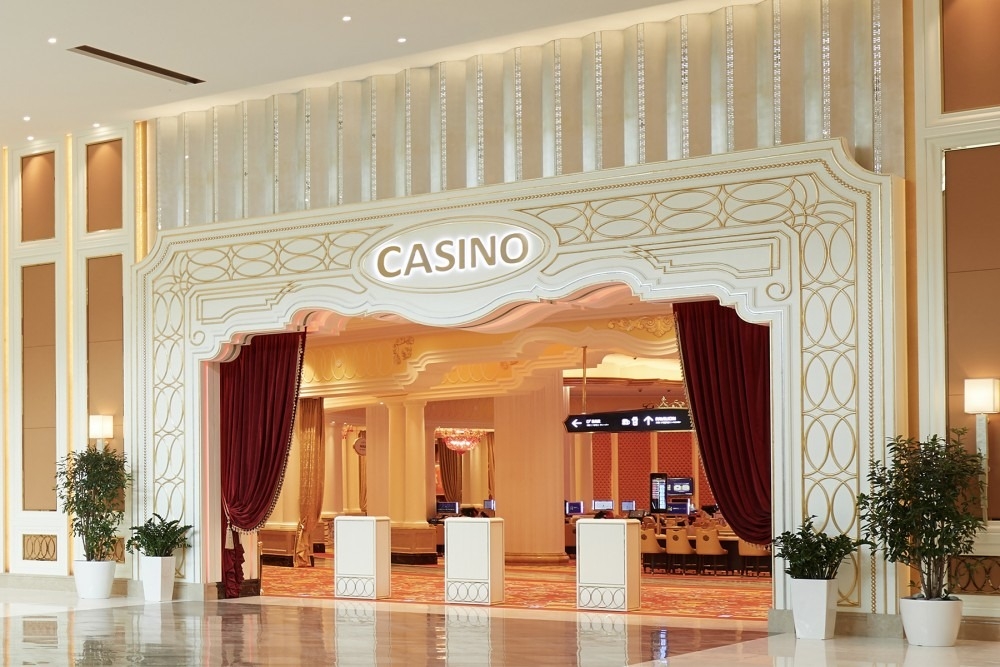
The two sides also diverged on the question of South Korea's competitive standing against other East Asian markets. The industry warned that as Macao, Singapore, the Philippines and Japan move to capture market share through deregulation, raising the fund levy and tightening regulations would drive capital out of the country.
The ministry countered that domestic casino operators have long benefited from limited competition under a licensed monopoly and already receive regulatory advantages and tax breaks from the government, and are therefore not subject to excessive discrimination or punitive regulation.
The ministry also said that foreigner-only casinos are not subject to the additional levies imposed on Kangwon Land — the only casino open to Korean nationals — including a closed-mine fund contribution of 13 percent, an addiction prevention and treatment surcharge of 0.35 percent, taxes on visitors, and customer betting limits. Foreigner-only operators already enjoy considerable institutional and tax benefits, it said.
The ministry also pushed back against a pessimistic outlook on the operating environment. "Major domestic casino operators have posted relatively stable earnings for decades, except during extraordinary circumstances such as the COVID-19 pandemic," a ministry official said. "Given the recent surge in K-culture's popularity and the growing number of foreign tourists visiting Korea, there is no basis for categorical pessimism about the future operating environment."
The joint statement was signed by 12 organizations, including the Korea Camping Ground Association, the Seoul Tourism Association, the Korea MICE Association, the Korea PCO Association, the Korea Tourist Cruise Industry Association, the Korea Tourism Association, the Korea Casino Tourism Association, the Korea Theme Park Association, the Korea Hotel Management Association, the Korea Hotel Association and the Korea Resort Condominium Management Association.
terry@heraldcorp.com