The government plans a sweeping review of tax expenditures, restructuring roughly half through termination, reduction, redesign or conversion to direct fiscal support.
Tax credit and income deduction schemes that offer relatively little benefit to low-income earners — who often pay little or no tax — will be replaced with direct fiscal support to strengthen income redistribution.
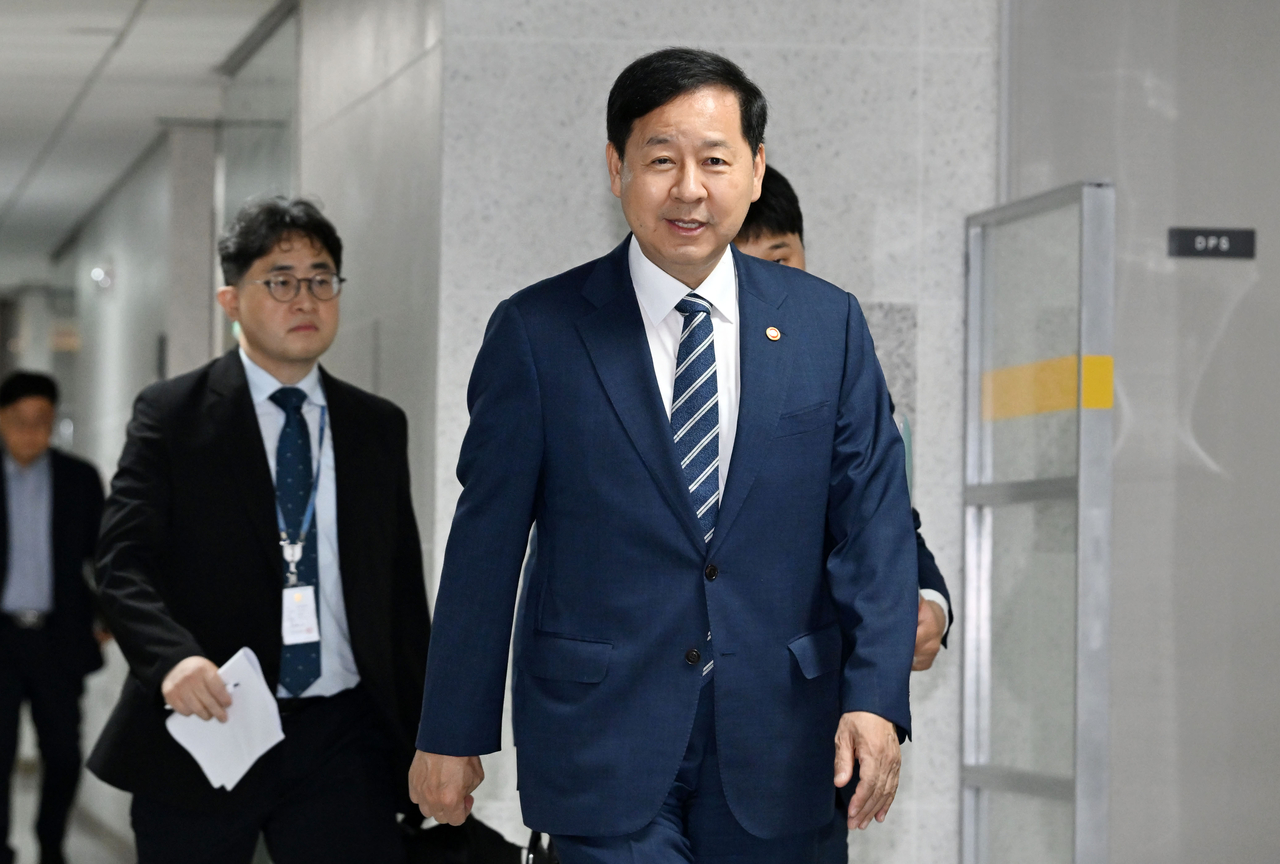
Deputy Prime Minister Koo Yun-cheol said the government would "move away from the longstanding practice of routinely extending sunset clauses and instead restructure 115 of the total 241 tax expenditure items — about 50 percent."
The government projects the overhaul will reduce tax expenditures by 2.5 trillion won ($1.74 billion) in total, with items converted to direct fiscal support accounting for about 1.1 trillion won of that figure.
Hybrid car excise tax break to end; tax special treatment for job-retaining SMEs also sunsets this year
Under the 2026 tax reform package the Ministry of Economy and Finance announced Monday, the individual consumption tax exemption on hybrid vehicles — capped at 700,000 won per vehicle — will expire at the end of this year.
A special tax treatment for small and medium-sized enterprises that maintain employment will also sunset at its scheduled expiry at year's end. The scheme provides a corporate tax credit of 10 to 15 percent of wage cuts for companies that preserve jobs through reduced working hours or work-sharing arrangements, and an income deduction equal to 50 percent of wage reductions for the affected workers.
A separate income and corporate tax credit for companies that raise employee wages will be terminated at the end of December 2028. That scheme deducts 10 to 20 percent of wage increases exceeding the average wage growth rate of the preceding three years.
A stamp tax exemption of up to 70,000 won per document on loan papers and savings certificates for members of agricultural and fisheries cooperatives will also end at year's end.
A VAT refund program that reimburses foreign tourists for room charges at designated tourism hotels for stays of up to 30 nights will continue through June 30, 2027, before being terminated.
The government said it plans to phase out these programs because they have either achieved their intended purpose or proven ineffective.
![[Yonhap]](https://wimg.heraldcorp.com/news/cms/2026/08/04/news-p.v1.20260803.bc091592ac8c4310844f38f1c0a1ecd7_P1.jpg)
Tax credits offering little benefit to low earners to shift to direct support; EV excise break to become subsidy
The government plans to convert tax credits that low-income earners — who make up a large share of non-taxpayers — find difficult to benefit from into direct fiscal support.
Tax credits for childbirth, adoption and marriage will be converted to a direct subsidy-based system.
The current childbirth and adoption tax credit provides 300,000 won for a first child, 500,000 won for a second and 700,000 won for a third or subsequent child. The marriage tax credit offers each spouse a one-time credit of 500,000 won in the year they register their marriage.
The government expects that replacing these tax credits with subsidies will improve income redistribution.
The individual consumption tax exemption on electric and hydrogen fuel-cell vehicles, which had been set to expire next year, will instead be extended but with the cap reduced in stages.
Next year, the cap will be cut by 1 million won each — to 2 million won for electric vehicles and 3 million won for hydrogen fuel-cell vehicles. By 2028, the caps will fall further to 1 million won for electric vehicles and 1.5 million won for hydrogen fuel-cell vehicles, before the tax expenditure is eliminated entirely in 2029 and folded into the subsidy system.
The additional credit for public transit spending under the credit card income deduction will be abolished and consolidated into the standard deduction, with the transit portion to be integrated into direct fiscal support for public transportation costs.
The additional deduction for spending on books, performances and similar cultural items — currently limited to earners with total annual wages of 70 million won or less — will be extended to all wage earners regardless of income level.
The cap on additional card income deductions will be lowered from 3 million won to 2 million won for earners with total annual wages of 70 million won or less, and from 2 million won to 1 million won for those earning above that threshold.
The Ministry of Planning and Budget will announce the specific method of direct fiscal support at a later date.
![[Yonhap]](https://wimg.heraldcorp.com/news/cms/2026/08/04/news-p.v1.20260803.df6df8b63b204558b2ae4bea4d2c5f04_P1.jpg)
Special income tax rate for foreign workers raised to 21%; large firms excluded from integrated employment credit
Programs still deemed necessary will be made permanent, while others will be redesigned to better align with their policy objectives.
The income deduction for interest payments on long-term mortgage loans will be restricted to borrowers who actually reside in the mortgaged property.
Among hagwon fees for preschool-age children, expenses for English and Korean-language hagwon — as opposed to arts, physical education and music programs — will be excluded from the education expense deduction.
The VAT credit scheme for business operators' credit card sales will also be revised.
The preferential credit rate will be trimmed from 1.3 percent to 1.2 percent and extended for three years, while the preferential credit cap will be abolished.
The credit card VAT credit was introduced to bring self-employed business income onto the tax rolls by encouraging card use. The government said the scheme has largely achieved its purpose but opted for only a modest reduction in the preferential rate out of consideration for the difficulties facing self-employed workers.
The special flat income tax rate for foreign workers will be raised from 19 percent to 21 percent to improve tax equity with domestic workers.
The investment tax credit for new-growth source technologies — which currently carries no sunset clause — will be given an expiry date of December 2029, in line with national strategic technology credits. Technology- and facility-specific expiry dates will also be introduced to allow periodic reassessment.
Large corporations will be excluded from the integrated employment tax credit, and the additional credit for employees returning from parental leave will be sunsetted.
The tax reform package will be submitted to the regular National Assembly session as a bill after going through a legislative notice period and a Cabinet meeting.
thlee@heraldcorp.com