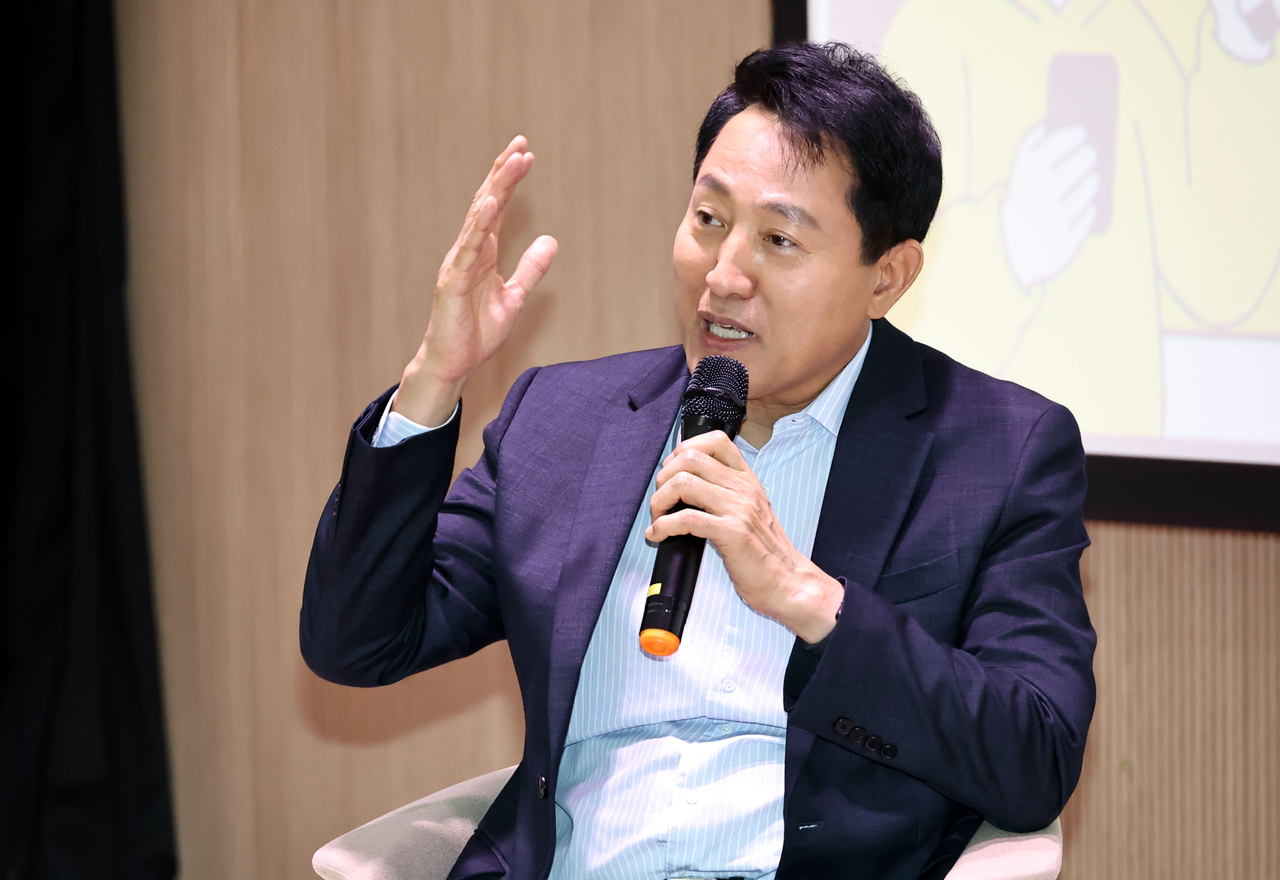
Seoul Mayor Oh Se-hoon sharply criticized the government's real estate tax overhaul Tuesday, warning it would usher in a "tax hell" and predicting the measures would fall short of their goals — with the market already searching for homes priced below 3.2 billion won ($2.24 million) to avoid the new rules.
Oh posted a message on his SNS account Tuesday titled "Once again, ordinary people will be the biggest victims of this measure."
"The government has long emphasized expanding supply," he wrote. "But looking at this package, there is no visible plan to actually increase supply — only heavier taxes. The problem is that raising taxes does not bring down home prices; if anything, it can make the market more unstable."
Oh said the core of the tax overhaul appeared to center on the long-term holding special deduction, and warned of unintended consequences. "Going forward, simply holding a home for a long time will no longer be enough to qualify for tax benefits — you will have to actually live there," he said. "The government has sent a signal to the market: if you do not live in your home, pay more in capital gains tax."
He predicted that, contrary to the government's expectations, the supply of ultra-high-priced homes on the market would not increase significantly. "The government seems to expect that higher taxes will push a large number of properties onto the market," he said. "But reality is likely to be different. Many owners will simply hold on even after paying the tax, or only a handful of distressed sellers will list — ultimately, it will be hard for as many homes to come to market as the government hopes."
Oh was equally pessimistic about the mid-tier housing market and the jeonse and monthly rent market. "To reduce capital gains tax, landlords may find it advantageous to evict tenants and move in themselves," he said. "That would shrink the supply of jeonse and monthly rent units and push rents higher. Ultimately, the biggest harm will fall not on homeowners but on ordinary people and young people looking for jeonse and monthly rent housing."
He also said the revamped real estate tax system was needlessly complicated. "What should a single-homeowner who has to live in another region for work or livelihood do? How far will exceptions be recognized?" he asked. "A system that even experts struggle to understand will ultimately breed only more confusion and distrust."
Oh said the market was already moving to find new ways to minimize its tax burden. "The government says it is targeting ultra-high-priced homes, but the market has already started looking for a 'less prime single property' priced below 3.2 billion won," he said. "The market is not moving in the direction the policy intended — it is finding new ways to cut its tax bill."
"If things continue this way, the real estate problem will remain unsolved, and there is a serious risk that 'tax hell' — where you pay taxes whether you buy or sell — will only get worse," he added.
Oh noted that the president had stated the goal was not to lower home prices but to normalize the real estate market. "If that is the goal, the solution must also align with market principles," he said.
"The surest way to stabilize the market is not taxes but supply," he said. "The market stabilizes when people believe homes will consistently be supplied going forward. The key to that is expanding supply through redevelopment and reconstruction." He urged the government to abandon what he called piecemeal tax fixes and shift course toward a fundamental housing policy centered on supply. "We must stop trying to move the market with taxes," he said.
ken@heraldcorp.com