Fatal accidents on mountain trails during the heat wave keep mounting, yet hikers continue to head out with little regard for the danger — overconfident in their own fitness and dismissing heatstroke as something that happens to other people. The number of mountain rescues for heat-related illness in summer has grown every year as a result.
On Wednesday, when a major heat wave alert was in effect across Seoul, the government and local authorities urged residents to avoid outdoor activities — but the trails were still busy. Around 9 a.m., temperatures around Cheongun-dong, where Cheongun Park connects the trails of Inwangsan and Bugaksan in Jongno-gu, had already climbed to 32 degrees Celsius. The Korea Meteorological Administration warned that the Greater Seoul area, where the major heat wave alert was in force, could expect "extreme heat threatening to human life."

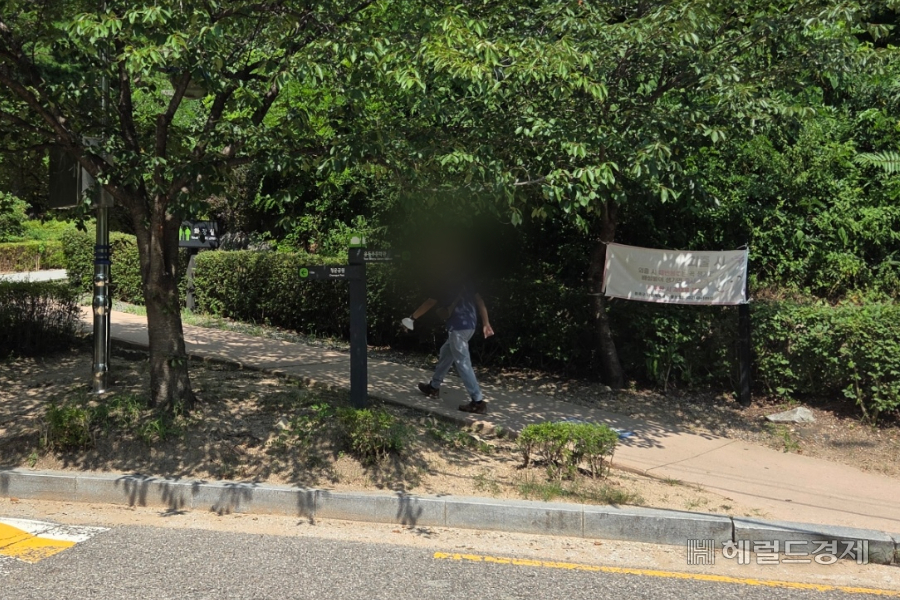
A reporter spent about two hours at Cheongun Park from around 8:30 a.m. Wednesday and encountered five solo hikers. Safety alert texts from the Jongno-gu and Eunpyeong-gu district offices — urging people to stay indoors — buzzed on their phones, yet each hiker said they were fit enough that heatstroke was not a concern.
A 59-year-old surnamed Im, who was on his way down, said he makes a point of coming to Inwangsan for an hour every day. "I have a vascular condition, so I exercise regularly," he said. "Because I work out every day, it never crosses my mind that I might collapse from heatstroke."
A 67-year-old surnamed Yeon, encountered on the path to the summit, said he had been walking uphill for about 30 minutes. "I brought cold water and this is a place I come to often, so I did not think twice about it," he said.
One hiker had already felt warning signs but kept going. A 55-year-old surnamed Kim, descending the mountain, said he had suddenly felt a wave of heat and thought he was about to collapse. "After that I just slowed down and kept a steadier pace than usual," he said.
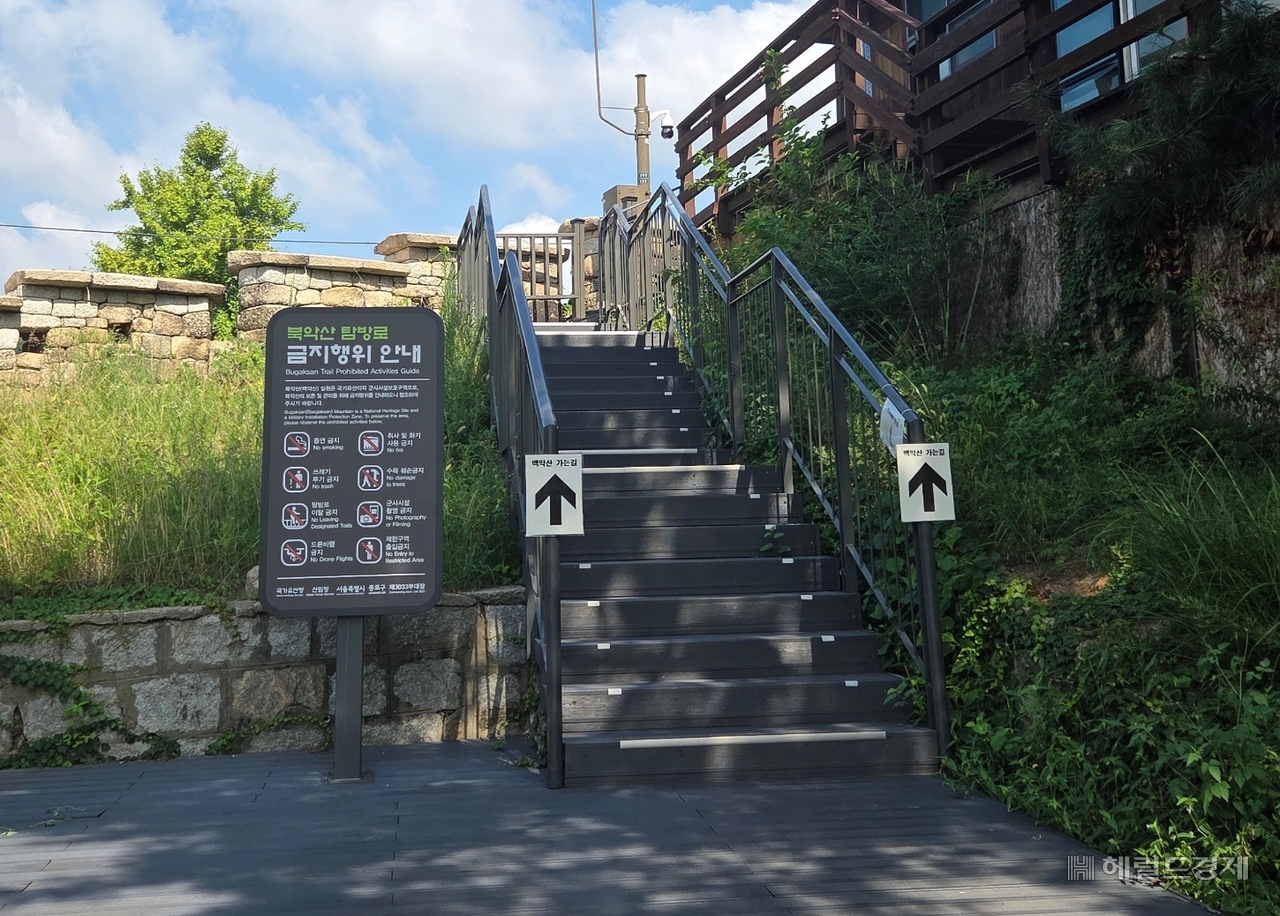
A staff member at the Bugaksan information center said about 20 people a day still head up the mountain even in severe heat, and there is little that can be done to stop them. "If we tried to restrict access, we would be flooded with complaints — it is not something we can even consider," the worker said. The center keeps a log of hikers entering and descending the mountain and conducts regular patrols to help prevent heat-related accidents.
Deaths keep coming as mountain rescues climb
Hikers who head out thinking they will be fine continue to die. Heatstroke can strike anyone, regardless of age or physical condition. On Sunday, a man in his 50s died while hiking Dobongsan in Uijeongbu, Gyeonggi Province, and a woman in her 50s died on Cheongnyang Mountain in North Gyeongsang Province. On July 30, a hiker in their 60s died while climbing Manisan on Ganghwado in Incheon.
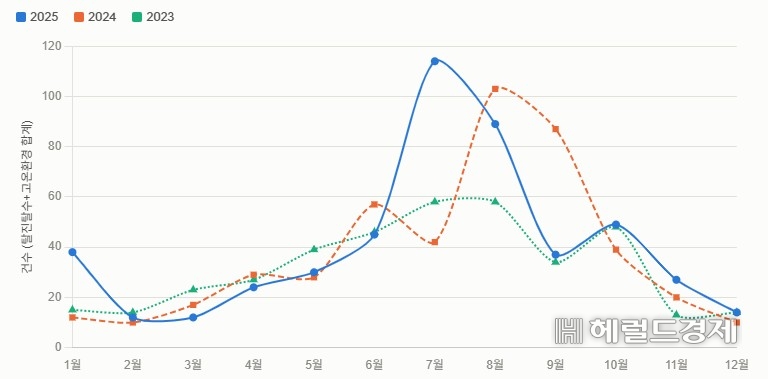
The number of people rescued after collapsing from heat-related illness on mountain trails has risen every year. According to the National Fire Agency, rescues involving exhaustion, dehydration and high-temperature environments increased from 389 cases in 2023 to 454 in 2024 and 491 last year. About half of those rescues were concentrated in the summer months of June through August.
Lee Hyeong-min, a professor of emergency medicine at Hallym University Sacred Heart Hospital, said the body works to lower its temperature when it overheats, but beyond a certain threshold it can no longer release heat — leading to impaired brain function, autonomic nervous system failure, a drop in blood pressure and, ultimately, death. "Excessive sweating or a clouding of consciousness are early warning signs of heatstroke," he said. "At that point, you need to get into the shade and drink plenty of water."
20ki@heraldcorp.com