![The Kospi is displayed on an electronic board at Hana Bank's dealing room in Jung-gu, Seoul, on Thursday afternoon. [Yonhap]](https://wimg.heraldcorp.com/news/cms/2026/08/06/rcv.YNA.20260806.PYH2026080615230001300_P1.jpg)
Goldman Sachs maintained a positive outlook on South Korea's stock market despite the Kospi's recent sharp decline, reaffirming its 12-month Kospi target of 12,000 and characterizing the drop as a correction within a longer-term bull market.
According to the financial investment industry on Thursday, Goldman Sachs strategist Timothy Mo, in a report released Tuesday (local time), kept an "overweight" rating on the South Korean market and held his target at 12,000 points. Based on the Kospi's closing price of 6,296.38 that day, the bank sees roughly 90 percent upside remaining.
Goldman Sachs said the market was "pricing in a more negative fundamental outlook than is justified," diagnosing the recent decline as a steep correction within a bull market.
The bank cited concerns over the sustainability of the memory chip cycle as a key driver of the pullback. Technical factors — including selling by leveraged ETFs, short-term momentum trading and an overbought signal with the relative strength index exceeding 80 — amplified the decline, it said.
Goldman Sachs maintained its optimistic view on the memory chip sector, saying the current cycle is likely to prove stronger and longer-lasting than previous ones, given a supply shortage it expects to persist through 2030.
The report said the memory sector's "strong pricing power and profitability are not fully reflected in current share prices." It also said concerns about the memory cycle, hyperscaler capital expenditure, capital market fundraising and intensifying competition were not significant enough to undermine the long-term growth scenario.
The bank also said supply-and-demand conditions had improved, noting that market positioning had stabilized compared with before, as leveraged ETF net assets shrank, margin financing contracted, regulation tightened and hedge fund exposure eased.
Goldman Sachs was upbeat on non-memory sectors as well, pointing to projected earnings growth of 71 percent this year and 20 percent next year, low valuation burdens and continued improvements in corporate governance.
The bank said the current price-to-earnings ratio stands at 5.1 times, and that reaching the 12,000 target would require only a modest re-rating to around 7.8 times — still below valuations seen at previous market peaks, it added.
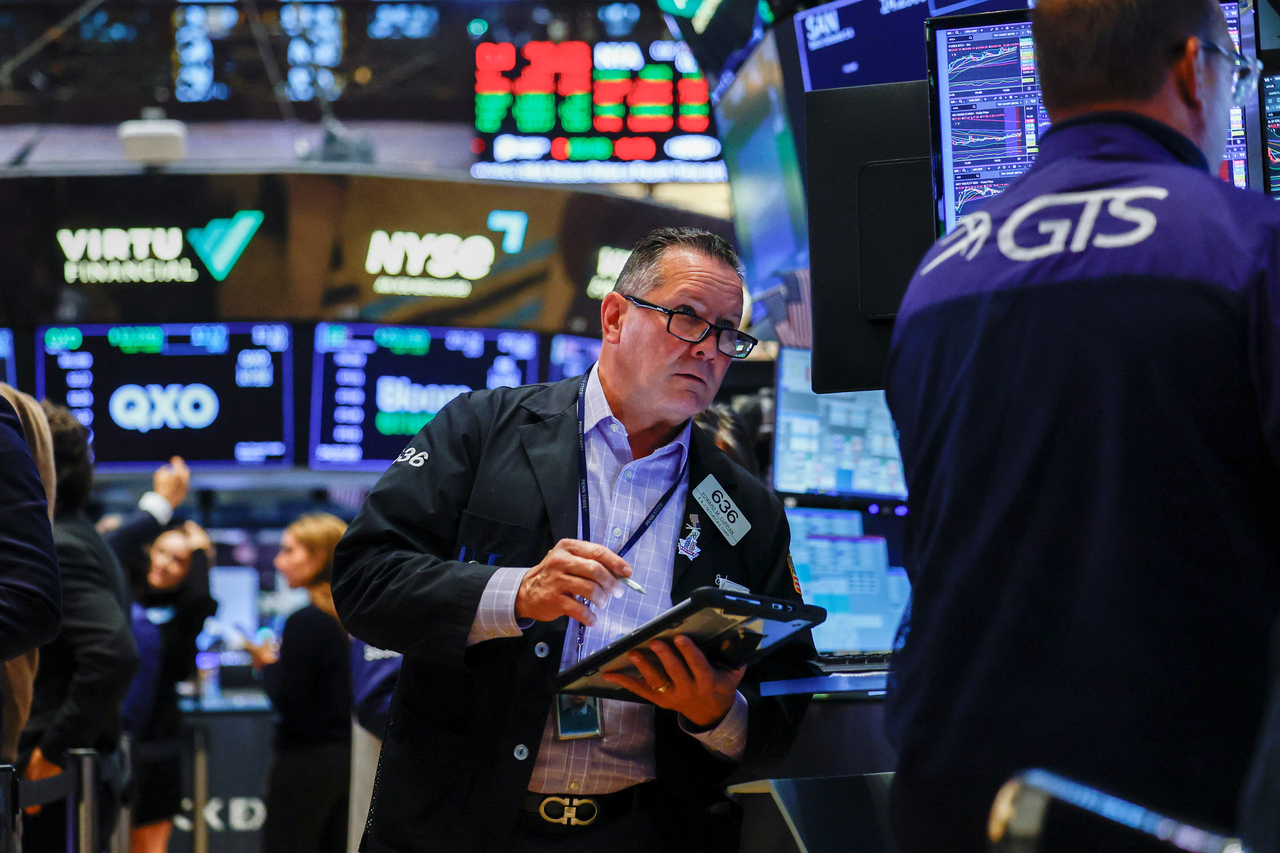
The Kospi closed Thursday at 6,296.38, down 301.88 points, or 4.58 percent, from the previous session.
The index opened down 119.51 points, or 1.81 percent, at 6,478.75 and extended its losses through the session, touching an intraday low of 6,238.32. When the index fell more than 5 percent, a sidecar — a temporary halt on program sell orders — was triggered at 10:18 a.m.
moon@heraldcorp.com