A consensus is forming within the Democratic Party of Korea that the supply of non-apartment housing — including row houses and multi-family homes — should be expanded to address the rental market in the short term. The thinking is that relying solely on long-term apartment supply is insufficient to stabilize the jeonse and monthly rent market, and that non-apartment units deliverable within roughly a year need to increase.
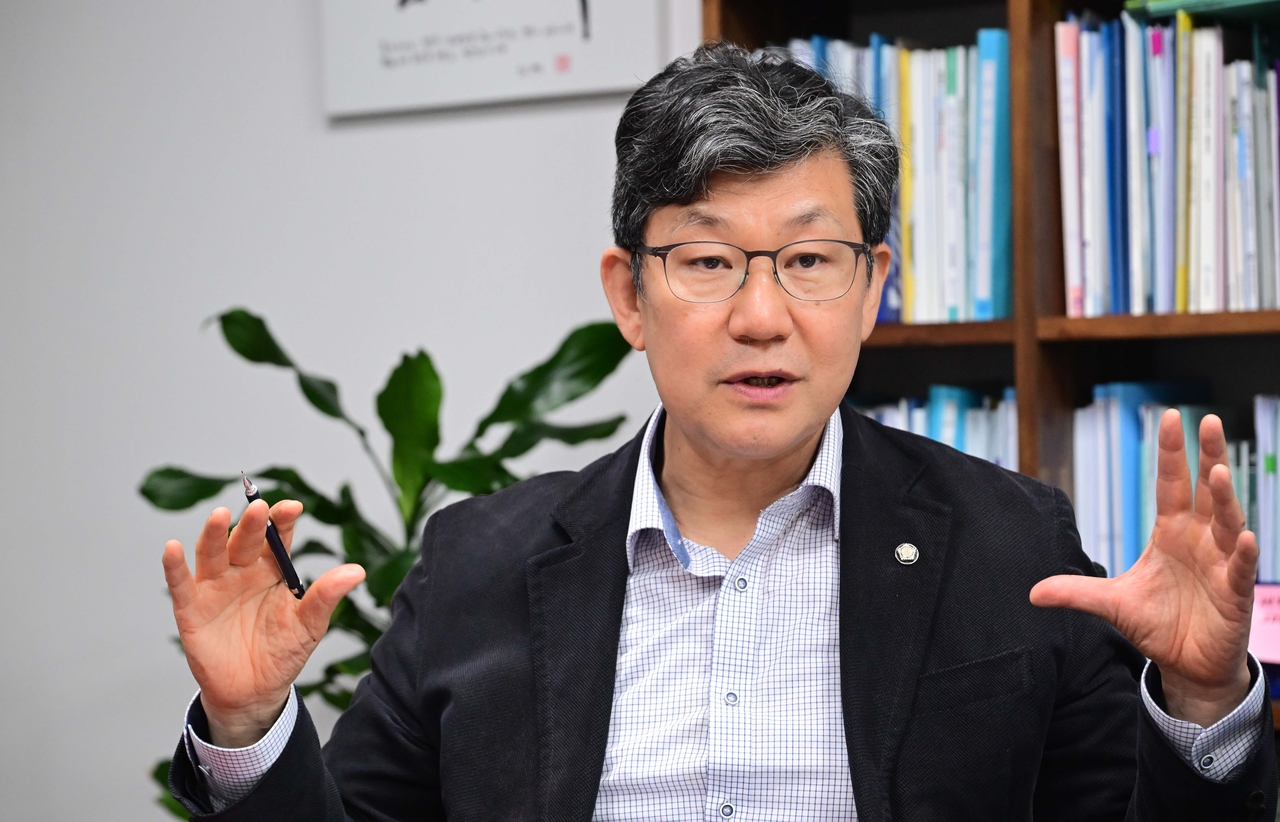
Rep. Kim Nam-geun of the Democratic Party of Korea, a member of the National Assembly's Land, Infrastructure and Transport Committee, said in an SBS radio interview Friday that "there is a degree of consensus on increasing the supply of row houses and multi-family homes that can actually be delivered in about a year, as a way to address the jeonse and monthly rent problem in the short term."
Kim said Seoul faces a shortage of large housing sites and therefore needs to pursue multiple supply methods in parallel — not only reconstruction and redevelopment, but also public-led redevelopment, public urban complex development, and row and multi-family housing. "If we insist on only one particular supply method, supply cliffs will keep recurring," he said.
He also took direct aim at Seoul Mayor Oh Se-hoon, saying the Seoul Metropolitan Government had failed to actively push non-apartment supply projects and had not properly spent budget funds provided by the central government. Kim added that while Seoul's housing supply target for this year stands at 66,000 units, only 10,000 had been delivered through May.
On Mayor Oh's supply policy, Kim said Oh had shown "a somewhat more forward-looking stance since the June 3 local elections, including pledging to throw Seoul's weight behind public redevelopment projects." But he added that "the problem is execution."
Kim said one of the key projects for supplying newly built multi-family and row housing is the new-build purchase rental program, under which Seoul Housing and Communities Corp. (SH) primarily acquires units using funds from the Housing and Urban Fund. "During Mayor Oh's tenure, a large portion of the related budget went unspent," he said.
He called for streamlining the permitting process — including merging the project implementation plan and management and disposal plan procedures — if legislative changes are needed. He also stressed that Korea Land and Housing Corp. (LH) must strengthen its staffing and fiscal capacity to improve the effectiveness of supply measures.
Kim also raised the need for confidentiality in announcing supply measures. "If you announce that a certain area will be developed, land prices can spike immediately," he said. Supply plans should be discussed with a degree of secrecy, he added, and anti-speculation measures — such as designating land transaction permit zones — should be rolled out alongside any announcement.
thanks@heraldcorp.com