"Homeplus is always by your side — happy shopping!"
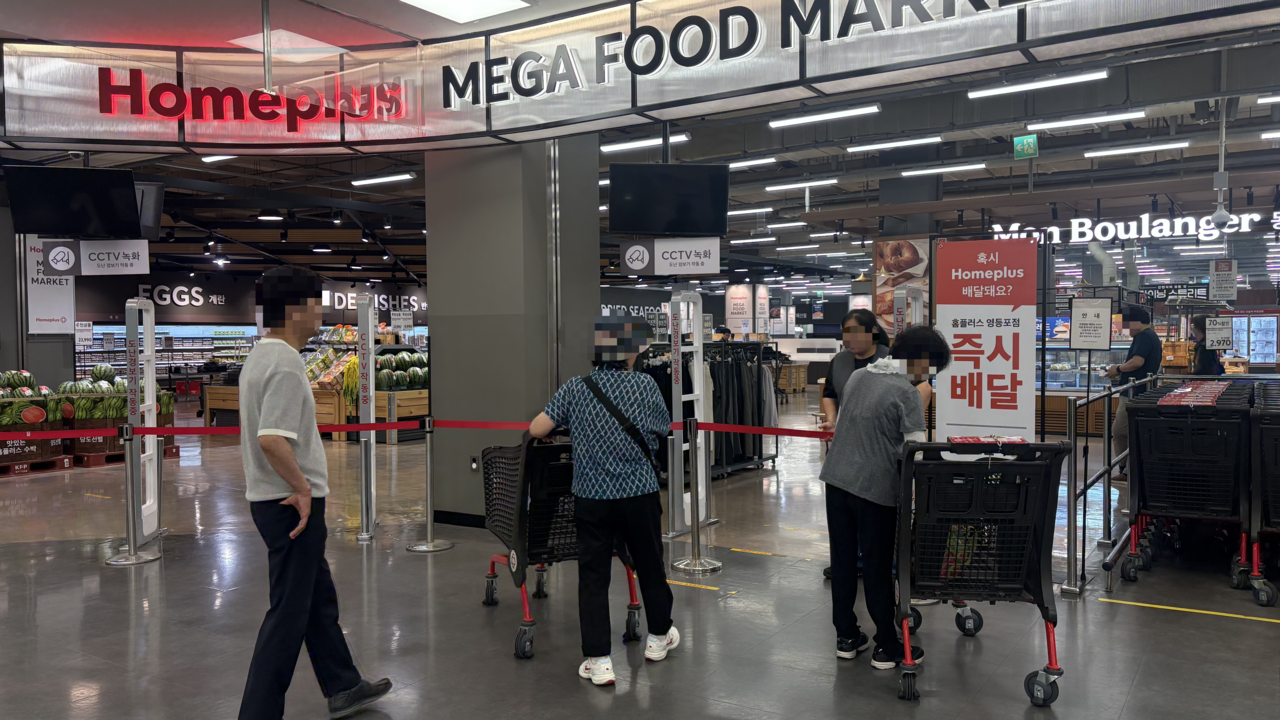
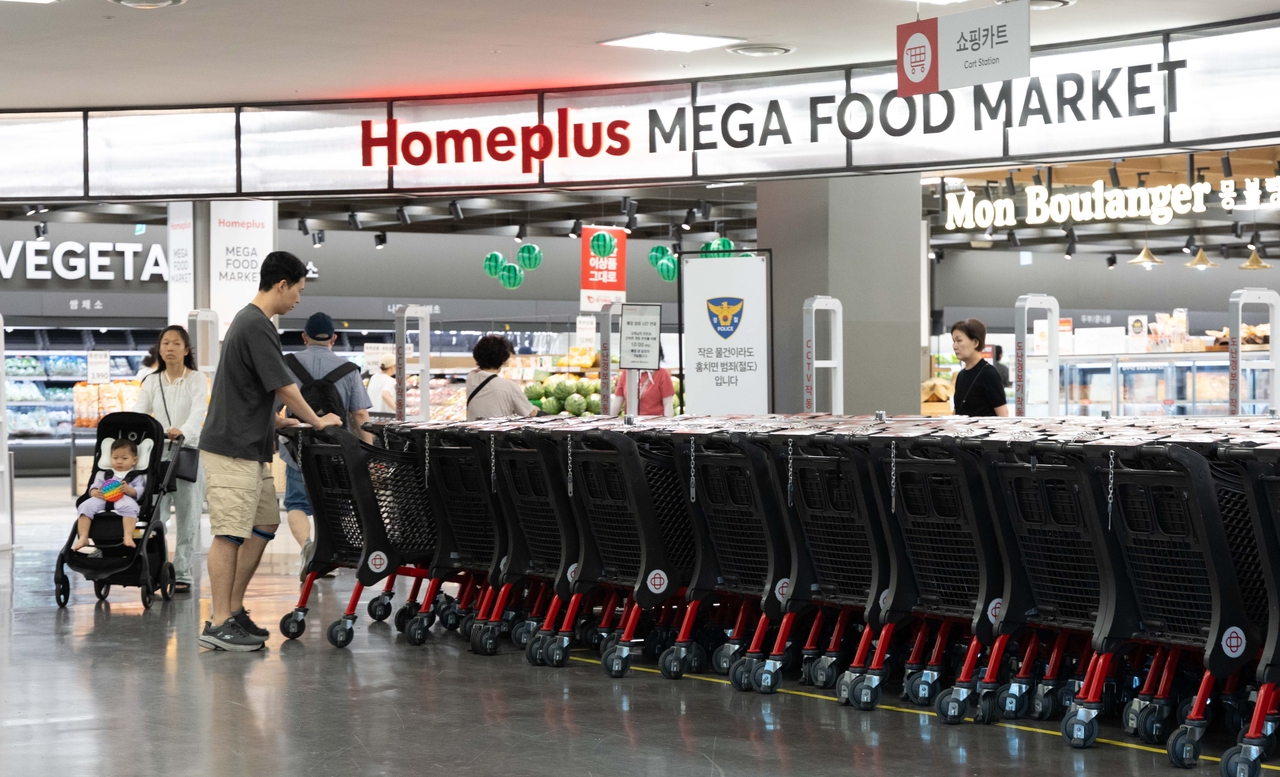
Homeplus reopened 67 stores nationwide at 10 a.m. Friday, after securing 200 billion won ($141 million) in emergency debtor-in-possession financing that allowed it to resume its court receivership proceedings. A reporter visiting one Seoul branch on the soft-opening morning found staff preparing to welcome customers to the familiar strains of the chain's jingle. On the basement food floor, shoppers had already lined up with carts, waiting for the doors to open.
One customer, who said she had been shopping at the branch since it first opened, said she came after seeing the news Thursday that the store would reopen. "If this store disappears, I'd have to take the subway just to go grocery shopping — that would be so inconvenient," she said. "It'll probably take a while for everything to be fully stocked, but I really hope they can keep operating."
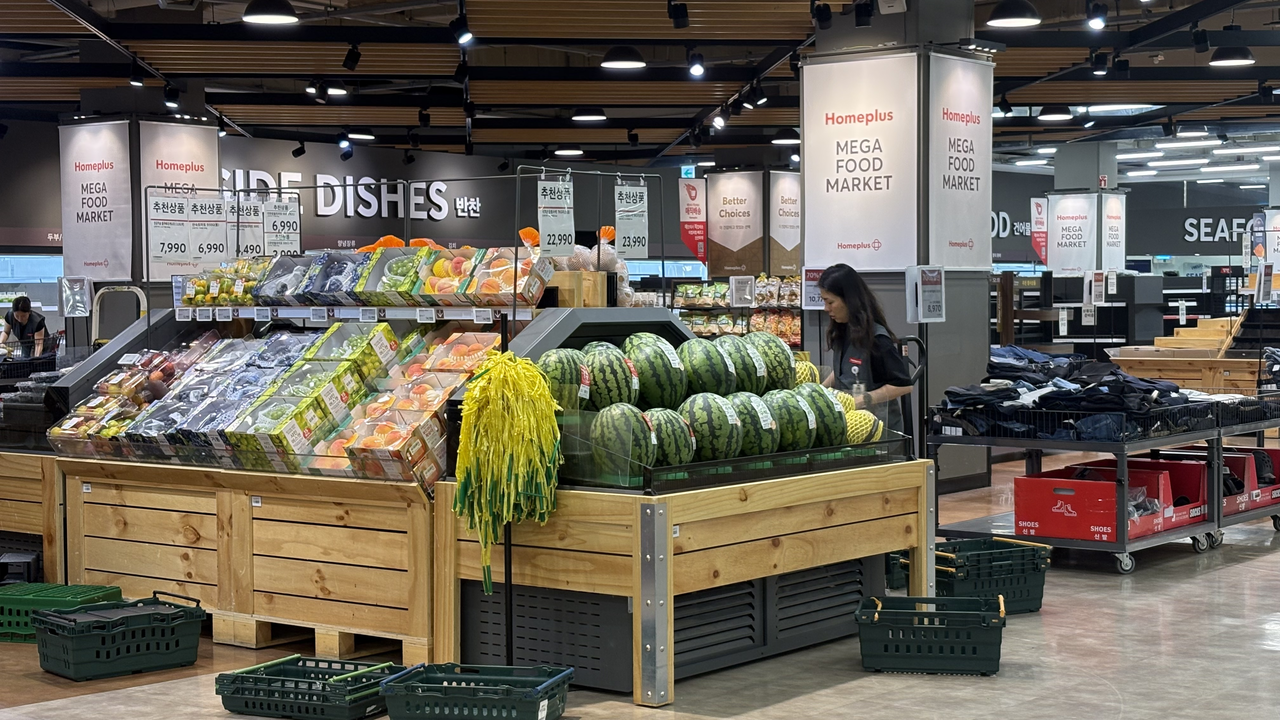
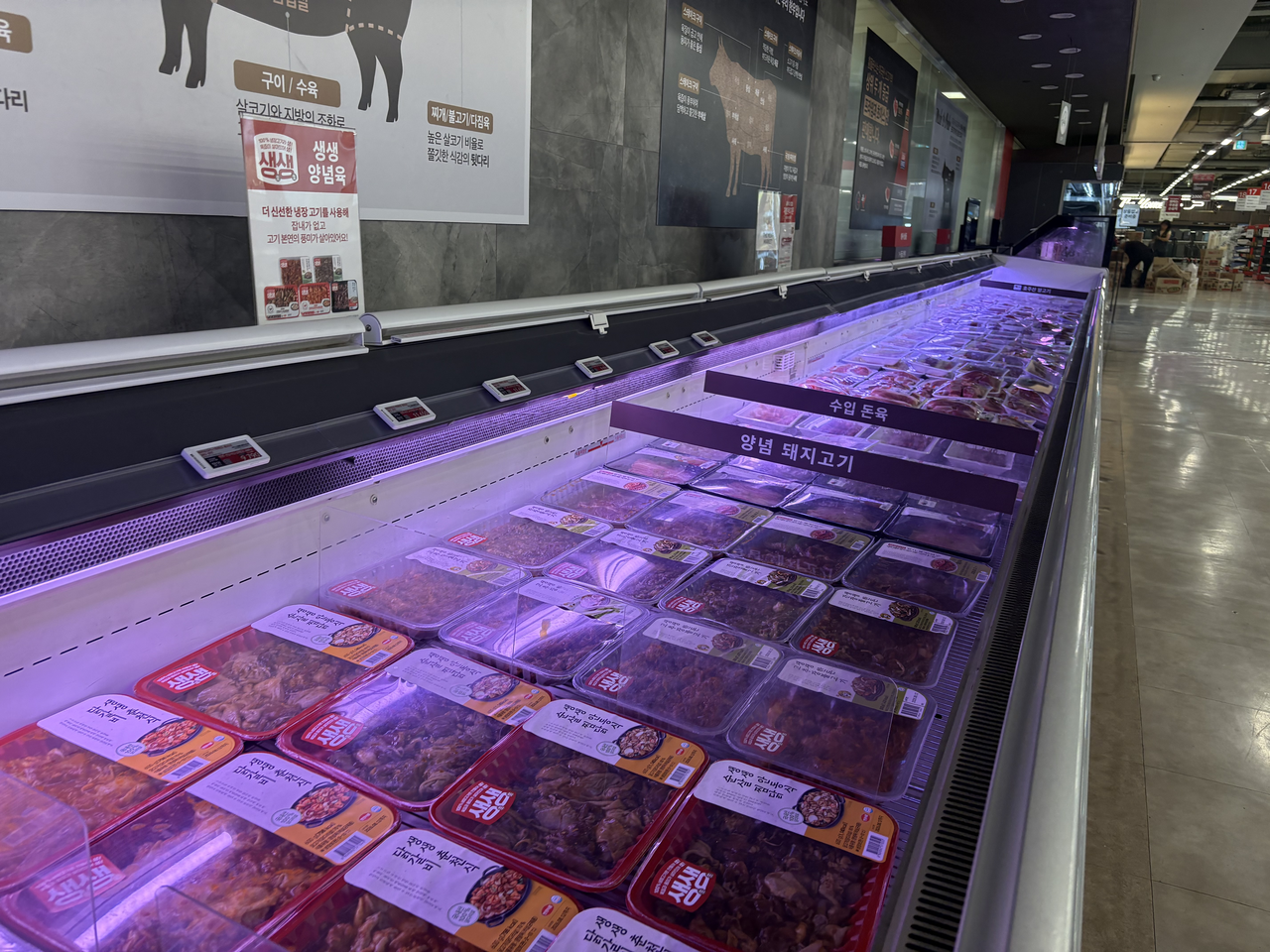
At 9:58 a.m., staff greeted customers with an energetic "Happy shopping!" and the doors opened. Employees were busy stocking shelves with green chili peppers, ramyun, cheese and other groceries, and swapping out promotional price signs. Products from Nongshim, Pulmuone and CJ CheilJedang — brands that had gone undelivered for some time — were visible on the shelves. The meat section was stocked with chicken, beef and pork, with the final stretch of the traditional summer heat period just a week away.
Some sections remained empty, however — including "Dining Street," a ready-meal corner, where a sign reading "Shelves under preparation" stood alone. Liquor and snacks had yet to arrive, and in some fresh-food aisles, clothing items had been placed on shelves as an awkward stopgap. According to Homeplus, stock levels stood at about 30 percent as of Friday.
Friday's reopening came about 25 days after Homeplus suspended operations at all its stores nationwide on July 13. The chain plans to bring in additional stock and address remaining issues before its official full reopening on Aug. 13. The closure followed a court ruling on July 3 to terminate its receivership proceedings, which left the company without sufficient operating funds. The situation was resolved after major shareholder MBK Partners and MBK Chairman Kim Byung-ju agreed to provide a personal guarantee, enabling the company to secure 200 billion won in DIP financing and continue the receivership process.
To restore normal operations, Homeplus has adopted what it calls a "Trader Joe's strategy" — scaling back store size and product variety. Rather than the wide-ranging, high-volume approach typical of large hypermarkets, the chain plans to focus on high-turnover food items, daily necessities and private-label products, mirroring the model of the American retailer. The strategy centers on improving cash flow within tight financial constraints.
Staffing has been cut to the minimum, with each store operating between 52 and 70 employees. The urgency stems from a looming deadline: the court-set deadline for approval of a rehabilitation plan falls on Sept. 4, less than a month away. Homeplus must demonstrate its viability by recovering earnings before that date.
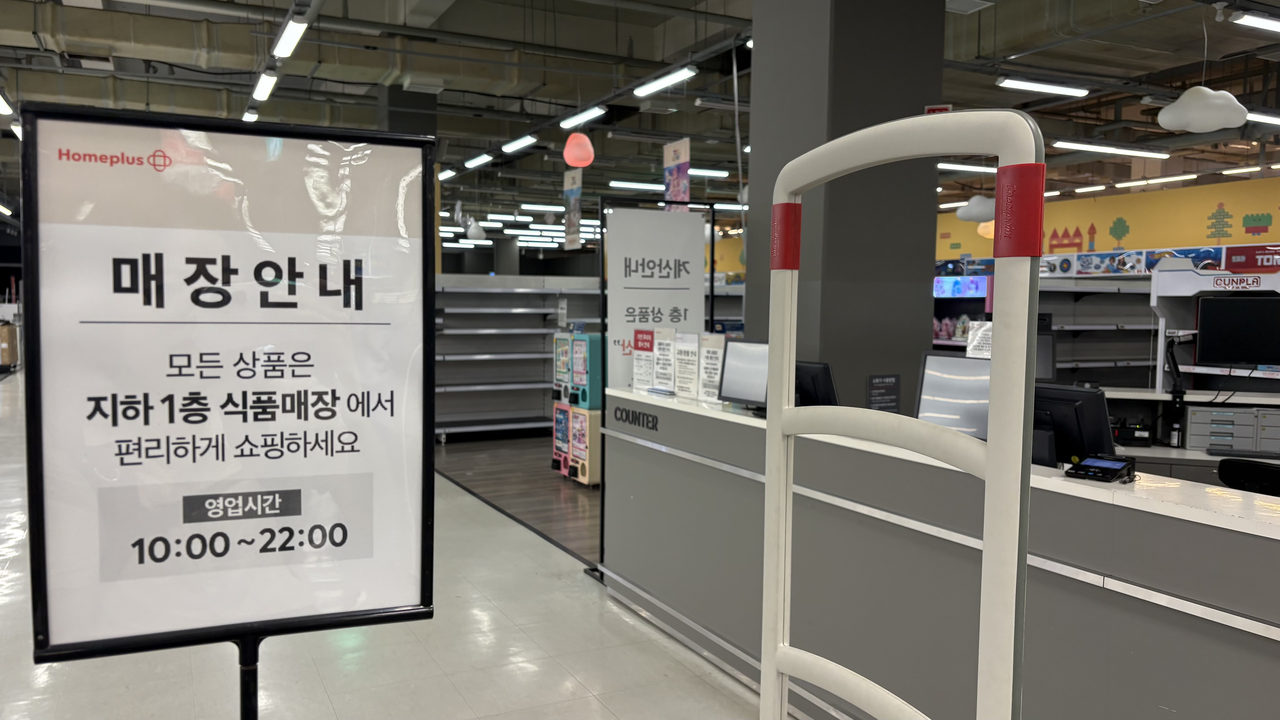
Multi-floor stores have been consolidated to a single level to improve efficiency. The first-floor sections dedicated to electronics and toys have been shut down, with operations concentrated on the basement food and daily essentials floor. The approach to product display has also changed. Rather than spreading items thinly across shelves to fill empty space as before the closure, the chain now stacks products densely on select shelves.
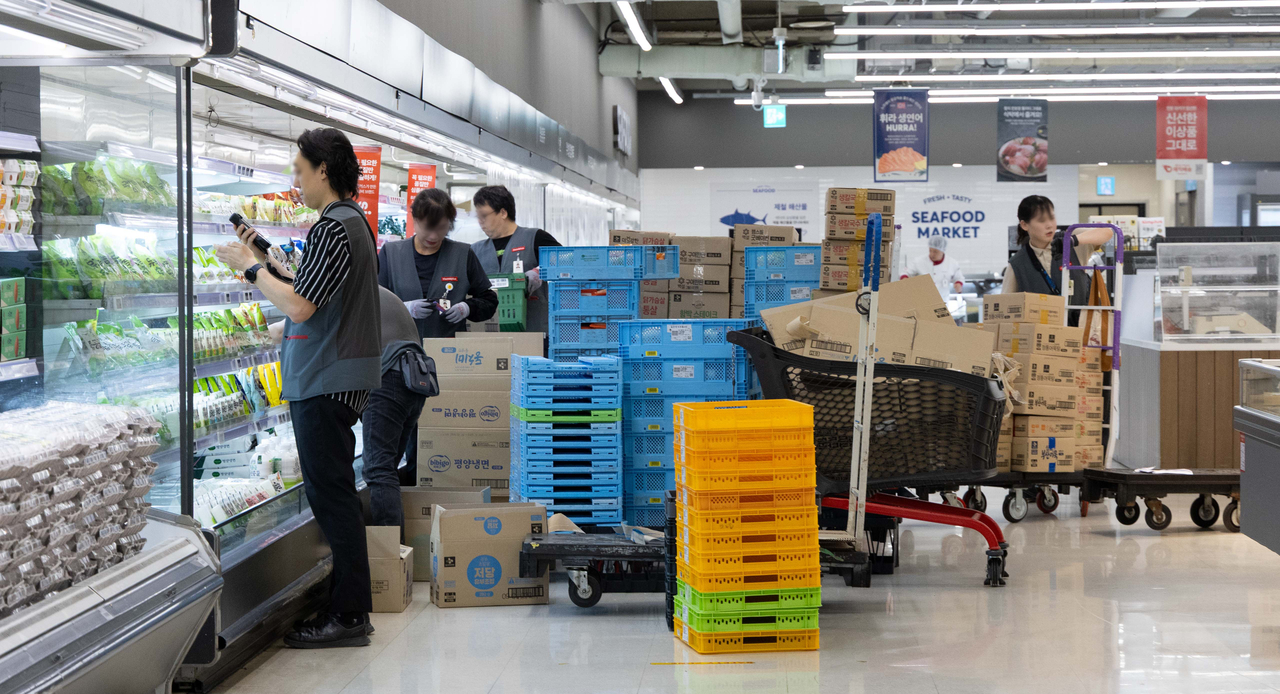
The biggest obstacle to a full recovery remains persuading suppliers to resume deliveries. Some vendors have reacted negatively, saying Homeplus is asking them to restock shelves without first settling outstanding unpaid bills. For suppliers, committing to additional deliveries while existing receivables remain uncollected is a significant financial risk.
Attorney Kim Tae-hee of law firm Pyeongsan has formed the "Homeplus Trade Public-Interest Creditors Council" to protect the rights of Homeplus suppliers and is recruiting member companies. The group aims to consolidate 790 billion won in public-interest claims and present a unified demand to the courts, government and National Assembly for prompt repayment and effective remedial measures.
Seo Yong-gu, a professor at Sookmyung Women's University's School of Business Administration, said a private-label-focused store strategy — which reduces Homeplus's dependence on outside suppliers — could improve the chain's chances of survival. "Ultimately, the key to normalization is securing competitive private-label products while at the same time rebuilding trust with suppliers," he said.
siuu@heraldcorp.com