When the lights went out inside the firefly experience zone, more than 13,000 fireflies began to flicker like bulbs on a Christmas tree — a sight that brought back childhood memories of summer nights spent playing near the water.
Everland, operated by Samsung C&T's resort division, launched its Midsummer Night Firefly Festival on July 24. The event is the largest firefly viewing experience in South Korea, giving visitors a close-up look at an insect rarely seen in cities.
Everland has run the program since 2017, but made it free to the public this year, drawing a steady stream of visitors. Sessions are held daily from 5 p.m. to 9 p.m. at the Lost Valley education center, with each session lasting about 15 minutes. Some 30,000 visitors came in the first two weeks after opening. The festival runs through Aug. 30.
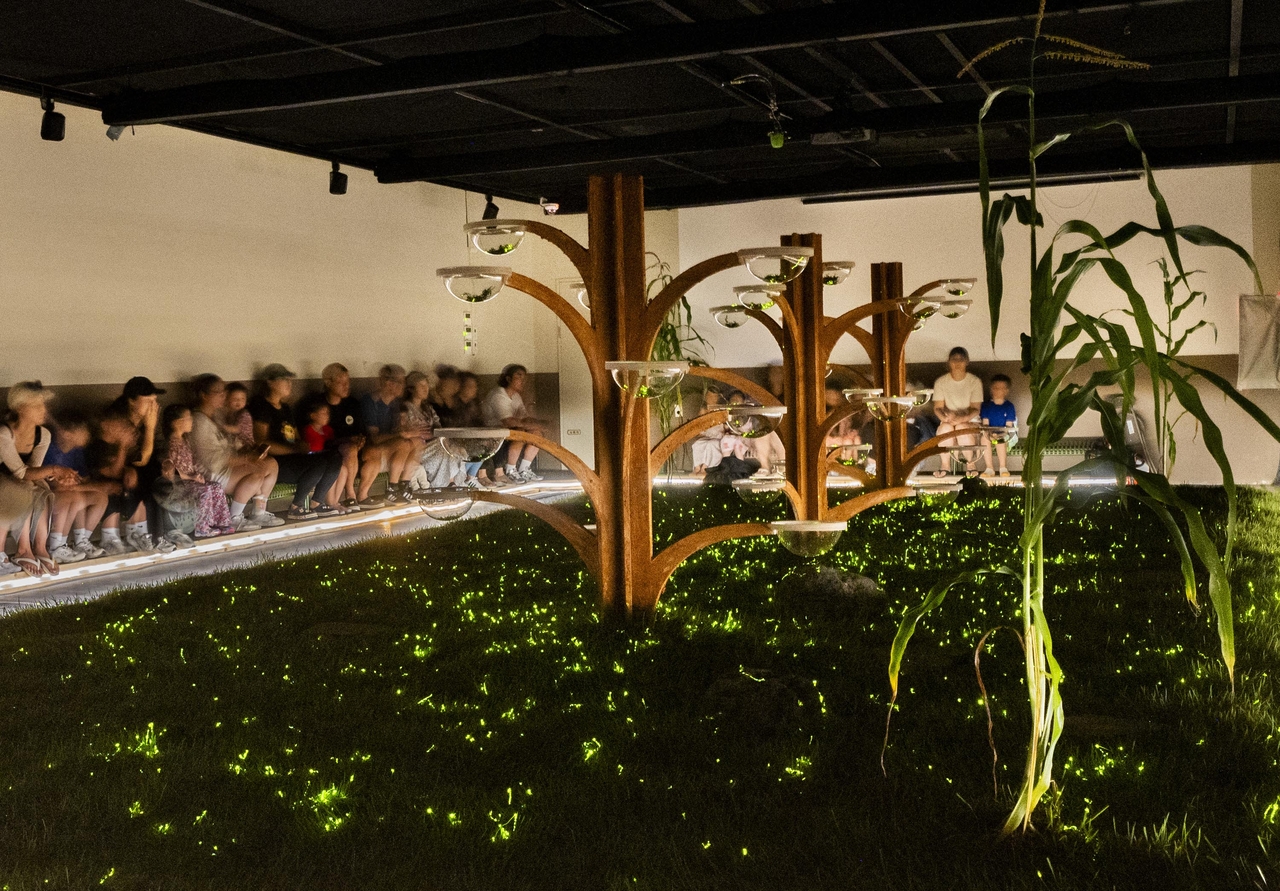
Each session begins with an indoor lesson led by a zookeeper, who walks visitors through the firefly life cycle from egg to larva, pupa and adult. Participants then move into the darkened experience zone for the main event.
The habitat is carefully managed to suit fireflies, which thrive only in clean environments. A mist system used in semiconductor production facilities maintains the temperature and humidity needed to keep the insects healthy.
Everland's zookeepers spend the entire year raising more than 10,000 fireflies for the festival, which opens each summer. The park first succeeded in artificially breeding the species in 1998, and 27 years of accumulated expertise now underpin the program.
"Fireflies are extremely sensitive to stimulation from the larval stage," said zookeeper Kim Jin-mok. "We counted and raised them one by one with chopsticks until they reached adulthood."

The firefly experience zone sits near Lost Valley, Everland's eco-style herbivore safari, making it easy for animal-loving families to combine both attractions. Lost Valley is home to a range of herbivores including camels, elephants and rhinoceroses.
The giraffes, however, steal the show. On a lucky visit, one may lean its head right into the safari bus. After snatching food with its long tongue, the animal seemed to wear an expression of quiet satisfaction.

A five-minute walk away, at Ppuppa Town, visitors can meet Raon, a baby lion born at Safari World in June. The first lion cub born at Everland in eight years, Raon made its public debut on Wednesday. Hand-raised by zookeepers, the cub now weighs 5.5 kilograms and is growing healthily.
Raon bounded around playfully the moment a zookeeper appeared, as if greeting its mother. "Raon is currently at the weaning stage and is growing normally on a meat diet," said zookeeper Kang Hye-yun, who is caring for the cub. "We plan to move it to Safari World in stages after going through the necessary process internally."

Even late at night, Safari World offers vivid encounters with predators — lions, tigers and brown bears among them. Everland moved its night safari, previously held in autumn, to the summer season this year, running the Summer Night Safari until 9 p.m. to take advantage of cooler evening temperatures during the heat wave.
As with the firefly festival, admission to the night safari is free this year, broadening access. In the roughly 50 days since it opened in June, about 120,000 people have visited.
True to Everland's claim that predators become more active after dark, the animals inside Safari World were visibly alert at night. Tigers that had been sleeping during daytime visits were prowling their enclosures after sundown.
For the Liberation Day holiday, Everland will extend its night hours until 11 p.m. for three days from Aug. 14 through Aug. 16. The park is also offering discounted evening admission tickets, valid from 6 p.m., to attract visitors looking for a night out.

Jeong Dong-hui, director of the Everland Zoo, said the park has installed shade structures to shield animals from direct sunlight during the heat wave and uses mist systems to maintain humidity. "We are helping the animals get through the heat together with our zookeepers by providing supplements and special food tailored to each individual's age and condition," he said.
Jeong added that the firefly festival was expanded and made free this year so that children who have never seen a firefly can have a chance to think about the environment and living things. "We also plan to run a hands-on program where visitors can experience the full firefly life cycle themselves," he said.

jeongwan@heraldcorp.com