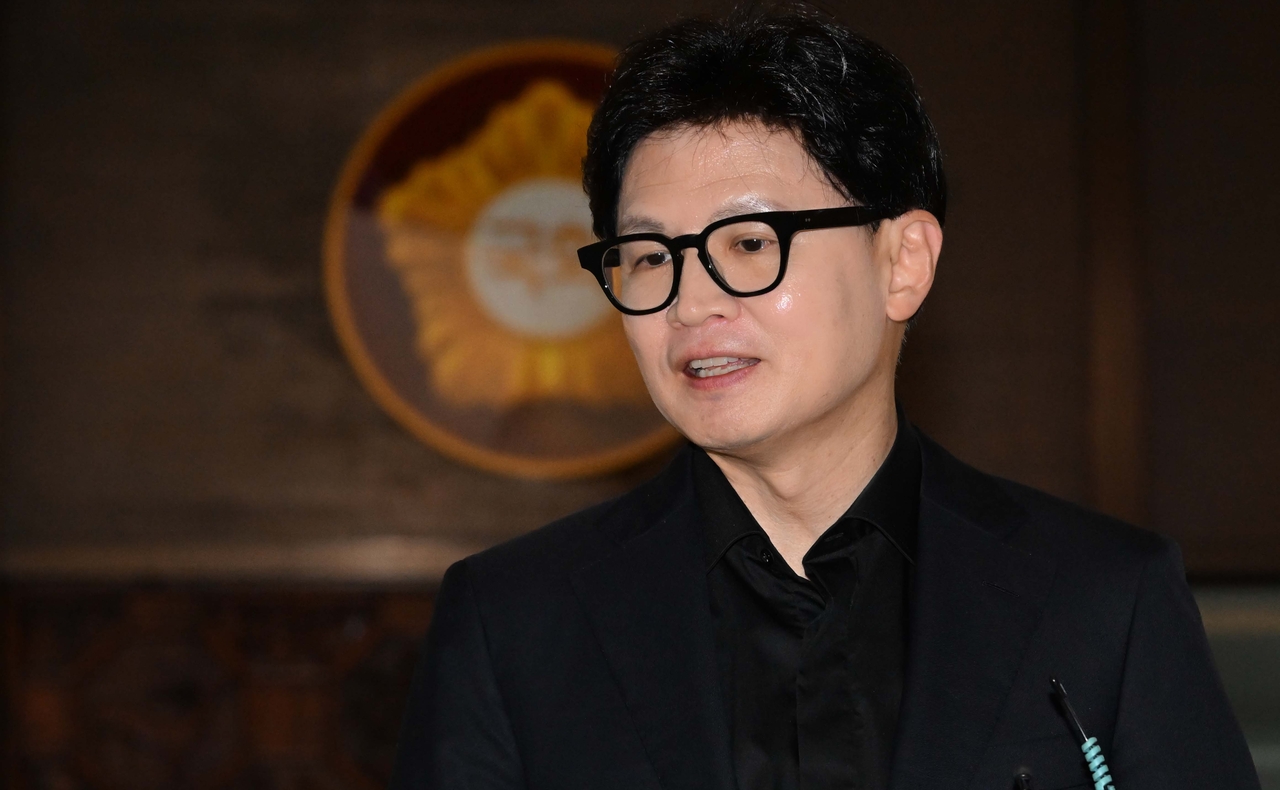
![Jeong Jin-guk, executive vice president and head of Samsung Electronics' Samsung Research Next-Generation Communications Research Center. [Samsung Electronics]](https://wimg.heraldcorp.com/news/cms/2026/08/10/news-p.v1.20260810.0d412286bd62456386b87155a0db6367_P1.jpg)
Samsung Electronics said Monday it has successfully completed a validation of AI-based next-generation communications technology jointly developed with Japanese mobile carrier NTT Docomo.
The validated technology is a "user-customized network quality optimization" solution built on an AI radio access network, or AI-RAN, co-developed by the two companies.
The system uses AI to analyze each user's service usage patterns and real-time wireless network conditions, predict potential quality degradation and automatically apply optimal network settings for each user.
The companies expect the technology to contribute to realizing an "AI-native future network" — one that autonomously recognizes each user's situation and requirements and delivers the best possible connectivity.
Previously, a single set of network configurations was applied uniformly to all smartphones connected to a base station, causing connectivity drops and quality degradation in areas with weak signals. The newly developed technology has AI learn each user's movement patterns and service usage habits to detect early signs of quality deterioration, then select the optimal frequency band and network settings before problems arise.
For example, if buffering or video quality degradation is anticipated while a user streams content, the AI predicts the issue and automatically applies optimized network settings, allowing the user to enjoy high-definition streaming without interruption.
In simulations using data from NTT Docomo's 5G test network in Japan, the two companies confirmed that the frequency of service throughput degradation fell by roughly half, dropping from 13.1 percent to 7.2 percent.
The two companies also developed a process to minimize network load during AI-RAN operations. Under the previous approach, wireless environment data had to be collected and processed all at once, placing a heavy burden on the network. The new process selectively handles only the information relevant to each specific problem a user encounters, reducing that load.
The companies jointly submitted this network data-processing procedure to 3GPP (3rd Generation Partnership Project), the global mobile communications standards body, in February, continuing their collaboration on 6G technology standardization.
"This validation demonstrates that AI can meaningfully improve individual users' service experience," said Jeong Jin-guk, executive vice president and head of Samsung Research's Next-Generation Communications Research Center at Samsung Electronics. "We will continue to advance AI-RAN technology and deepen our standardization cooperation with NTT Docomo to lead the development of user-centric future communications technology."
Masuda Masafumi, head of NTT Docomo's 6G Technology Division, said the results represent "an important step toward realizing user-centric communications experiences in future networks," adding that the company would "enhance AI-based technology and service quality to deliver new value to customers."
joze@heraldcorp.com