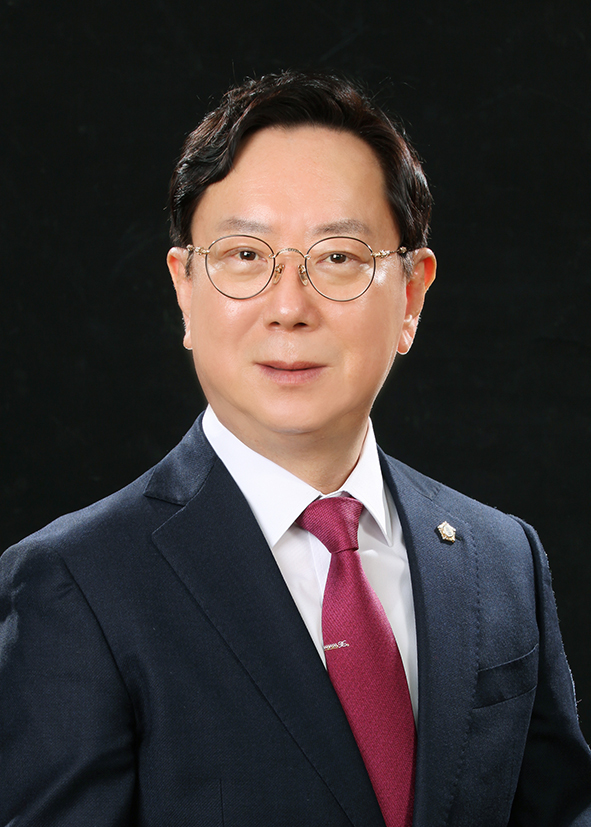
Kim Gwang-cheol, a Seoul Metropolitan Council member representing Songpa District 2 for the People Power Party, is focusing his legislative work on linking Songpa's cultural, sports and tourism infrastructure with local commercial districts, while also addressing pressing community issues including apartment reconstruction, a public office complex development and the expansion of recreational sports facilities.
Having previously served on the Songpa-gu council, Kim said he intends to draw on that experience to channel Seoul Metropolitan Government policy and financial support toward projects too complex for the district to handle on its own. He said close cooperation between the city and the district is particularly important on issues that directly affect residents' daily lives — including transportation, urban planning, housing conditions and community infrastructure.
"An important role of a city council member is to ensure that demands raised in the community are not left as mere suggestions but are actually reflected in Seoul's policies and budget," Kim said. "I will work to build momentum for the projects that residents need so they can feel the change themselves."
Serving on the Culture, Sports and Tourism Committee of the 12th Seoul Metropolitan Council during its first half, Kim has identified connecting Songpa's scattered tourist attractions and commercial areas into a single integrated zone as a central legislative goal.
He noted that Songpa already has a strong tourism base, including Olympic Park, the Jamsil Tourism Special Zone, Seokchon Lake, the Bangi food street and Songnidan-gil. Rather than promoting each attraction separately, Kim — who previously served as chairman of the Songpa Jamsil Tourism Special Zone Council — said the priority should be broadening visitors' travel routes within the district to extend the time they spend there.
His plan centers on connecting Olympic Park's performance and sports offerings with the dining scene at the Bangi food street and the shopping and tourism infrastructure around Seokchon Lake, Songnidan-gil and the broader Jamsil area. He said festivals, performances and sporting events should also be tied to nearby commercial districts so that spending by event-goers spills over into surrounding shops.
"Songpa already has more than enough competitive tourism assets," Kim said. "We need to create a structure where tourists don't just visit one spot and leave, but move through the whole district — eating, enjoying themselves and staying — so that the benefits reach even the small alley businesses."
To that end, Kim said he is reviewing measures to improve pedestrian conditions and wayfinding between major attractions, along with multilingual information services and smart tourism services to enhance visitor convenience. He also plans to lay the groundwork for small business owners and the tourism industry to participate broadly in related projects, ensuring that rising tourist demand translates into greater spending within the district.
He is also taking an integrated approach to culture and sports, treating them not as separate from tourism policy but as mutually reinforcing. Because large-scale performances, festivals and sporting events draw outside visitors, he said programs should be developed to channel those visitors into nearby accommodation, restaurants, traditional markets and small commercial streets before and after events.
Kim is also attending to neighborhood-level issues in parallel. In Oryun-dong, he is continuing consultations with relevant Seoul city departments to ensure that transportation, education, parks and everyday amenities are upgraded in step with the planned reconstruction of the Olympic Village apartment complex. The focus is on getting ahead of the lifestyle disruptions a large-scale redevelopment project is expected to bring.
In Bangi 1 and 2 dong, he is working to put the long-stalled Bangi-dong public office complex mixed-use development back on track. Because the project requires coordination among Seoul city, Songpa-gu and the Korea Land and Housing Corporation, he said he will work to align each agency's positions and ensure follow-up procedures move forward smoothly.
In Songpa 1 and 2 dong, he is looking for ways to balance commercial revitalization with the protection of residents' living environment along the busy Songnidan-gil strip, including improvements to parking and pedestrian conditions. He said he will also keep a close watch on the redevelopment of aging residential areas, including the reconstruction of the Hanyang 1cha apartment complex.
Push for Bangi Elementary archery facility; community voices to shape policy
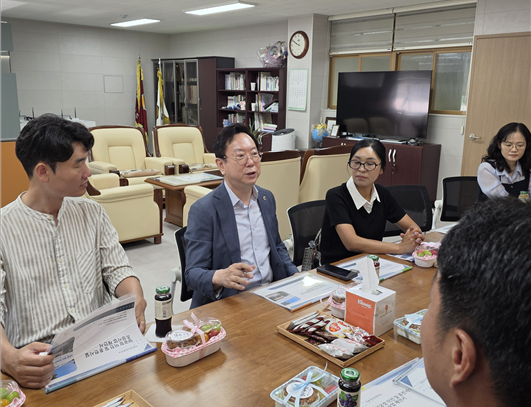
Improving training conditions for student athletes is also on Kim's agenda. On Friday, he visited Bangi Elementary School to hear from Songpa-gu officials and parents of archery team members about plans for a dedicated archery training facility.
Kim said the school's archery program operates with 15 student athletes along with coaches and instructors, but has no dedicated facility and currently uses a makeshift space for training. He said calls have grown for a proper space where student athletes can train safely without being significantly affected by weather or surrounding conditions.
The plan under review would use an approximately 400-square-meter site behind the school's annex building to create an archery training space equipped with a shooting line, targets and safety installations, along with ancillary facilities including equipment storage and a coaches' room. The estimated project cost is about 1.2 billion won ($848,000), and securing funding through a cost-sharing arrangement among the Seoul Metropolitan Government, Songpa-gu and the Seoul Metropolitan Office of Education will be key to moving the project forward.
"Providing student athletes with a stable training space is not just a matter of athletic performance — it is directly tied to their safety," Kim said. "I will continue working with the city, the district and the education office to divide responsibilities, secure the necessary funding and get the dedicated training facility built."
Going forward, Kim said he plans to concentrate his legislative efforts on connecting everyday grievances and long-standing community requests gathered in the field to Seoul city administration. In tourism and culture, he said he will focus on making effective use of Songpa's existing assets, while in housing, transportation and urban infrastructure, he will prioritize projects that bring direct, tangible improvements to residents' lives.
For projects spanning multiple agencies — including Songpa-gu, the Seoul Metropolitan Government and the Seoul Metropolitan Office of Education — he said he will focus on clarifying each agency's role and accelerating the consultation process to improve execution. He added that he will continuously monitor progress from community input through budget allocation and administrative procedures to reduce delays.
"I will work to grow Songpa's strengths in culture, sports and tourism into an engine of local development, while also carefully tending to the everyday issues residents need addressed," Kim said. "I will be faithful to my role as a bridge that connects voices from the community to Seoul city policy and delivers real results."
7toy7@heraldcorp.com