"It felt like testing my limits — like seeing the very end of myself."
It was an epic undertaking: compressing a 15-hour masterwork into 205 minutes. In a sense, it was a door opening onto uncharted territory, a crossing of a universe with no visible end. Soprano Lee Myung-joo, a self-described Wagner newcomer, said those words after completing her debut as Brünnhilde.
Richard Wagner's four-opera cycle "Der Ring des Nibelungen" is like a vast mountain range. The sheer scale demands enormous physical and musical stamina from singers and orchestra alike, making it a daunting undertaking. Without the right conductor, ensemble and cast to carry the journey, the attempt can easily become reckless.
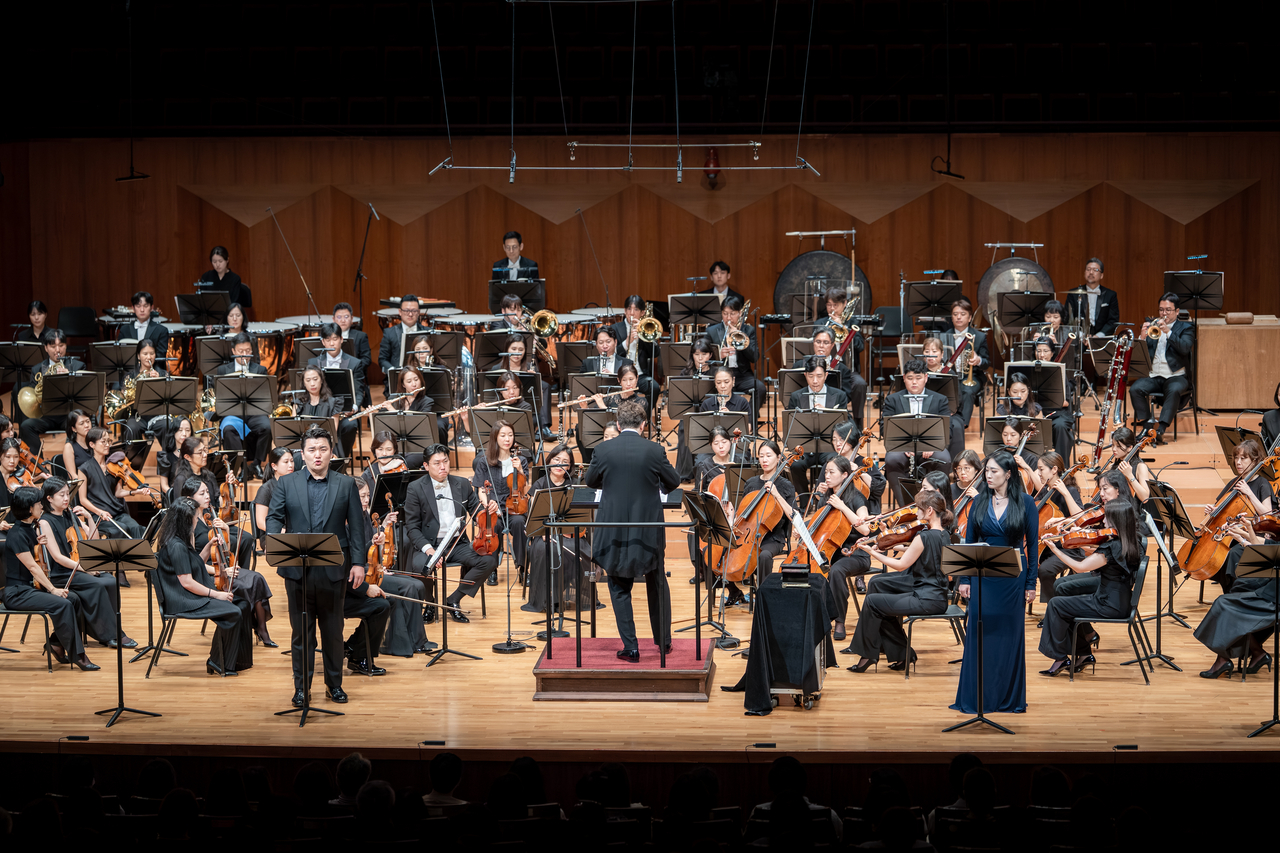
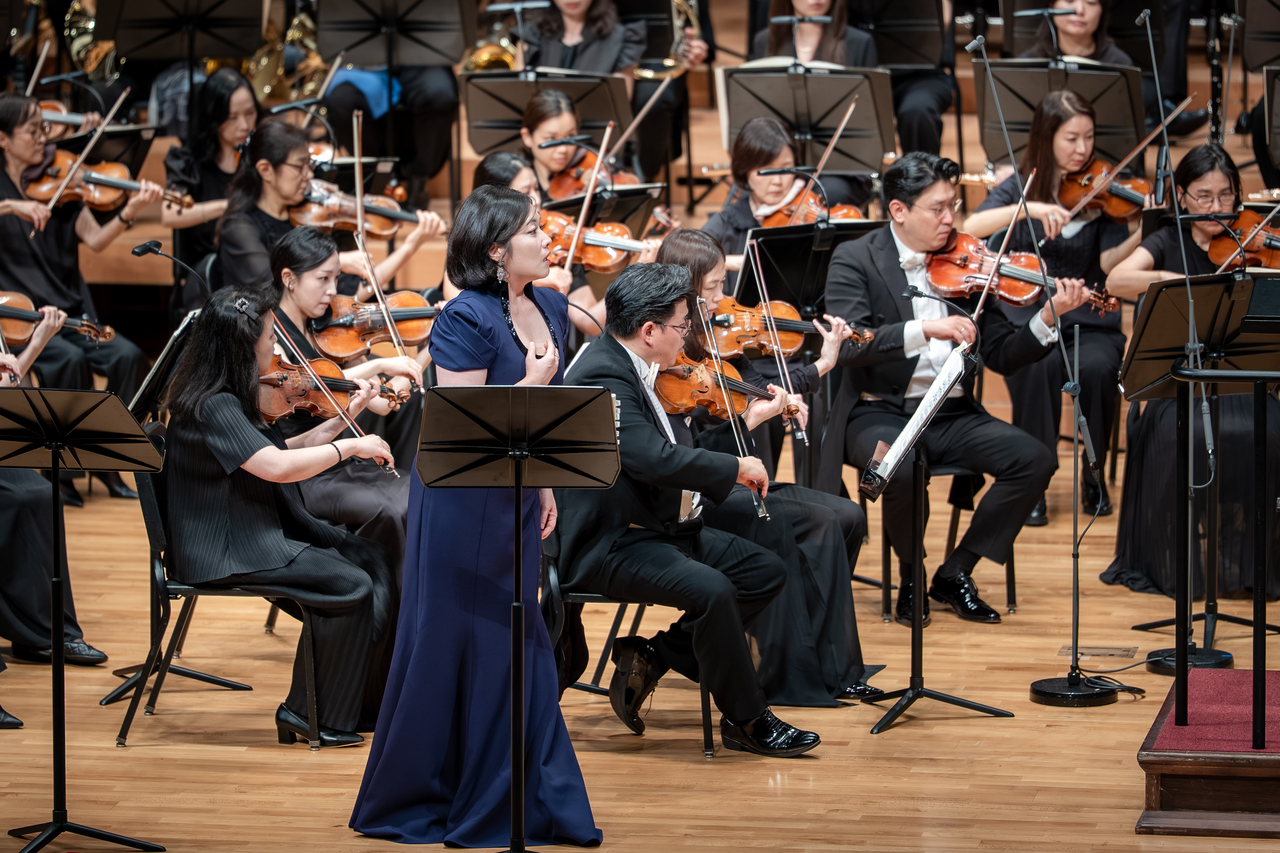
They pulled it off. Bass-baritone Samuel Youn, conductor Adrien Perruchon at the helm of the Bucheon Philharmonic Orchestra, and production company Art&Artist joined forces to present a highlights version of "Der Ring des Nibelungen."
"Because of the density of the scenes we chose, it felt as though we had passed through the entire Ring cycle. The emotional and musical intensity — you only truly understand it once you've played it from beginning to end." (Adrien Perruchon)
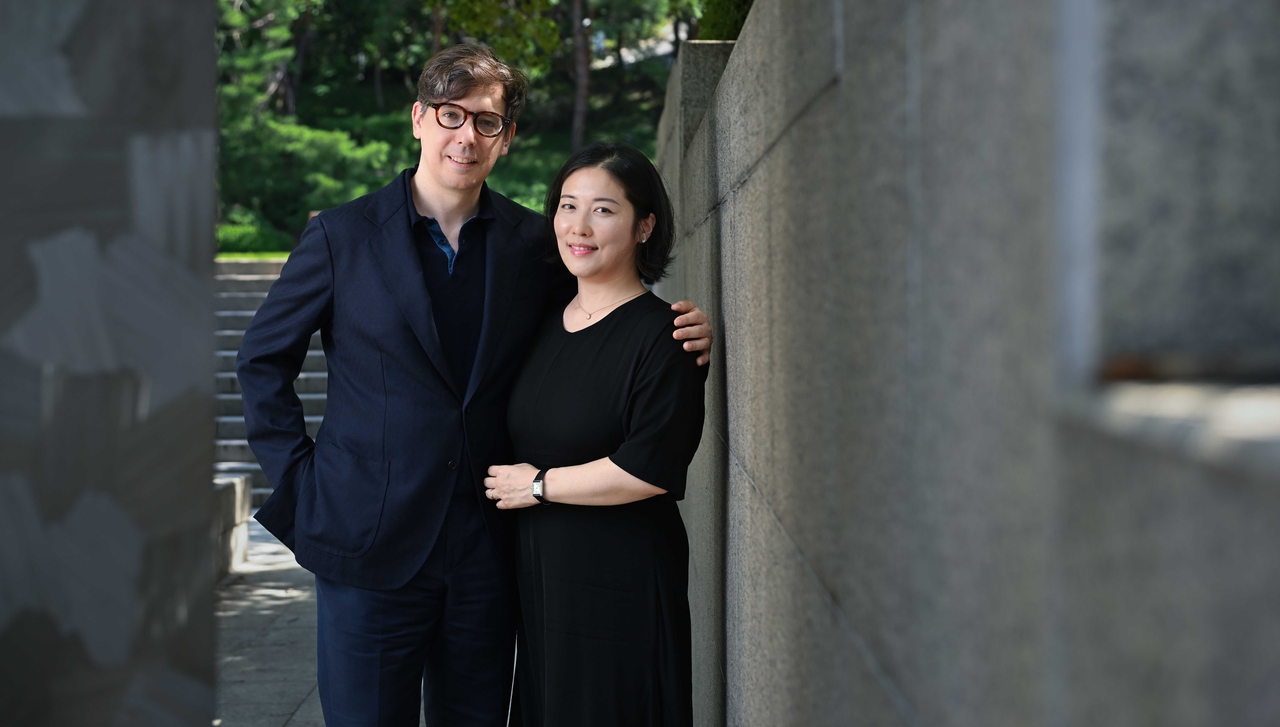
Fresh from a successful Wagner debut, soprano Lee Myung-joo, 44, and her husband, conductor Adrien Perruchon, 43, sat down for an interview with one final performance remaining — Friday at Bucheon Arts Center. They will return to the stage on the second day of the program, in keeping with the schedule of the 1876 Bayreuth world premiere, when "Die Walküre" (Part II) was performed. After the intensity of the journey, the couple come home and slip back into everyday life, asking each other, like any couple, "What should we have for dinner?"
"Doing something we had only ever imagined felt like seeing the very end of what we are capable of," the two said. "We are glad to experience this grand journey again at the second performance."
'205 minutes of Wagner: characters, relationships and compositional structure are the key'
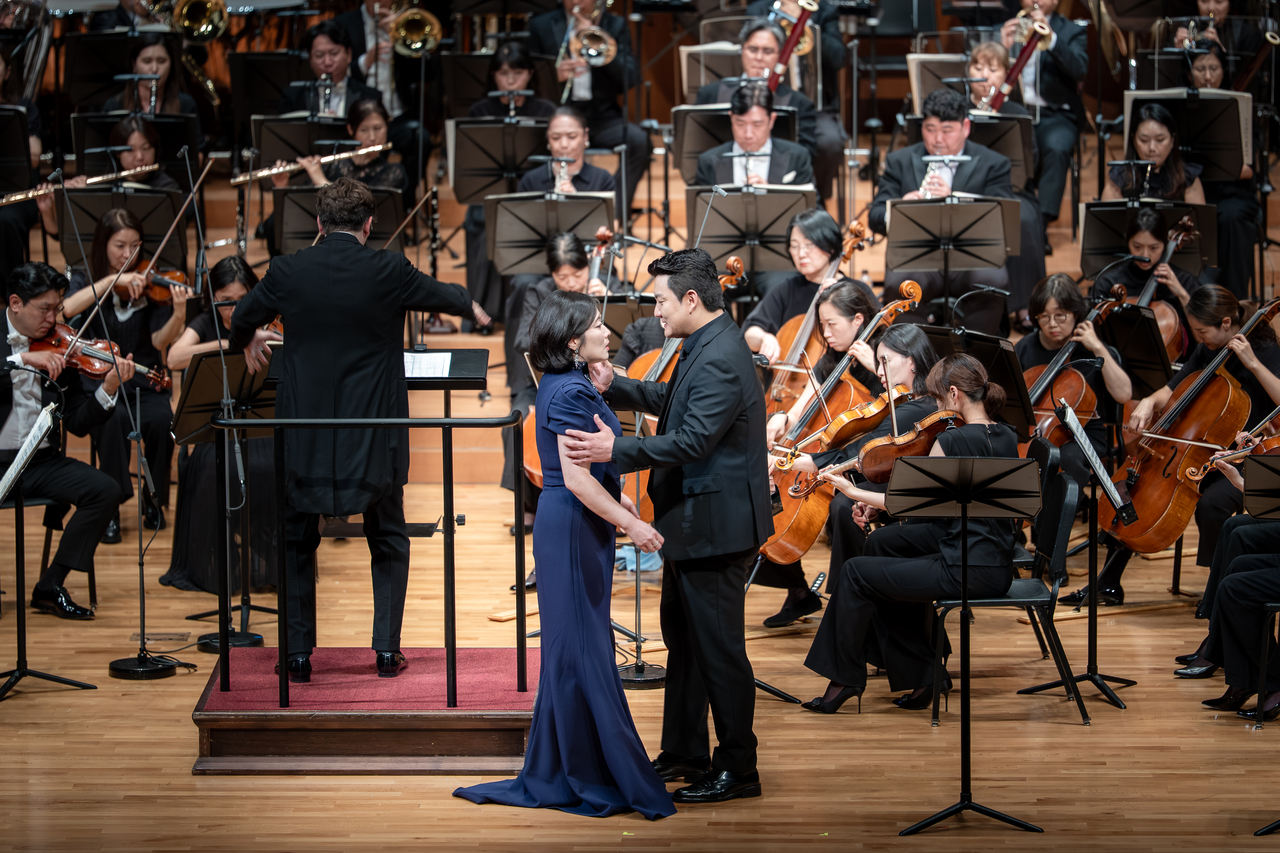
"I was watching from the dressing room on the monitor and saw what looked like a gray lump of rock on stage. At first I thought something had gone wrong." (Lee Myung-joo)
It was the scene in which the dwarf Alberich, having seized the all-powerful ring and reached the pinnacle of power, uses his shapeshifting ability. The schemer Loge goads him — "Can you transform into something even smaller?" — and Samuel Youn's quick thinking shone through: he had cleared away the music stand to create acting space, then pulled his suit jacket over his head to transform into a toad. Lee said the audience response was strong. "Once I realized it wasn't an accident but Samuel Youn, I burst out laughing."
What to keep, what to cut — those were the guiding questions. Most of the cycle was pruned away, but certain scenes were simply non-negotiable. The moment showcasing Youn's method-level acting was one of them.
Perruchon said the Ring "has a great deal of storytelling and relatively little outright action," adding that certain elements that set the world in motion had to stay — the murder of Siegfried, the transitions from one place to another, and the entrance of the gods in "Das Rheingold."
The four-hour condensed version was the product of close collaboration among Perruchon, Samuel Youn and Kim Jeong-ho, chief executive of Art&Artist. From early this year through the summer, the three pored over the score together for months, working through a painstaking process of detailed musical analysis before a dense, sharp condensation could take shape. Perruchon set three priorities: . preserve the characters who drive the story, the relationships between them, and Wagner's unbroken compositional architecture. "Because the number of singers was limited, we built the narrative around the interactions between characters," he said.
The orchestra's role is especially critical, because in Wagner the orchestra is never mere accompaniment. Perruchon sees Wagner's orchestral writing as something that "speaks without pause and constantly seeks dialogue with the singers."

"Unlike Wagner's early work 'Der fliegende Holländer,' the Ring flows like one long movement, so I wanted to avoid any sense of artificial interruption — to use the orchestral music to slide seamlessly from one scene into the next. I wanted to give the audience the experience of a total work of art that holds their hand from beginning to end and never lets go." (Adrien Perruchon)
Lee watched her husband's immersion in the world of Wagner in real time, for more than seven months. She recalled it as "a process of continuously revising the assignment of roles and the connections between scenes, meticulously calibrating the harmony, the text and even the number of bars, one by one."
The stage brought together 16 formidable singers, led by Samuel Youn and including Kim Ki-hoon — who performed in the Ring at the Berlin Philharmonic and the Salzburg Festival this year — as Donner and Gunther; Choi In-sik as Wotan; Kim Jae-hyeong as Siegfried; Lee Myung-joo as Brünnhilde; Park Seung-ju as Loge; and Kim Seung-jik as Siegmund.
Several among them were Ring newcomers. Lee recalled that when she first received the invitation, "before I even looked at the score, I wondered whether this was really something I should be doing." Studying the score changed her mind. She concluded that "the character resembles me, so my voice should suit it well."
Brünnhilde is the pivotal figure who brings the work to its conclusion. The role demands a particularly high range even among dramatic sopranos, and the voice must cut through a massive orchestra. Lee's vision of Brünnhilde was somewhat different from the norm.
"Many productions portray Brünnhilde as heroic, but I saw her as a woman of fierce will who becomes infinitely vulnerable in the face of love and stakes everything to protect it. In her decision to renounce her divinity and become human, and in the image of her grasping the ring and defying authority, I read conviction. I myself tend to follow my convictions and rarely change my decisions, so she was a character I desperately wanted to play." (Lee Myung-joo)
Lee looked inward at Brünnhilde's emotions and inner life. "Sopranos with powerful voices have long taken on this role because they need to project over the orchestration, but I don't think that was the direction Wagner intended," she said. "I wanted to show the character while producing sound in a natural, comfortable way."
One might expect a conductor and a soprano married to each other to exchange constant advice and feedback, but on this production the two respected each other's domain entirely. It was a process of standing by each other purely as musicians — and it reflects Perruchon's conducting philosophy. He emphasizes that "the conductor must serve as the common denominator, bringing everything into balance."
"When I conducted opera in Germany, it was common for several singers to share a single role. Each singer's approach to the character was different, which was sometimes challenging. Early in my conducting career, I learned to support and bring out the individuality of each singer as fully as possible. The same goes for the orchestra. Eighty people with eighty different personalities are playing together, and sometimes a musician will bring an idea that is better than mine. My role as conductor is to bring all of that together. Working with my wife is no different. My role is to support her one hundred percent." (Adrien Perruchon)
Maestro and Brünnhilde — partners who keep the warmth of everyday life
Seven years of dating, nine years of marriage. The couple — she is older — first met in 2010. At the time, Perruchon was principal timpanist of the Seoul Philharmonic Orchestra (2006–2016), holding a uniquely trusted position under conductor Chung Myung-whun.
Their first meeting came that August, at an after-party following a performance of Mahler's Symphony No. 2, "Resurrection." It was at a restaurant called Callas, in front of Seoul Arts Center, at an orchestra dinner where Perruchon first encountered Lee. That is why, whenever he recalls that time, Perruchon jokes that he "met his Callas." The matchmaker was conductor Chung Min, son of Chung Myung-whun. Lee laughed as she recalled: "Conductor Chung Min invited me to an orchestra after-party I hadn't been invited to — and it turned out he had arranged the whole thing to introduce the two of us."
Perruchon's ties to Korea run deep. After a connection formed in 2003 when he became the youngest principal timpanist of the Orchestre Philharmonique de Radio France under Chung Myung-whun, he spent many years as a member of Korea's leading orchestras. Through the Seoul Philharmonic he met Lee and built a family, and he went on to become music director of one of the country's foremost ensembles.
"I live in France, but I have never truly left Korea," he said. "As a musician, and above all as a person, I have gained so much here — so it is very special to have had the chance to build a life in this place. Whether you call it fate or a bond, I feel fortunate to be able to continue making music with the people I met the very first day I came to Korea."
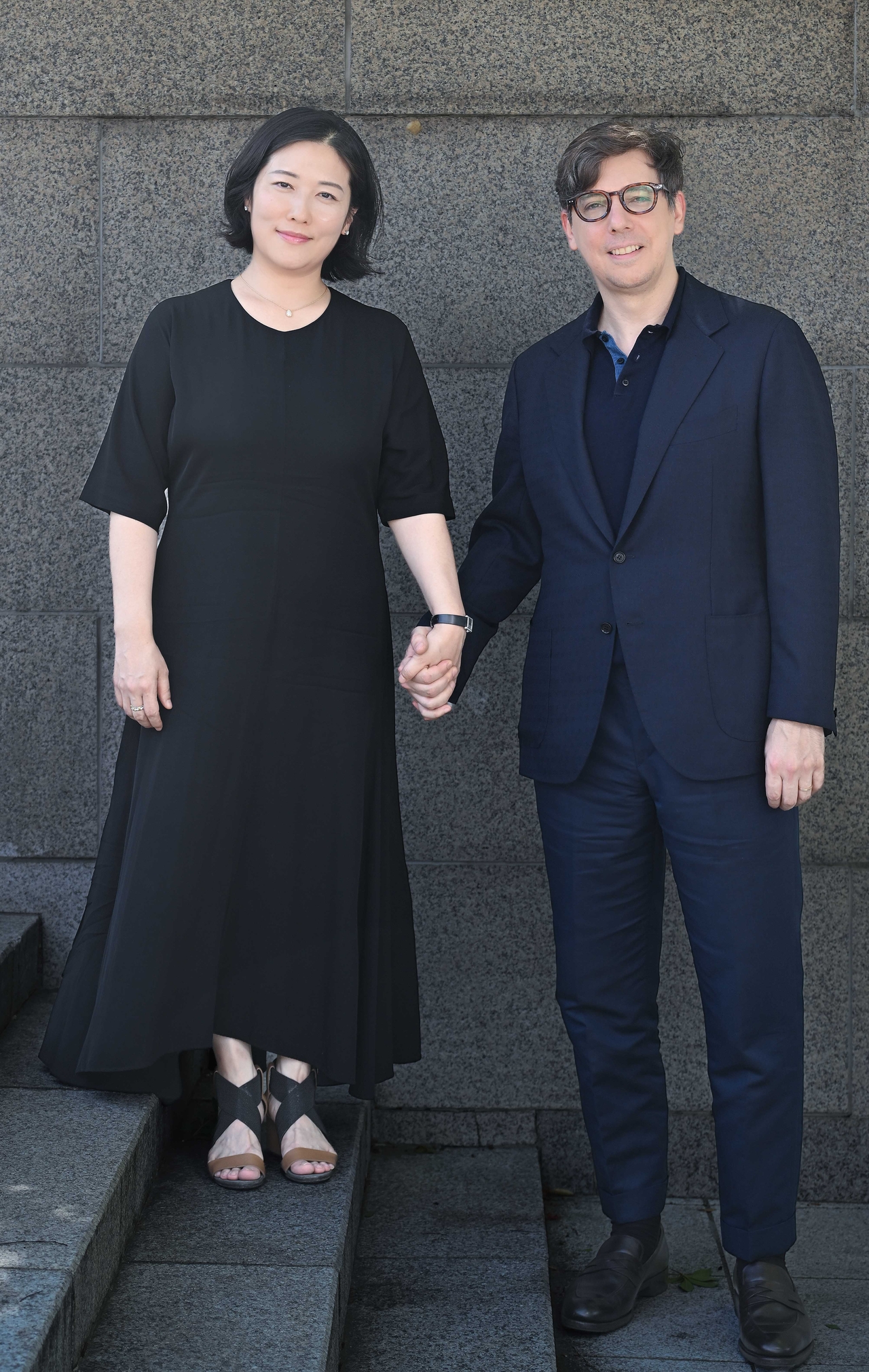
The musical couple had been colleagues and then lovers, watching each other's paths unfold from the start. Walking the road together and separately, they have been each other's compass and strongest supporter.
The influence of Chung Myung-whun loomed large in Perruchon's decision to revive his dream of becoming a conductor — a dream that earned him the nickname "Jeong-Peri," a portmanteau of the two men's names. He has said he is ready to pick up the timpani sticks for Chung "anytime, anywhere, whenever he calls."
It was Lee who proposed the practical path forward. She introduced her then-boyfriend to professor Kim Deok-gi, whose conducting class she had attended at Seoul National University, and actively encouraged him when the offer from the Bucheon Philharmonic came. "When the 'Mahler syndrome' swept through university campuses, the Bucheon Philharmonic under conductor Lim Heon-jeong was a towering presence," she said. "I believed my husband's focus, dedication and sense of ownership would serve the Bucheon Philharmonic well."
Their meeting feels at once like predestined fate and a perfectly timed coincidence. "Music is such a vast part of my life that I cannot speak of it separately from life itself," Lee said. "I thought that someone who doesn't understand music cannot understand me as a person, so I couldn't imagine being with someone outside of music." Listening to his wife, Perruchon added: "It's no coincidence that there are so many conductor-and-singer couples. When you perform together you depend on each other, but your approaches to making music are completely different — which makes you enormously enriching to one another."
Her husband and father-in-law both played decisive roles in a turning point in Lee's musical life. Around the time of the pandemic, she passed through a long and painful slump. For a perfectionist like her, music was "a realm where perfection can never be declared." A sense of sorrow — as a professional, as an artist, as an individual — followed her throughout her career.
"For a long time I didn't like my own voice. I wasn't satisfied with myself, and I thought it was unpleasant to listen to. My ideal voice was Maria Callas, but no matter how hard I worked or how deeply I analyzed a character, I couldn't reach the sound I had in mind. I wanted to be called an opera singer, but I worried that listeners might find me monstrous." (Lee Myung-joo)
The painful days stretched on. When she finally raised the white flag and told her husband she wanted to quit, Perruchon quietly encouraged her — by telling her to go ahead and quit. "I still haven't forgotten that day," Lee said. What lifted her back up was a story her husband told her about his father. When a journalist interviewing his father, composer Étienne Perruchon, asked whether it was common to listen to his own work at home, the elder Perruchon replied: "Why would I make music I don't love?" Hearing that, Lee wept without stopping. "From that moment I began to see my own strengths. I started thinking about what I do well, what others cannot do. And little by little, I began to love singing again." (Lee Myung-joo)
What Perruchon learned from his wife was the power of silence on stage. Endlessly diving deep to build a perfect musical world, then stepping onto the stage to shape an ideal one, Lee was a singer who wove even quiet moments into music. This was especially true of a performance in which she stepped in as a last-minute replacement for the role of Mimì in "La bohème." "A conductor's instinct is to push the music forward," Perruchon said, "but on that stage my wife fell silent and waited for the expression the moment required. Watching her, I thought: I need to bring these moments into my own music. It's something I'm still working on."
Music is a constant in their daily life, and the moment a playful debate starts — Puccini versus Verdi, for instance — it quickly turns into a lively argument.

"My husband has a firm position that Verdi is the more revolutionary composer, and we've had big arguments about it," Lee said with a laugh. "My view is that the ocean of music is endless, and that the two are simply different — you can't choose who is greater." Perruchon said such differences are entirely natural: the more you have in common, the more sharply the differences stand out.
"Our tastes have actually aligned very well for a long time. When we see or hear something, we often feel exactly the same way. Sometimes we're completely opposite, but we understood each other so well that we rarely needed to say 'do we like this?' or 'do we not?' Above all, our shared dedication to music — our sincerity in trying to get as close as possible to the composer — that has never changed." (Perruchon)
Second only to music in their daily deliberations is what to eat. Perruchon, who loves to cook, always makes the day's meals a priority when he is with his wife. "Home should be a space where we talk about music, but also a space where we can forget music," he said. "Sometimes we get completely absorbed and talk about it obsessively, but we're getting better at reading the moment when it's time to disconnect entirely." Sharing music constantly while also carving out moments of complete disconnection is one of the rules the couple lives by — and always has been.
"Being present and happy — I think that's the good life and the good music we can make. We're working hard at both music and life, so I want to tell my husband: stay just as you are, don't change." (Lee Myung-joo)
Perruchon paused to think before responding. "Life, like opening a magnificent score, is overwhelming in its possibilities. Keeping the balance is always what matters," he said. "Ten years from now we'll still be doing what we do, but I'd love for us to have time that belongs just to the two of us, outside of music. What do you think?" — and he turned to his wife with a smile.
"Oh — and one more dream: to study Korean more and one day give an interview or press conference entirely in Korean. For my mother-in-law's sake, if nothing else. Please bear with me a little longer." (Adrien Perruchon)
shee@heraldcorp.com