The number of Seoul homeowners transferring properties as gifts rose roughly 10 percent after the government unveiled its 2026 tax reform plan, which sharply increases the holding and transaction tax burden on high-priced homes, non-resident single-home owners and multi-home owners. The increase was most pronounced in Songpa-gu — home to dense clusters of apartments priced at 3 billion won ($2.12 million) or more around Jamsil, Dunchon-dong and Garak-dong — where gift transfers more than doubled. The trend is spreading across Seoul, from mid- to lower-priced outer districts such as Gangbuk-gu, Gangseo-gu and Geumcheon-gu to high-end neighborhoods closer to the city center.
According to the Supreme Court's Registry Information Plaza, 325 owners transferred collective buildings — including apartments, row houses, multi-family homes and officetels — as gifts in Seoul from Aug. 3 to Friday, the period immediately following the announcement of the 2026 tax reform plan. That compares with 299 transfers in the equivalent period just before the announcement (July 22 to Aug. 2), an increase of 8.7 percent.
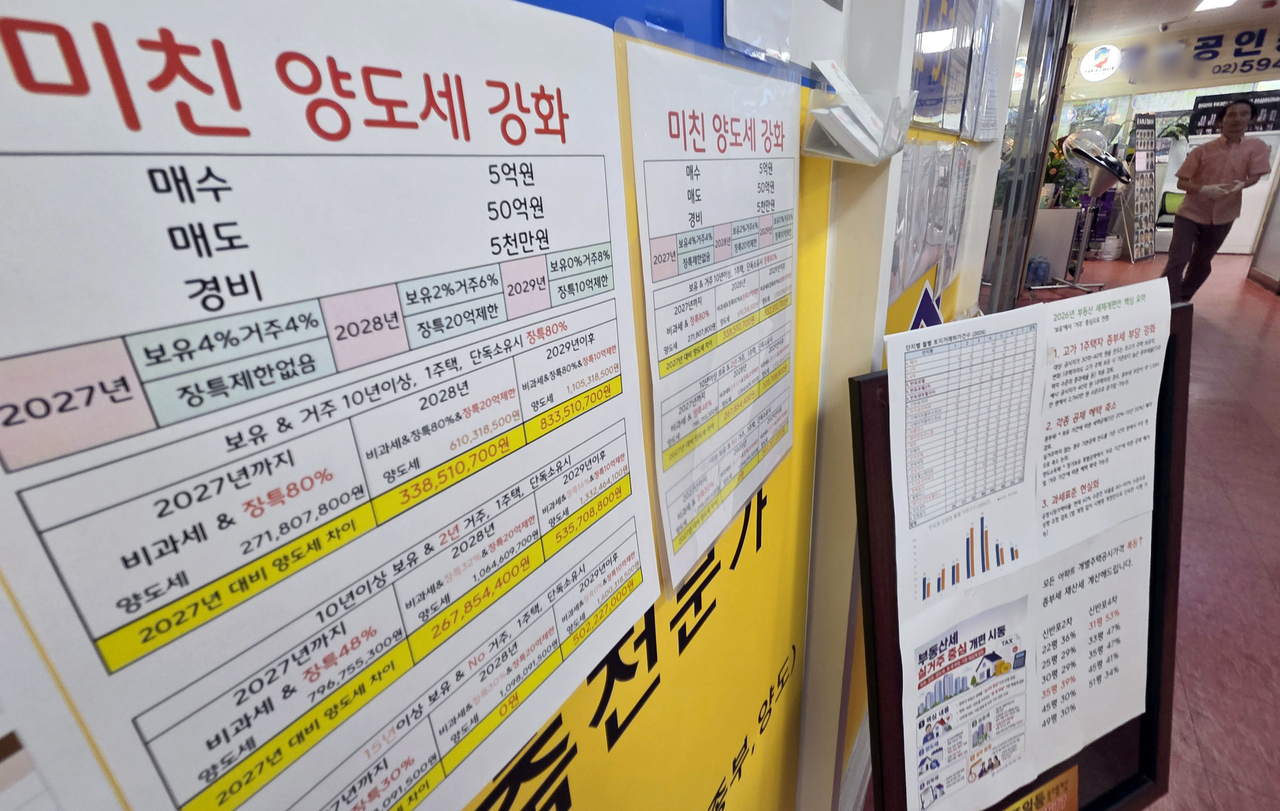
The reform package includes changes to capital gains tax — converting the long-term holding special deduction for one-household, one-home owners into a long-term residency income deduction (with the holding requirement abolished from 2029) and introducing a cap on that deduction — as well as adjustments to the comprehensive real estate tax, including a revised basic deduction amount (900 million won for non-resident single-home owners; 400 million won plus a residency-weighted share of 500 million won for multi-home owners), an increase in the fair market value ratio from 60 to 70 percent, a phased elimination of the tiered tax rate based on the number of homes owned, and a rise in the tax burden ceiling from 150 to 200 percent.
With both holding and transaction tax burdens on high-priced homes rising at the same time, a growing sentiment has taken hold across many parts of Seoul: gifting is better than selling. Park Hap-su, an adjunct professor at Konkuk University's Graduate School of Real Estate, said that under the reform plan, the reduction in long-term holding deduction benefits would cause capital gains tax to rise sharply when selling a home priced at 3 billion to 4 billion won or more, making it difficult to buy a comparable property afterward.
Across all 25 of Seoul's autonomous districts, gift transfers increased broadly regardless of whether a complex was high-end or mid- to lower-priced. Jongno-gu recorded the largest percentage gain, jumping from two to seven transfers — a 250 percent increase. The district is home to properties ranging from Gyeonghuigung The Sharp (a 138-square-meter unit sold for 3.85 billion won in April this year) to the mixed-use Di Palace complex, where large units exceed 5 billion won (a 182-square-meter unit sold for 7.4 billion won in January this year).
Gangdong-gu, one of the Han River belt districts, saw gift transfers jump 180 percent, from five to 14, immediately after the reform announcement. Seongdong-gu, another Han River belt district, rose 25 percent from eight to 10, while Yongsan-gu climbed 44 percent from nine to 13.
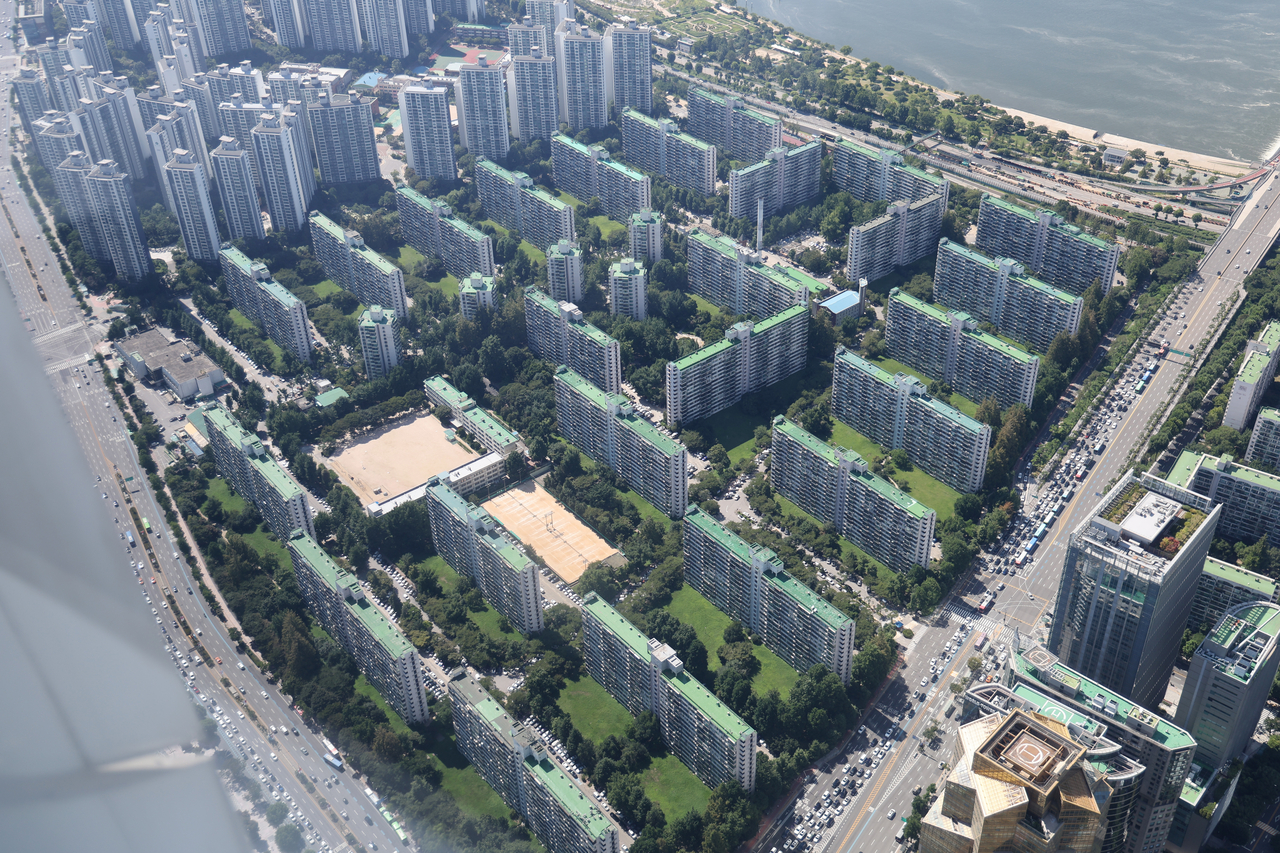
Songpa-gu, which has a high concentration of large, high-priced complexes priced at 3 billion to 4 billion won or more around Jamsil, Dunchon-dong and Garak-dong, saw gift transfers of collective buildings surge 150 percent, from 18 to 45. That figure was the highest of any of Seoul's 25 autonomous districts in the period immediately following the reform announcement.
The trend extended well beyond those areas. Outer districts including Gangbuk-gu, Gangseo-gu, Geumcheon-gu and Dobong-gu, as well as mid- to lower-priced apartment-heavy districts such as Dongdaemun-gu and Jung-gu, also posted increases. Geumcheon-gu nearly tripled, rising from five to 15 transfers, while Dobong-gu doubled from six to 12. Gangbuk-gu rose 66.7 percent from nine to 15, Gangseo-gu climbed 42.9 percent from seven to 10, and Dongdaemun-gu expanded from eight to 12.
The Yeongdeungpo area around Yeouido, which has many reconstruction complexes priced above 3 billion won, also saw gift transfers rise 33.3 percent, from nine to 12.
By contrast, gift transfers in Gangnam-gu and Seocho-gu — two of Seoul's most affluent districts — actually fell. Gangnam-gu dropped 26.7 percent from 30 to 22, and Seocho-gu fell 26.1 percent from 23 to 17. Analysts attributed the decline to owners in those areas having already completed preemptive gift transfers ahead of the reform, or having entered a wait-and-see mode as they weigh the relative merits of gifting, selling or holding after the announcement.
Meanwhile, apartment prices in Gangnam-gu and Seocho-gu fell for the first time in about three months, as owners held off on decisions, distressed listings emerged and buyer sentiment weakened. According to the Korea Real Estate Board's weekly apartment price trend survey, Gangnam apartment prices, which rose 0.01 percent last week, fell 0.02 percent this week, while Seocho prices, which gained 0.02 percent last week, dropped 0.04 percent this week. It marks the first decline for Gangnam since the first week of May (minus 0.04 percent) and for Seocho since the third week of April (minus 0.03 percent).
Nam Hyeok-woo, a real estate researcher at Woori Bank, said the tax reform plan forces high-priced single-home owners to weigh the costs and benefits of selling, holding or gifting, and that the number of owners deliberating over their options in prime areas such as Gangnam is expected to grow. "Since there is still some time before the tightened tax measures take full effect, the tug-of-war between sellers deferring decisions out of caution and buyers watching the market for distressed listings is likely to continue for some time," he said.
hwshin@heraldcorp.com