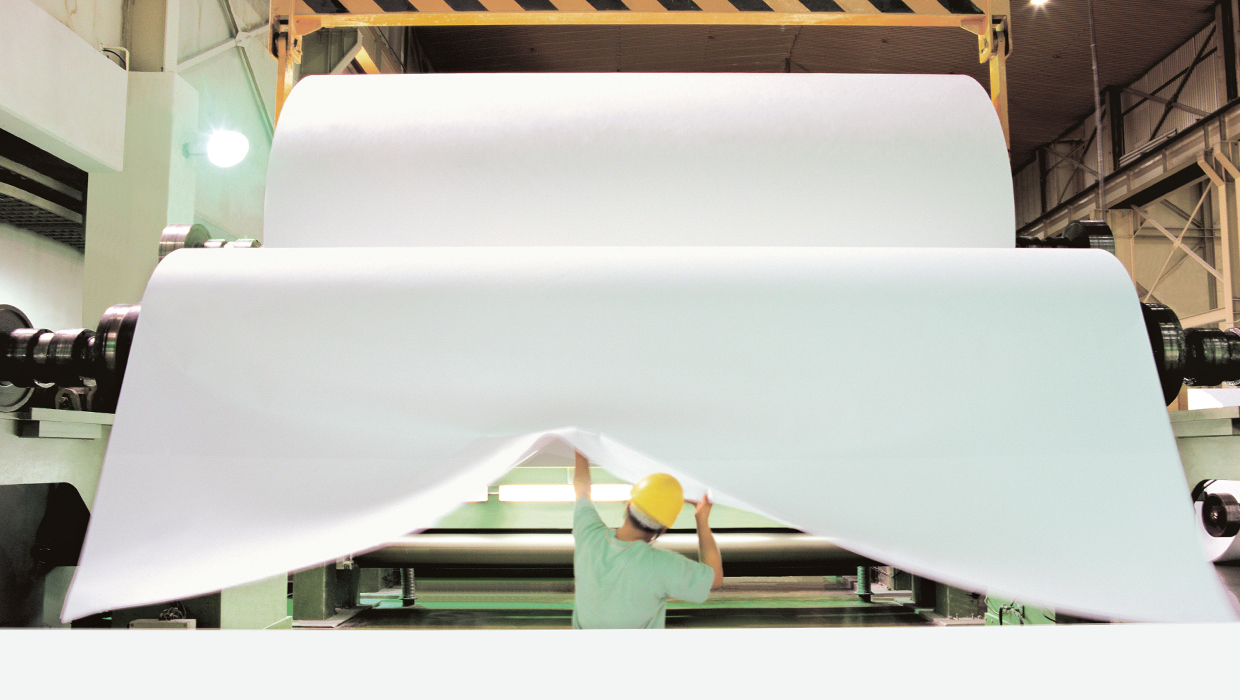
![A manufacturing factory in Hwaseong, Gyeonggi Province. [Provided by Korea Federation of SMEs]](https://wimg.heraldcorp.com/news/cms/2026/08/18/news-p.v1.20260626.5a750500821844b7a9b64ce0712fd524_P1.jpg)
"In effect, our contract price has been raised only twice in 17 years."
The head of Company A, an automotive parts processing subcontractor in Hwaseong, Gyeonggi Province, let out a deep sigh in a phone interview Tuesday. The company has managed only two price increases since it began operations in 2009. "The unit prices for two of our products were 60 won and 80 won per kilogram 17 years ago — now they are 80 won and 100 won," the CEO said. "That is a 20-won increase over 17 years."
Over the same period, the company's major operating costs — labor, electricity, equipment maintenance and consumables — rose by roughly 40 to 160 percent depending on the item. Company A receives semi-finished automotive parts from a client, performs a specific surface-treatment process and returns the finished parts. The client supplies the raw materials; Company A provides the labor and equipment. Because it does not purchase raw materials directly, it falls outside the existing supply-price linkage regime, which was designed primarily around raw-material price fluctuations.
Company A's own cost breakdown for the first half of this year shows that labor, employee benefits and safety-related expenses accounted for 44.5 percent of total costs — the largest share. With contract prices failing to keep pace with rising costs, the company says its processing costs have exceeded its contract revenue by an average of about 5.39 million won ($3,810) per month so far this year. "Working no longer generates a profit," the CEO said. "We are steadily drawing down our reserves, and it is becoming harder to hold on."
'Root industry' firms outside linkage regime — some forced to close
While the Ministry of SMEs and Startups has been highlighting the achievements of the supply-price linkage regime, small processing subcontractors — the so-called "root industry" firms like Company A — have been left outside its coverage and now face the threat of closure. The government plans to expand the regime in December to include major energy costs such as electricity and gas bills, but critics say a blind spot will remain because energy costs must account for at least 10 percent of the contract price to qualify.
Company B, an automotive parts heat-treatment firm that had operated in Gimhae, South Gyeongsang Province, handled general heat-treatment processes for a supplier to a major automaker. As electricity and labor costs climbed, the company was unable to pass enough of the increase through to its contract prices, losses accumulated, and it recently shut down after prolonged financial difficulties.
Company C, another automotive parts heat-treatment firm based in Sacheon, South Gyeongsang Province, faced a similar situation. Electricity and labor costs tied to its heat-treatment operations kept rising, but the increases were not adequately reflected in contract prices, widening its losses. The company's financial difficulties deepened from late last year, and it recently went bankrupt.
The further down the supply chain a firm sits, the weaker its bargaining power over contract prices — a hardship that small processing subcontractors say they feel acutely. "Even when large companies like Hyundai Motor or Samsung Electronics engage in cooperative partnerships, the benefits reach second-tier suppliers at best," said an official at a cooperative association for the processing subcontracting industry. "The small manufacturers in the root industry — the third- and fourth-tier suppliers — see virtually no effect. The reality on the ground is that when overall costs rise 40 percent, contract prices go up maybe 5 percent, if that."
![[Image generated using ChatGPT]](https://wimg.heraldcorp.com/news/cms/2026/08/18/news-p.v1.20260818.8bdffba35f1e427ea3676ea6079872ba_P1.png)
Ministry to conduct first-ever fact-finding survey this year
The government has already moved to narrow the gap by broadening the linkage regime's scope. Previously, only primary raw materials accounting for at least 10 percent of the contract price were subject to linkage. Starting in December, an amendment to the Mutually Beneficial Cooperation Act will add major energy costs — including electricity and gas bills — to the list.
However, critics say the expansion will not fully close the blind spot. Energy costs, like raw materials, must still account for at least 10 percent of the contract price to qualify, meaning processes with significant but sub-threshold power consumption will remain excluded. Cost increases beyond energy — labor, social insurance contributions, consumables, equipment maintenance and logistics — will also remain unaddressed by the expansion alone.
The Ministry of SMEs and Startups acknowledges that incorporating everything into the linkage regime is not feasible. "The supply-price linkage regime is not a system designed to guarantee an adequate unit price at the time of the initial contract," a ministry official said. "We expanded it to include energy costs in order to reflect the situation facing processing subcontractors."
Still, the ministry says it will step up on-site inspections to address the difficulties firms are reporting. For the first time, the Ministry of SMEs and Startups will conduct a fact-finding survey on the supply-price linkage regime this year. "We plan to examine in greater detail the characteristics and difficulties specific to each industry, as well as the rate at which linkage agreements are being concluded," a ministry official said.
boo@heraldcorp.com