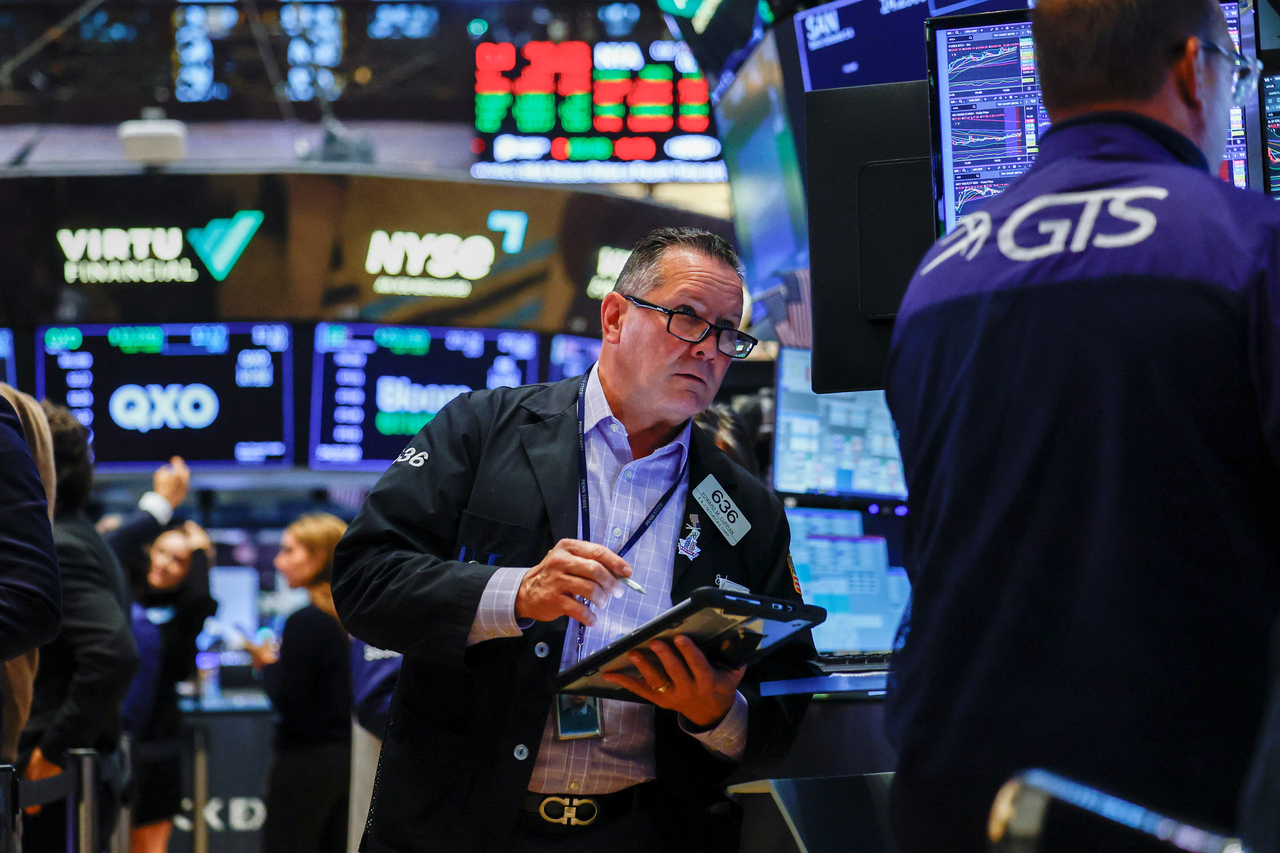
![Jung Won-taek, head of the equity management division at Mirae Asset Global Investments, speaks during an interview at the company's headquarters in Jongno-gu, Seoul. [Mirae Asset Global Investments]](https://wimg.heraldcorp.com/news/cms/2026/08/18/news-p.v1.20260818.acd6f63779f14403a94f66a3e5aeeb26_P1.png)
"I believe Kosdaq has confirmed its bottom. From here, we are likely entering a phase of genuine stock-picking — separating the winners from the rest. This is the moment when active ETFs can show their real strength."
Jung Won-taek, head of the equity management division at Mirae Asset Global Investments, made the remarks in an interview, diagnosing Kosdaq as having passed its trough. He also said the market environment in which fund flows were concentrated almost entirely in Samsung Electronics and SK Hynix — leaving Kosdaq broadly sidelined — has now run its course.
"Memory chip prices are still rising, but the pace of increase is slowing, which means earnings growth at Samsung Electronics and SK Hynix will inevitably decelerate," Jung said. "That narrows the growth gap with other stocks. The phase where only Samsung Electronics and SK Hynix kept climbing while Kosdaq and small- and mid-cap shares were left behind — as we saw in the first half — is over."
Jung has been a small- and mid-cap specialist at Mirae Asset Global Investments since 2014, managing funds including the Mirae Asset Growth Promising Small-Mid Cap fund. Portfolio managers who have run small- and mid-cap strategies for more than a decade are rare in the industry. He has since transferred the stock-selection expertise and experience built through those funds into an active ETF format.
The TIGER Kosdaq Active ETF, listed June 2, uses the Kosdaq index as its benchmark and aims to outperform it. Through Aug. 14, the fund had gained 20 percent, outpacing the Kosdaq's 17 percent rise over the same period. From July 31 through Aug. 11, it posted the highest return among all Kosdaq active ETFs.
The outperformance was driven by an early decision to overweight semiconductor materials, components and equipment stocks as the portfolio's lead sector. "Between the second half of this year and the first half of next year, there could be a window where capital expenditure growth at chipmakers such as Samsung Electronics, Micron and TSMC outpaces the rate of memory chip price increases," Jung said, highlighting the potential benefit for materials, components and equipment suppliers from that capex expansion.
Within that segment, Jung has begun selecting stocks to get ahead of the next leaders. Rather than chasing names that have already rallied, the strategy is to identify turnaround candidates where earnings improvement is gaining momentum, or companies whose growth prospects are becoming visible through long-term supply agreements.
Jung expects the AI investment cycle to broaden opportunities across Kosdaq more widely. "Semiconductor materials, components and equipment are acting as a bridge as AI benefits spread from memory chips to other industries," he said. "If that expands further into physical AI, the gains could extend to Kosdaq companies in secondary batteries and software."
As an active ETF, the fund takes an aggressive approach to staying ahead of market shifts — identifying leading sectors early while pursuing excess returns through nimble rebalancing.
"Five to ten years ago, I thought an investment idea had a shelf life of about a quarter. These days it feels more like two weeks," Jung said. "Even when I add a stock based on a medium- to long-term earnings improvement thesis, if that expectation gets priced in quickly, I look for new ideas and restructure the portfolio."
A recent addition of cosmetics stocks illustrates the approach. "I noticed that some cosmetics original design manufacturer companies were posting better results in the third quarter — typically the off-season — than during peak season," Jung said. "I read that as a signal of structural change and proactively added a selection of related Kosdaq names to the portfolio."
That thinking also underpins his view that now is the right time for active ETFs. Once the initial rebound phase passes, differentiation based on earnings and fundamentals tends to accelerate at the stock level. "When the market moves sideways or pulls back modestly, real stock-picking begins — and that is when active funds can show what they are capable of," Jung said.

moon@heraldcorp.com