"I want to transform Jongno — long known as the political heart of South Korea — into a cultural heart where residents can live well and visitors want to stay."
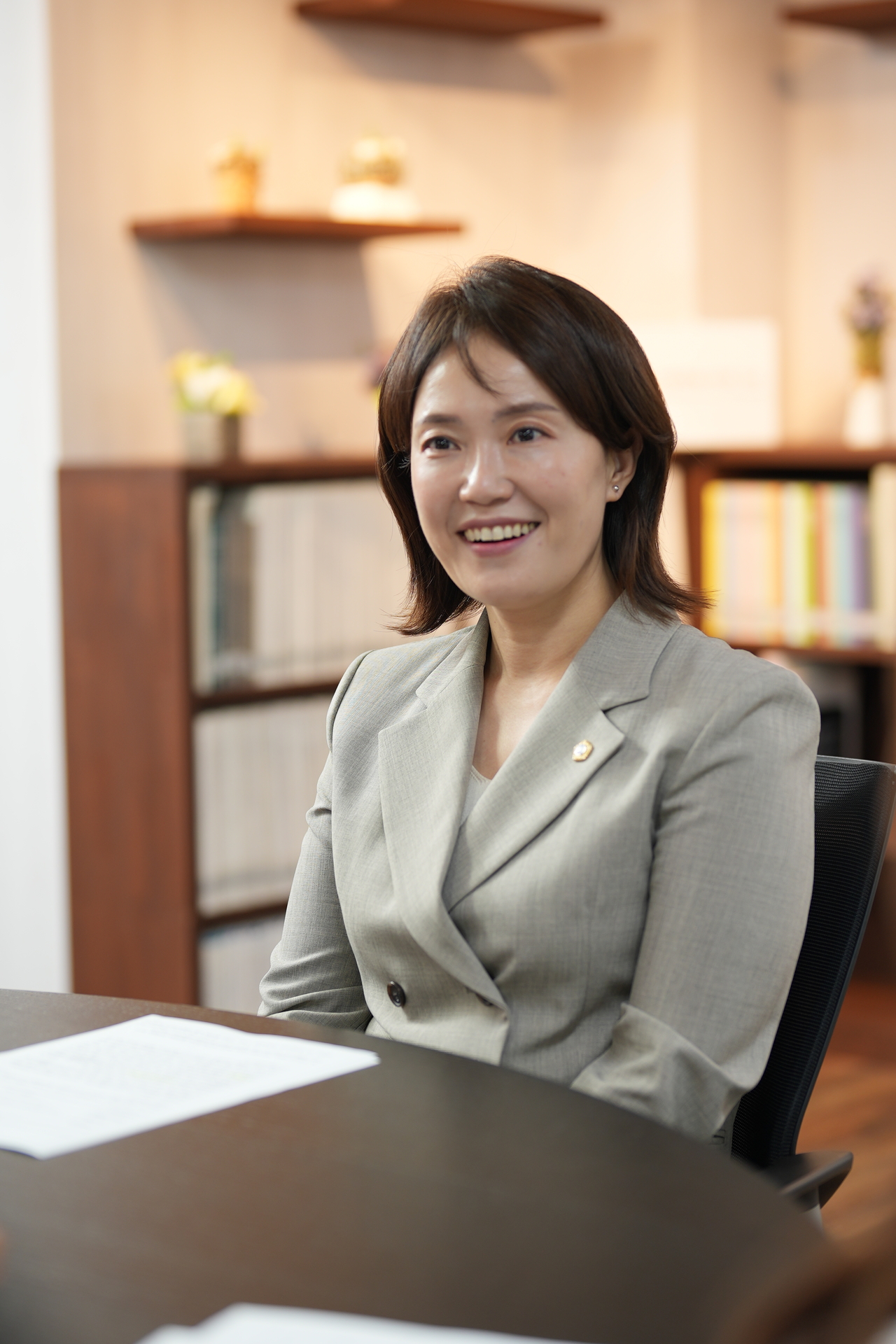
Yoon Sun-hee, a People Power Party member of the Seoul Metropolitan Council representing Jongno District 1, outlined a vision to preserve the area's historic and cultural assets while upgrading its aging housing stock, and to weave together the neighborhood's hanok workshops, independent bookstores and small galleries into a single tourism offering that can inject new energy into the local economy.
In an interview Wednesday, Yoon said preserving Jongno's cultural value and improving residents' quality of life must not be treated as separate goals. Residents have long endured layers of regulation and the daily disruptions that come with rising tourist numbers, she said, and the benefits generated by tourism must flow evenly to alley businesses and the broader community. "Jongno is a historic and cultural district that represents the whole country, but residents have put up with regulations and the inconveniences of growing tourism for a very long time," she said. "The most important task is to raise residents' quality of life while keeping Jongno's cultural value intact."
Balancing preservation and development: 'Expand small-scale, area-tailored redevelopment'
The issue Yoon identified as most urgent is striking the right balance between historic preservation and housing improvement. Jongno is home to some of Seoul's most significant cultural and historical assets — Gyeongbokgung, Changdeokgung, Bukchon, Seochon and Samcheong-dong among them. Yet height restrictions and regulations around cultural heritage sites have left a large number of aging low-rise residential areas in place, with significant constraints on home renovation and property rights.
Yoon said large-scale redevelopment alone cannot address Jongno's complex conditions. She proposed designating additional small-scale housing improvement management zones and expanding redevelopment models suited to the area's character, including street-block housing improvement projects.
She said spaces with high historic and scenic value should be firmly protected, but overlapping and excessive regulations that have lost touch with reality should be rationalized through consultations with the Seoul Metropolitan Government. She also plans to seek ways to make redevelopment financially viable in areas where large-scale projects are not feasible, so those neighborhoods are not left out of urban renewal — and so that both property rights and housing supply can advance together.
"Where large-scale redevelopment is not possible, we need to apply small-scale methods suited to local conditions," Yoon said. "I will work out practical solutions so that residents can live in comfortable and safe housing while we protect what must be preserved."
Turning alley cultural spaces into tourism: extending visitors' stay
Since joining the Seoul Metropolitan Council's culture, sports and tourism committee, Yoon has argued that Jongno's tourism policy must shift its focus from marquee attractions to the everyday life of its streets and alleys.
Tourist routes are currently concentrated around major landmarks such as Gyeongbokgung, Changdeokgung and Bukchon, she said. Breaking out of a "pass-through tourism" pattern — where visitors tour the main sites and move on — requires drawing foot traffic toward hanok workshops, traditional craft experience spaces, independent bookstores, local galleries, neighborhood restaurants and cafes. As a concrete measure, Yoon proposed what she is tentatively calling a "Jongno Local Culture and Arts Tour Pass" — a bundled product combining hanok workshops, hands-on experiences in traditional crafts such as hanji papermaking and decorative knotting, independent bookstores, small exhibition spaces, and local eateries and cafes, with discount or package benefits for participants.
Linking individually operated cultural and commercial spaces into a single tourism network, she said, would give visitors a distinctive experience while creating new customers and sales opportunities for small shops and arts venues. The aim is to extend tourists' length of stay and let the economic benefits flow naturally into the alley economy.
"We need to move from tourism where people simply look at Jongno's history and culture and pass through, to a stay-based tourism that fills the daily lives of residents and merchants," Yoon said. "I want to build a virtuous cycle that gives tourists a special experience and opens new opportunities for the neighborhood's small shops and cultural spaces."
She also said safeguards to protect residents' right to remain are essential as tourism grows. Many Jongno residents have lived in the area for three or four generations — 40 to 50 years or more — and carry a strong sense of pride in the district's history and symbolic importance, she noted.
At the same time, the concentration of tourists, events and rallies has piled up everyday inconveniences for residents — traffic congestion, noise, litter and parking shortages. Rather than focusing solely on growing tourist demand, she said, the district must also design structures that reduce the burden on residents and ensure that the benefits of tourism are returned to the community.
Connecting opera, the National Assembly and local politics: 'I will show results'
Yoon studied classical voice before working as a National Assembly aide and serving as a district-level council member, eventually moving up to the Seoul Metropolitan Council. She did not set out to become a politician when she first went to work at the National Assembly, she said, but experience assisting lawmakers and handling press and spokesperson duties drew her toward local politics.
She sees her background in opera, the National Assembly and local government not as disconnected chapters but as a single continuous path. If opera is the art of conveying thought and emotion through the voice, she said, politics is likewise the work of moving citizens and creating change through words and communication.
That experience has fed directly into her vision for Jongno's future — one that combines cultural arts with urban policy. In the AI era, she said, a city's appeal as a place people want to visit, enjoy and linger in will be just as important a competitive asset as industrial or technological foundations.
Because Jongno already holds historic and cultural assets that other districts would struggle to replicate, she said, the priority is not building large new facilities but carefully connecting existing resources. Jongno's distinctive urban competitiveness, she argued, can only be realized when famous landmarks, alley cultural spaces, shops and the everyday lives of residents are organically linked.
She said direct communication with residents will remain central to her work on the council. The scale of policy and budgets handled at the metropolitan level is larger than at the district level, she acknowledged, but the political fundamentals — meeting residents in person, listening to them, and explaining both progress and limitations — cannot change.
"A city that is good for tourists must not become a city that is inconvenient for residents," Yoon said. "I will explain the process transparently and show the people of Jongno-gu real change in their daily lives through concrete results."

7toy7@heraldcorp.com