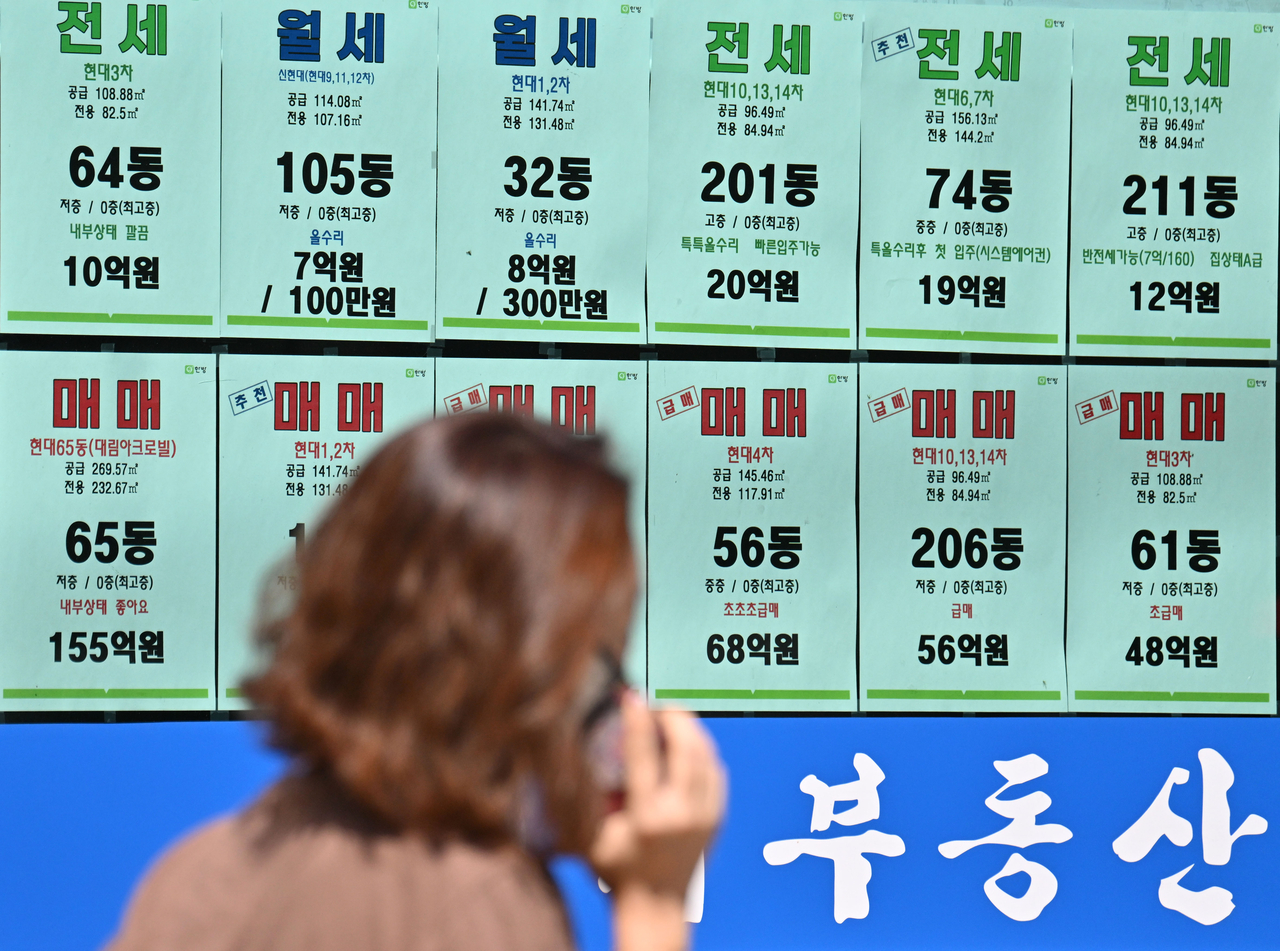
"The government encouraged us to buy tenanted homes, so I bought my first home this past May. They said that if a person without a home bought a property with a tenant already living there, they could delay moving in until the lease expired — and now, all of a sudden, my taxes are going up."
Momentum is building within the ruling camp to revamp the comprehensive real estate tax and capital gains tax rules for non-resident single homeowners. Since the government unveiled its 2026 tax reform package, criticism and public backlash have mounted steadily over what many see as a policy contradiction — the government had encouraged people without homes to buy tenanted properties, only to leave them worse off under the new tax regime.
Policy clash between move-in deferral and tax reform leaves buyers of tenanted homes in limbo
Confusion over the tax reform package is growing, particularly among first-time buyers who purchased tenanted homes under a move-in deferral policy introduced in the first half of this year, according to the real estate industry on Friday.
Ahead of the reinstatement of the capital gains tax surcharge on multi-property owners, the government on May 9 allowed people without homes to purchase tenanted properties as a special exception. Because all of Seoul had been designated a land transaction permit zone — normally requiring buyers to move in within four months of receiving a permit and reside there for two years — the government gave first-time buyers who purchased tenanted homes from multi-property sellers until May 11, 2028, to fulfill the owner-occupancy requirement. The measure was intended to ease a supply freeze caused by the renewed capital gains surcharge and to stabilize home prices by encouraging more listings.
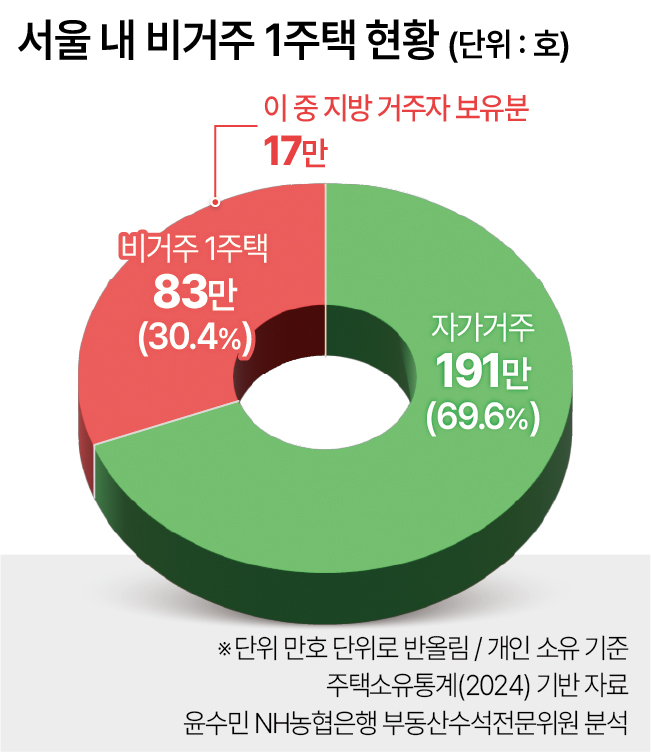
The problem is that the tax reform package reduces benefits for non-resident single homeowners without offering any relief to this group. Under the plan, the comprehensive real estate tax system will be restructured around actual residency, and the basic deduction for non-resident single homeowners will be cut from 1.2 billion won ($861,000) to 900 million won as early as next year.
The holding deduction for the comprehensive real estate tax will also be abolished in 2028 and replaced with a residency-based deduction. Tax rates across the top four brackets of the comprehensive real estate tax — covering taxable bases from 600 million to 1.2 billion won — will be raised in stages, from the current range of 1.3 to 2.7 percent to 2.0 to 5.0 percent.
Recognized exceptions for non-resident single homeowners are limited to four cases: relocating from a home where one has continuously resided for at least one year due to schooling, a job change, illness or an extended stay abroad; being unable to occupy a home because of a redevelopment or reconstruction project; owning a property excluded from the home count under certain special provisions; and holding a registered rental property that is either a construction-type or purchase-type rental unit. First-time buyers who received a move-in deferral are not included among the recognized exceptions.
One buyer who purchased a tenanted home said he had trusted the government's word and bought a property whose lease runs until 2028, planning to move in as soon as it expired. "They told us to buy tenanted homes, and now I'm going to end up paying more in comprehensive real estate tax next year than someone who actually lives in their home," he said.
'In effect a tax hike on non-resident single homeowners' — will the ruling party reverse course?
As the backlash from this policy clash persists, voices within the ruling camp are calling for revisions to the tax reform package. Kim Min-seok, the newly elected leader of the Democratic Party of Korea, has also expressed opposition to the heavier tax burden being placed on non-resident single homeowners and couples who hold property under joint spousal ownership.
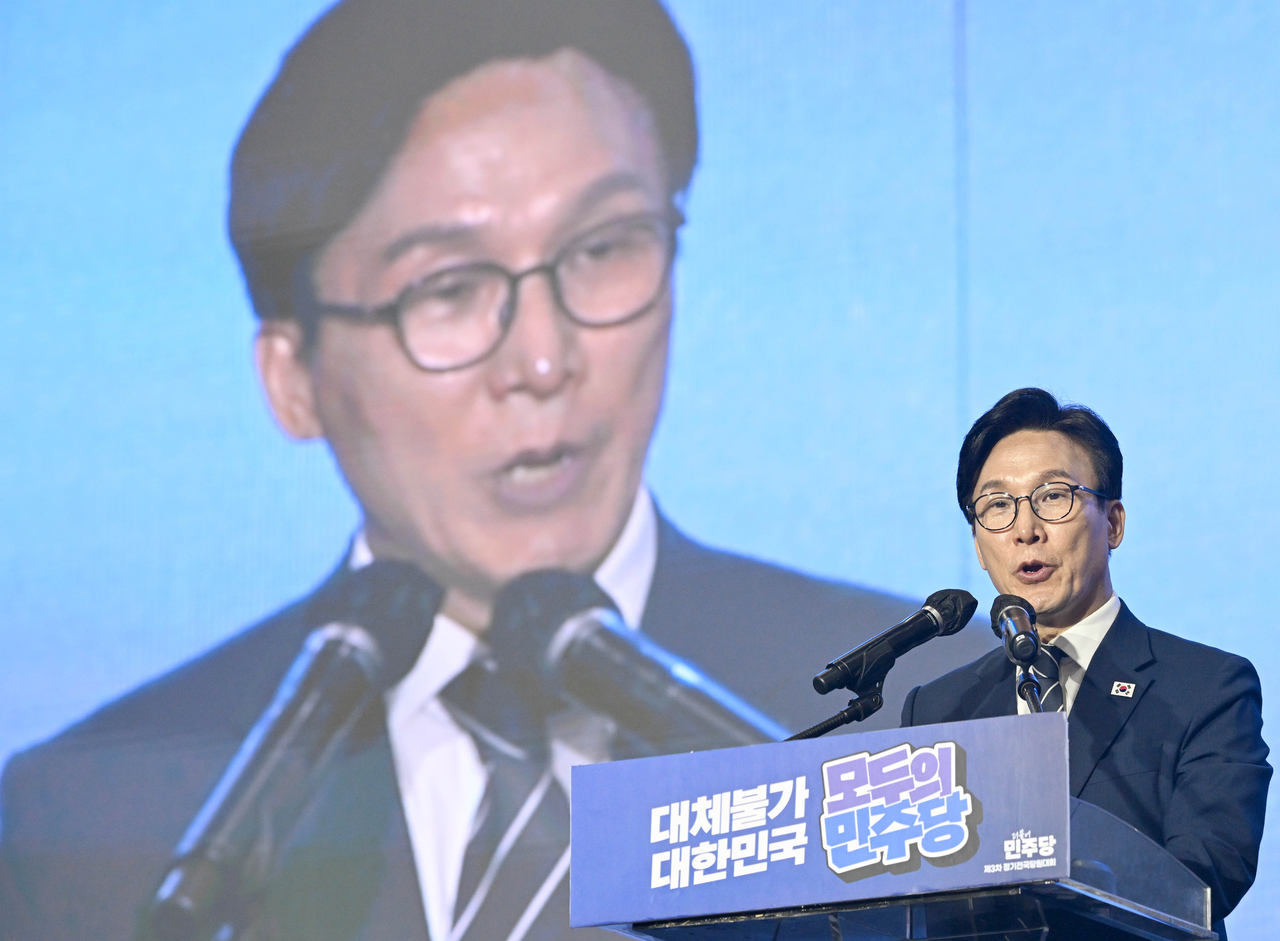
Political circles expect the first senior party-government consultative meeting under Kim's leadership — scheduled for Sunday — to take up possible revisions to the real estate tax reform package. Some observers say the ruling camp needs to find a turning point on real estate policy now, as President Lee Jae Myung's job approval rating has continued to slide since the tax overhaul was announced.
On Friday, Kim wrote on his SNS account that "a significant number of middle-class non-resident single homeowners exist across the country, and particular attention must be paid to how tax changes affecting them could ripple through the jeonse and monthly rent markets." He also said that abolishing the holding deduction for non-resident single homeowners under the capital gains tax "amounts to a de facto tax increase for non-resident single homeowners of homes valued at 1.2 billion won or more — which covers most apartments in Seoul — and there are concerns it could produce side effects such as forcing tenants out."
Kim also said directly that, given rising official assessed values, the tax burden on non-resident single homeowners would increase even if the current system were left unchanged, and argued that the comprehensive real estate tax on non-resident single homeowners — which would rise further under the lower basic deduction threshold — should be left alone.
Deputy Prime Minister Koo Yun-cheol, who also serves as Minister of Economy and Finance, has publicly pledged to provide relief for unavoidable circumstances beyond the non-residency exceptions already written into the tax reform package.
Speaking at the National Assembly's finance and economy committee on Thursday, Koo was asked whether many opinions had come in during the legislative notice period for the real estate tax reform package. He said that "if there are unavoidable reasons why a non-resident single homeowner cannot live in their home during the enforcement process, we will make sure the public is not inconvenienced in that regard."
In political circles, however, the prevailing view is that even if the real estate tax reform package is revised, the overarching principle of prioritizing actual residency will remain unchanged. A Democratic Party lawmaker on the finance and economy committee said opinions on the tax changes differ even among lawmakers representing Seoul constituencies, but added that "the broad framework of strengthening the holding tax on ultra-high-value and non-resident single homeowners will not change."
hss@heraldcorp.com