Priced at 37.5 million won, with 70 km EV range
Bold styling meets latest DM-i hybrid technology
Electric motor-led drive delivers quiet, efficient ride
Safety features standard, but ACC execution disappoints

BYD, which has been making inroads in the South Korean market on the strength of aggressive pricing, has launched the Sea Lion 6 DM-i plug-in hybrid electric vehicle (PHEV). Despite its accessible price tag of 37.5 million won ($26,900), the vehicle delivers a level of refinement that exceeds expectations — enough to revive the "accidental masterpiece from the continent" label that once attached itself to surprisingly capable Chinese electronics. For that price, buyers get a driving experience close to that of a full electric vehicle, along with a broad suite of safety features.
Where conventional hybrid systems rely on the combustion engine as the primary power source, the Sea Lion 6 DM-i is engineered around the electric motor, with the engine stepping in only when needed. The result is an EV-like feel behind the wheel, without the anxiety of finding a charger.
A sea lion's face up front — panoramic glass roof standard
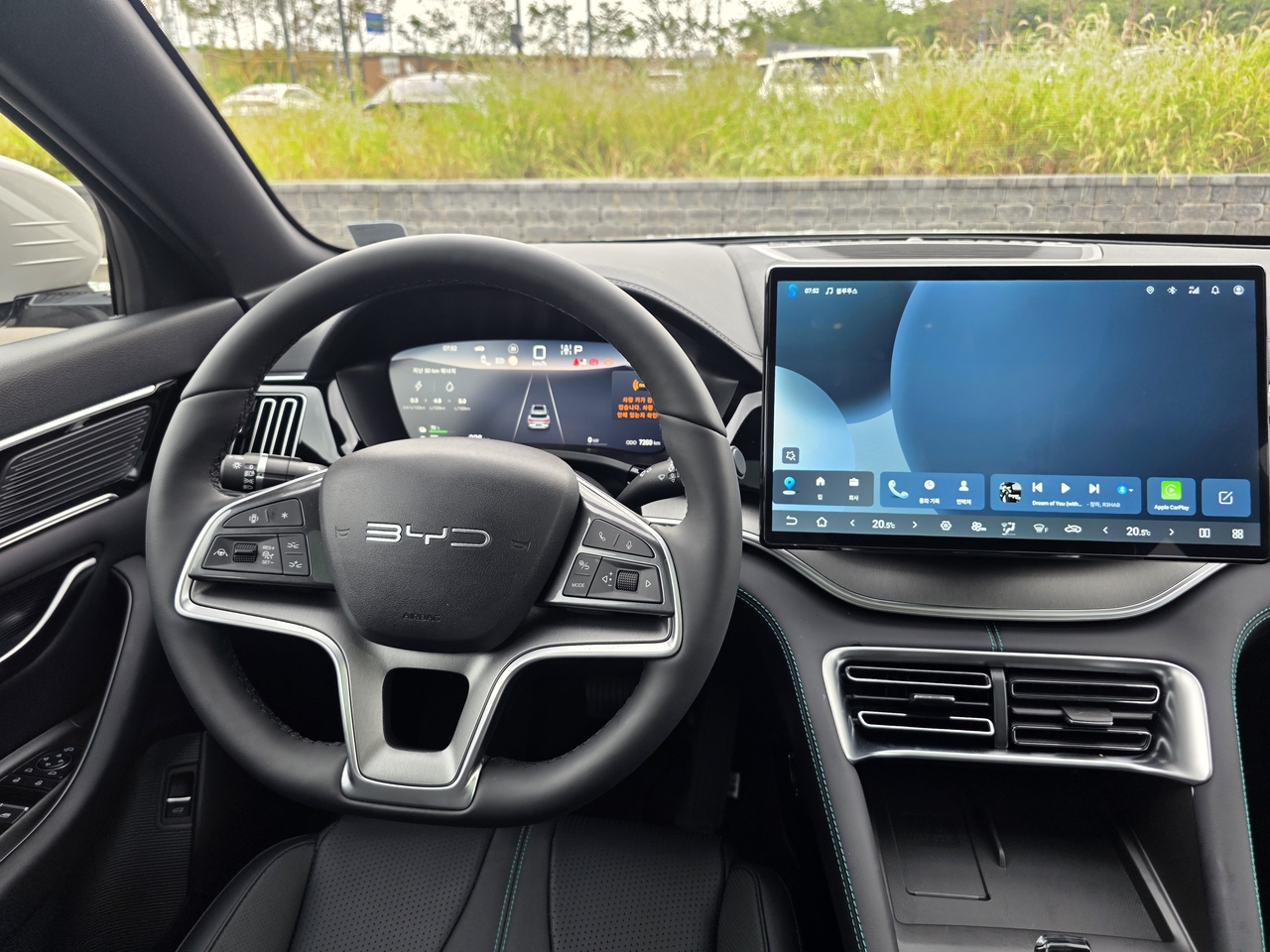
On Friday, Aug. 14, the Sea Lion 6 DM-i was driven on a roughly 120-kilometer round trip from central Seoul to Yeongjongdo in Incheon. Compared with PHEVs from other brands, the electric character of the drive was immediately noticeable. Engine intervention was perceptible only occasionally, through a faint engine note during harder acceleration.
The exterior makes a bold first impression. Horizontal trim lines across the front visually widen the car, while large air intakes cut into both sides of the bumper lend it the aggressive look of a performance vehicle. The hood rises in a power-dome shape at the center, projecting a sense of solidity and muscle. Swept headlights stretching wide across the face complete the look — one that calls to mind the face of a sea lion, the animal the model is named after.
Inside, a 12.3-inch digital instrument cluster sits alongside a 15.6-inch center display. The absence of a head-up display is a minor letdown, but the screen is generously sized for navigating vehicle settings and maps. Physical buttons for the ignition, gear toggle and hazard lights are arranged below the center display.
Rear passengers benefit from a 1.085-square-meter panoramic glass roof that opens up the cabin considerably. The roof is divided into two sections, and the front panel can be opened — a practical advantage. A motorized sunshade blocks light completely when closed, unlike a digital tinting system.


EV in the city, engine on the highway — DM-i system balances efficiency
The overall driving character closely resembles that of a full electric vehicle. Vibration and noise were minimal, and acceleration was immediate yet smooth. The engine made its presence known only on the highway, when pushing to higher speeds brought a noticeable engine note.
At the heart of the DM-i system is an electric motor-led drive architecture. In typical urban and everyday driving conditions, the motor handles the bulk of propulsion, while the engine generates electricity during its most efficient operating range or directly drives the wheels when required.
The vehicle automatically cycles among five drive modes — electric motor only, series hybrid, parallel hybrid, series-parallel hybrid and engine only — depending on conditions, optimizing energy use throughout. Battery consumption climbed noticeably in heavier traffic, while a stint of highway driving actually left the battery charge slightly higher than before.

The system delivers a driving feel close to that of a pure EV while letting the combustion engine's efficiency ease charging concerns on longer trips. In full electric mode, the Sea Lion 6 DM-i is certified by the Ministry of Environment for up to 70 kilometers of range on front-wheel drive — enough to cover a typical daily commute without touching the engine.
The vehicle also supports Vehicle-to-Load (V2L) functionality. Through the V2L connector, power stored in the battery can be fed to external devices, making it useful for camping, outdoor activities or emergencies. The system supports up to 3.3 kilowatts of output, sufficient to run most high-draw electronics.
The adaptive cruise control (ACC), however, left something to be desired. Even with both hands on the wheel, the system repeatedly prompted the driver to place hands on the steering wheel. It appeared to register the driver's grip only when the top of the wheel was held with firm pressure.
The Sea Lion 6 DM-i is offered at a single trim level priced at 37.5 million won, with no further variants. Radar sensors and cameras power a full array of safety and driver-assistance features that come standard.
All told, the Sea Lion 6 DM-i looks well suited to buyers in transition — those who want the feel of an electric vehicle but are not yet ready to commit to one fully. For shoppers who put value for money above all else, it makes a particularly compelling case.
eyre@heraldcorp.com