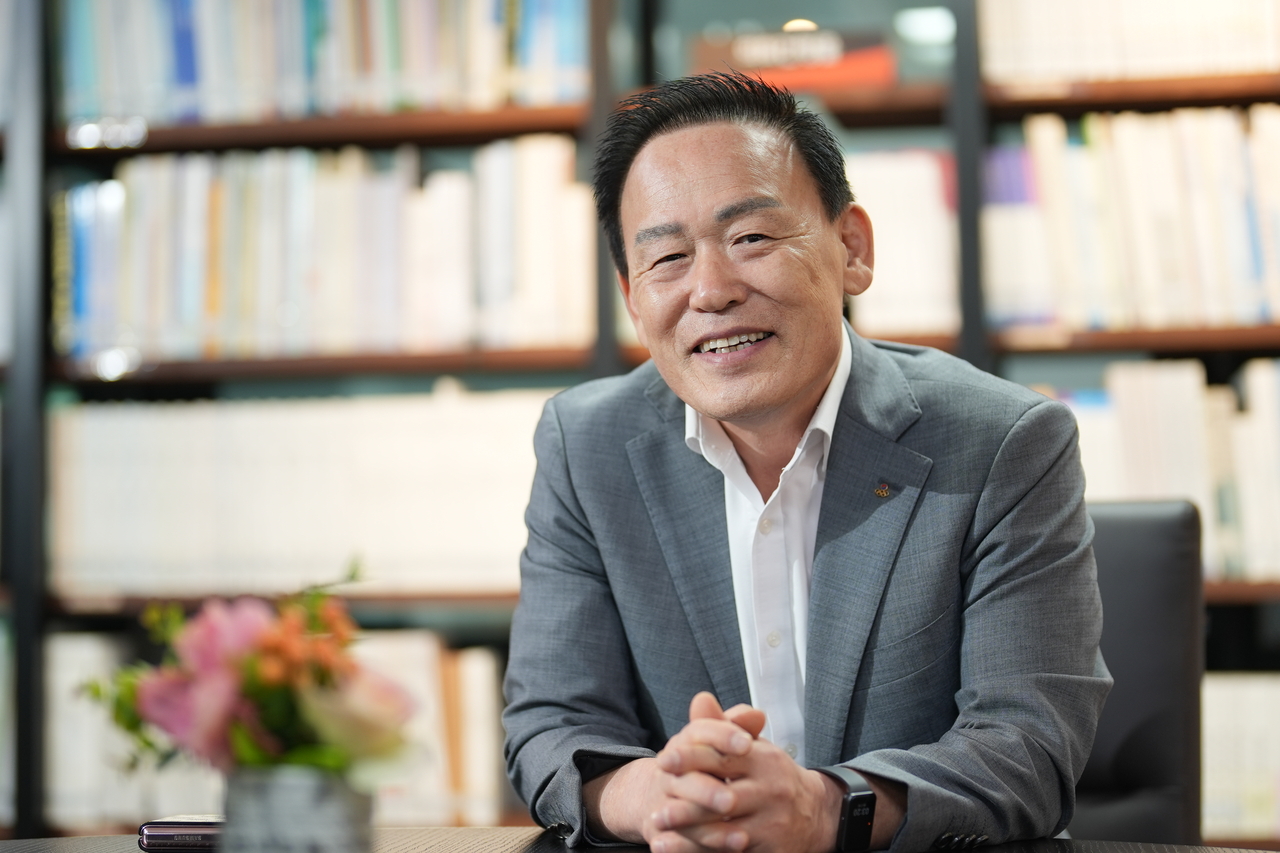
"The future of Seoul sports depends on building a system that starts with discovering young athletes, develops them into elite competitors, and takes responsibility for their careers even after they retire."
Lee Cheon-woo, chair of the Seoul Sports Council's sports federation presidents' council and president of the Seoul Judo Association, has put the development of future sports talent at the center of his agenda for the sustainable growth of Seoul sports.
His vision calls for moving beyond the school-centered model of athlete development to build a new system in which sports federations, district sports councils and local facilities all play a role — a response, he said, to rapid changes in the sports environment driven by a shrinking school-age population, the contraction of school athletic programs and a thinning pool of competitive athletes.
"We need a life-cycle support system so that a talented child can start playing a sport, grow into an elite athlete and then enter society on stable footing," Lee said in an interview on Friday. "I want to create a Seoul-style sports ecosystem where youth athlete discovery, elite competitiveness and recreational sports participation reinforce one another in a virtuous cycle."
He acknowledged that while Seoul has abundant human resources and strong infrastructure, significant gaps remain in training environments, athlete depth and coaching conditions across different sports.
"Rather than dividing sports into popular and unpopular categories, we need to look at the value and growth potential each sport holds," Lee said. "We must give athletes opportunities to grow, give coaches a stable working environment, and give citizens the foundation to experience a wide range of sports."
Linking schools, federations and communities to discover future sports talent
Lee described the decline of school athletic programs as one of the most urgent challenges the Seoul sports community must address together. With the school-age population shrinking and the burden of running school teams growing, he said it has become increasingly difficult to consistently identify top athletes through school programs alone.
As an alternative, he proposed a community-based athlete development framework connecting schools, sports federations, district sports councils and local facilities. The plan calls for expanding after-school sports classes, youth club competitions and sport-sampling programs so children can be exposed to a wide variety of sports — and for those who show talent and aptitude to receive support in developing into elite athletes.
"To discover future sports talent, the first step is giving children enough opportunities to experience sport," Lee said. "We must not rely solely on school athletic programs — local gyms, clubs and sports federations need to serve as important pillars of athlete development."
To that end, he plans to expand the youth development infrastructure involving the Seoul Judo Association, local judo gyms, district judo associations and schools. Introductory programs combining play, etiquette and basic fitness will also be promoted so children do not perceive judo as a difficult or dangerous sport.
"Judo has great educational value — it teaches not only physical fitness but also respect for others, self-discipline, responsibility and perseverance," he said. "If it is linked to character education and anti-bullying programs in schools, it can support the physical and emotional growth of young people at the same time."
He also said youth competitions across all sports should move away from a purely rankings-driven format and become venues for participation, growth and exchange. He called for a competition structure that allows children with limited match experience to take part without pressure and to sustain their interest in sport.
Life-cycle support spanning scholarships, careers and sports science
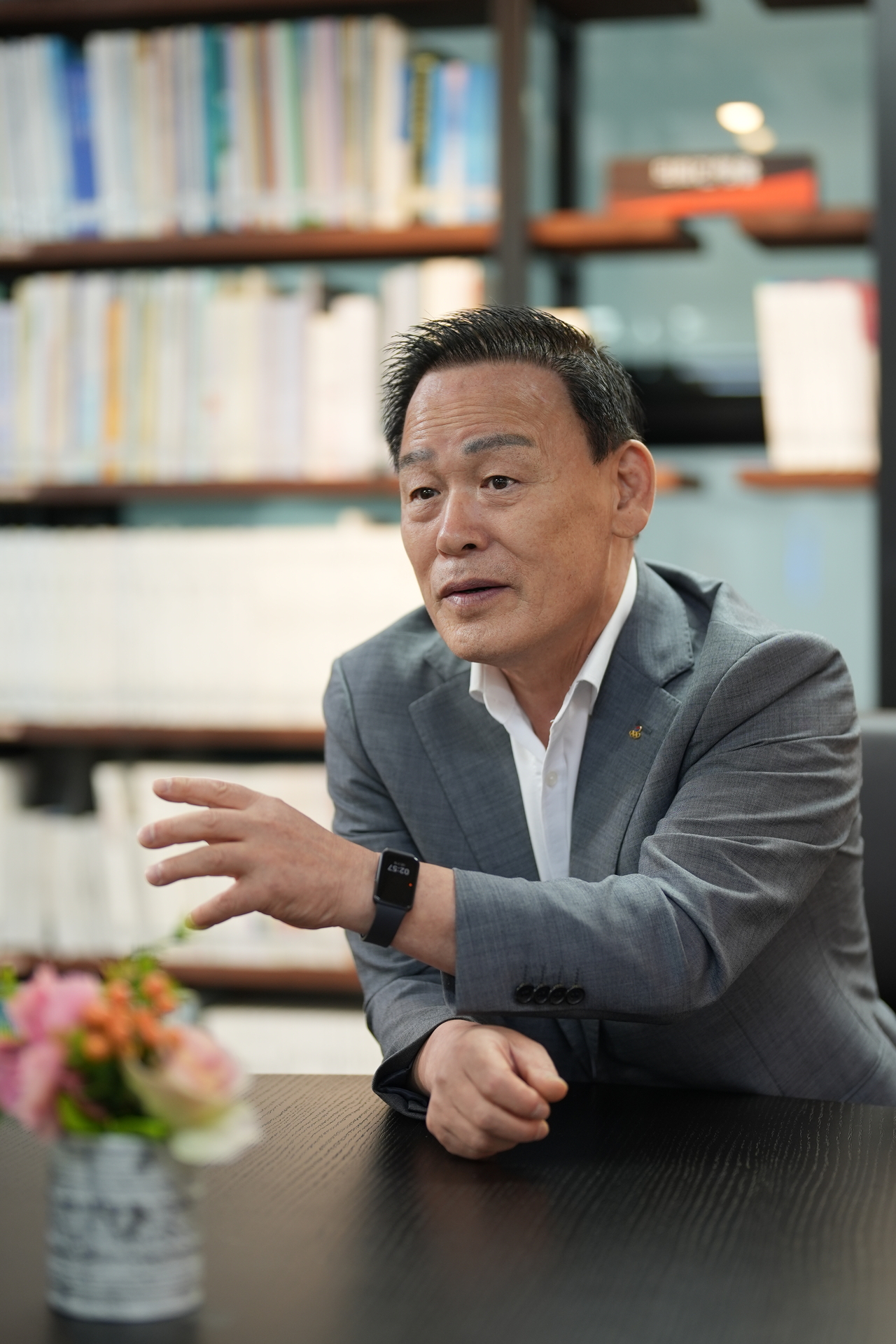
Lee said creating an environment in which athletes can continue competing is just as important as finding them in the first place. He called for expanded support — scholarships, training equipment and competition entry fees — so that talented athletes do not quit because of financial pressure, difficulties with school advancement or uncertainty about their future.
He also proposed strengthening the pipeline from elementary and middle school through high school to university and professional teams, with training, education and career counseling tailored to each stage of development.
"Athletes should not exist solely for competition results," he said. "The sports community and the education sector must work together to support a balance among academics, athletics and career development."
Lee said a structured system to help retired athletes transition into society is also needed. He called for linking education and employment so that former athletes can draw on their experience and sport-specific expertise to pursue careers as coaches, referees, sports administrators, sports scientists or professionals in the sports industry.
"In a structure where all support ends the moment an athlete stops competing, athletes and their parents have no choice but to view the future with anxiety," he said. "Only when a career pathway that extends beyond an athlete's playing days is in place can talented people commit to sport with peace of mind."
He also plans to expand tailored support using sports science — integrating fitness assessments, match video analysis, injury prevention, rehabilitation, nutrition management and psychological counseling into individual training programs, while deepening cooperation between the Seoul Sports Council and sports science institutions.
For athletes still in their developmental years, he said training should prioritize health, physical development and long-term growth potential over immediate competition results.
"We need to move beyond approaches that rely on experience and intuition and build a scientific training framework that reflects each athlete's physical condition, stage of development and the demands of their sport," Lee said. "I will strengthen injury prevention and rehabilitation support so that talented athletes are not forced to give up sport prematurely because of injury."
Virtuous cycle between elite and recreational sports; federations to tackle shared challenges
2027 Seoul World Youth Judo Championships to serve as platform for international exchange
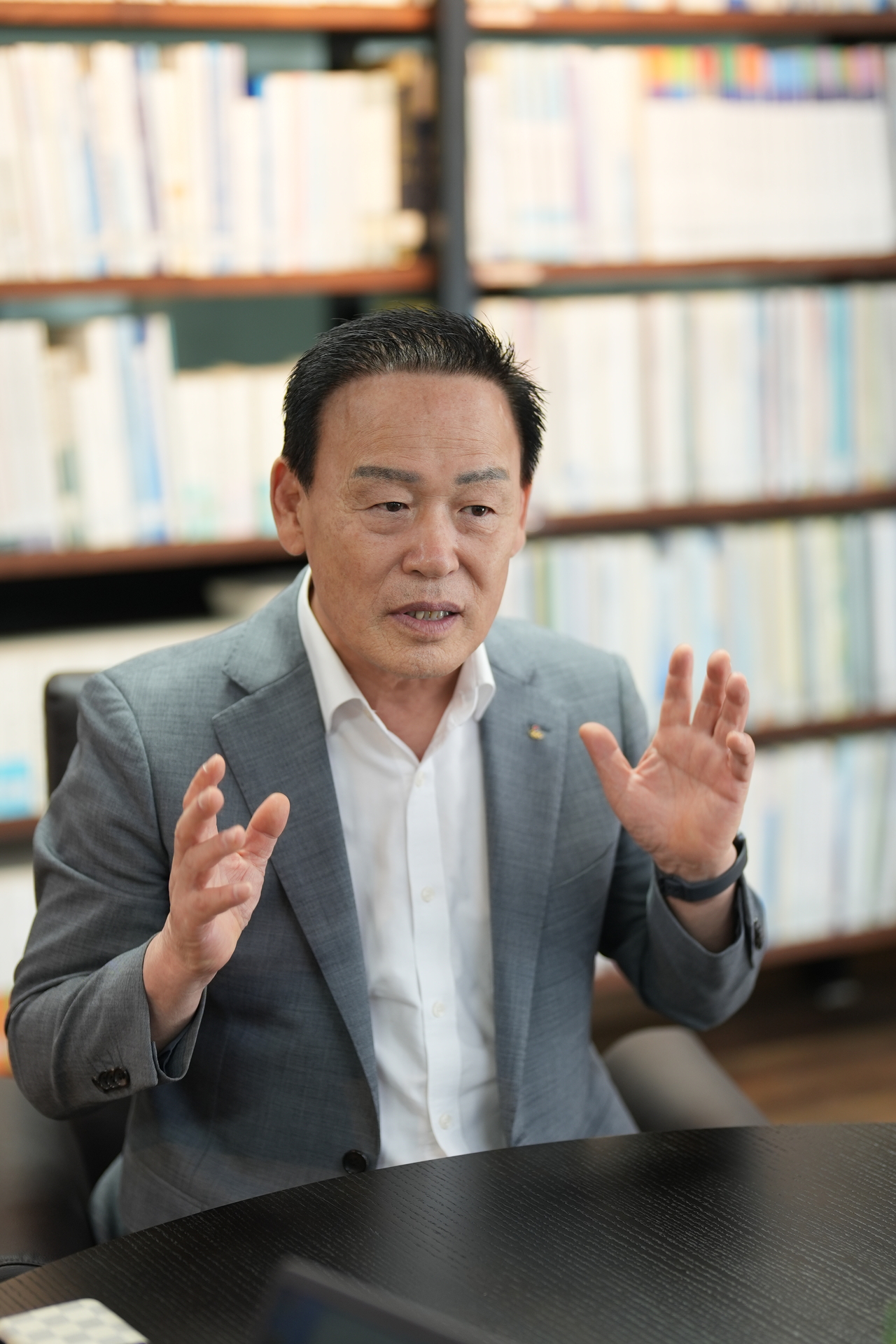
Lee is also pursuing the development of international sports events that leverage Seoul's strengths as a global city. The plan calls for raising the operational standard of existing competitions and gradually expanding a Seoul-style international event model in which domestic and overseas athletes, coaches and citizens all take part.
Rather than treating competitions as one-off events focused solely on results, he intends to develop them into sports festivals connecting youth athlete discovery, international exchange, public participation, cultural performances and tourism promotion.
"Seoul is a city with outstanding infrastructure for hosting international events — transportation, accommodation, culture and tourism," Lee said. "By combining the expertise of sports federations with Seoul's urban resources, we can create competitive sports content that draws participants from around the world."
He also plans to expand friendly competitions, joint training sessions, youth exchanges and coaching seminars with overseas sports organizations — giving young athletes the chance to gain international competition experience, interact with peers from other countries and learn the values of respect and friendship through sport.
The Seoul Judo Association has also decided to host the 2027 Seoul World Youth Judo Championships to advance youth talent development and expand international exchange. The event is envisioned as a platform for international sports exchange where young athletes from around the world compete and build friendships in Seoul.
The championships will be structured not merely as a competition but as a youth sports festival incorporating joint training, judo experience programs, cultural exchange and Seoul tourism. The event is expected to give promising domestic athletes international competition experience while introducing overseas athletes to Seoul's culture and urban appeal.
The Seoul Judo Association plans to work with the Seoul Metropolitan Government, the Seoul Sports Council and the Korea Judo Association to finalize the competition schedule, venue, scale of participation and detailed programming. The goal is to establish the event as a sustainable flagship international youth sports competition representing Seoul, with a safe and fair competition environment.
"The 2027 Seoul World Youth Judo Championships will be a stage where young athletes from around the world respect one another, build friendships and grow together through judo," Lee said. He added that he would develop it into a signature event that uses Seoul's outstanding sports, cultural and tourism infrastructure to give the next generation dreams and international competition experience. Seoul sports' most precious asset is its people, he said: "I will build a system where young athletes can nurture their dreams, elite athletes can realize their potential, and retired athletes can give their experience back to society — creating a Seoul sports community that gives hope to the next generation."
7toy7@heraldcorp.com