Total project cost 16.8 billion won — treated water from Unjeong sewage plant to be supplied continuously
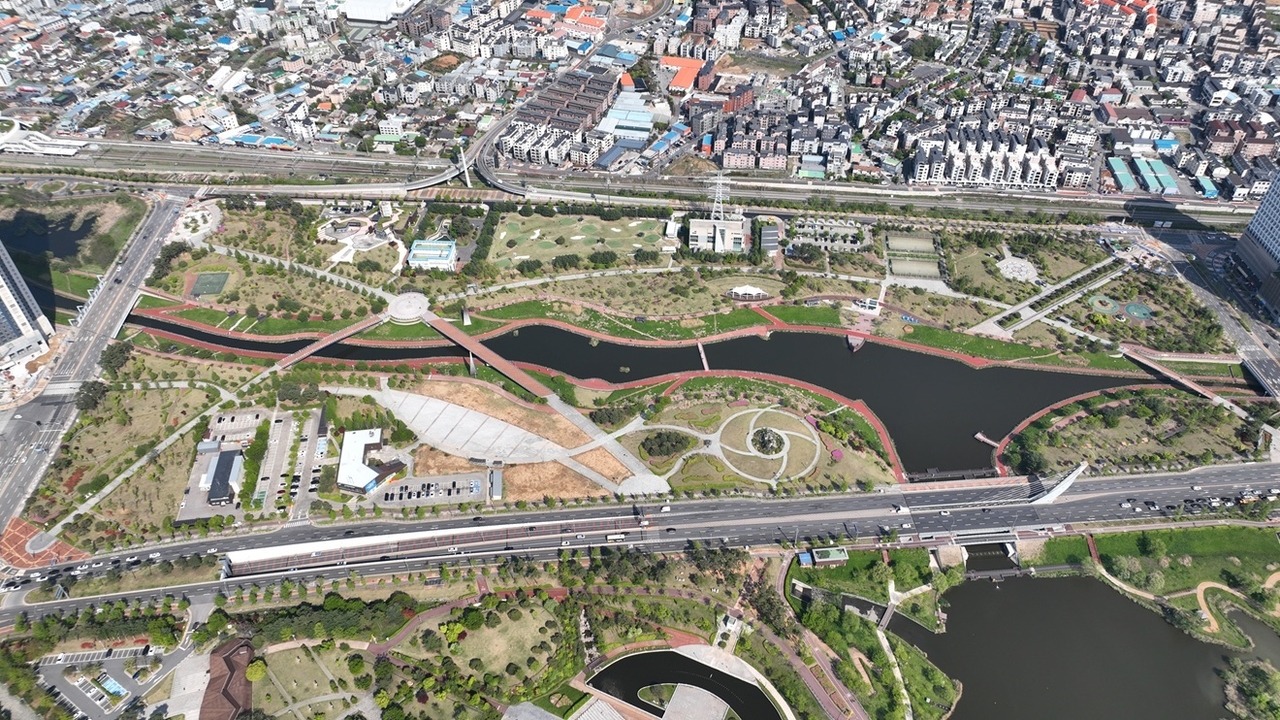
The city of Paju announced Tuesday that it will launch a wastewater reclamation project in September to permanently address recurring algae blooms at Unjeong Lake and Soricheon stream and restore a clean waterfront environment for residents.
The project will reprocess treated effluent from the Unjeong Sewage Treatment Plant and supply it continuously to Unjeong Lake and Soricheon stream. The city will invest a total of 16.8 billion won ($12.1 million), with completion targeted for 2030.
Algae blooms at Unjeong Lake and Soricheon stream have been a persistent seasonal problem every summer, and the situation has worsened in recent years due to prolonged heat waves.
The city identifies three main causes of the blooms: stagnant water from insufficient inflow, a sharp rise in water temperature during summer, and nutrient influx from roadside stormwater runoff and park weeding operations.
In response, Paju designated the wastewater reclamation project as one of the key campaign pledges of its ninth elected administration and moved to address the problem at its source.
The core of the project is to pump treated water from the Unjeong Sewage Treatment Plant — previously discharged directly into Soricheon stream — to a water-circulation treatment facility for further processing, then distribute clean water continuously through the existing 4.1-kilometer water-circulation pipeline network and 8.6-kilometer stream channels.
To that end, the city plans to spend 14.3 billion won of the total 16.8 billion won budget to build a new pump station inside the Unjeong Sewage Treatment Plant and lay 1.2 kilometers of pressurized pipeline connecting it to the existing water-circulation intake pump station.
The city will first complete administrative procedures, including an investment review, by the end of this year, then finalize basic and detailed designs in 2027, break ground in 2028, and complete the project in 2030.
Once finished, the system will supply more than 34,000 cubic meters of water per day on a stable basis, even during dry seasons such as winter when rainfall is scarce. The city expects the resulting continuous flow through Unjeong Lake and Soricheon stream to restore ecological health, dramatically improve water quality, and reduce algae growth.
"The wastewater reclamation project goes beyond simply recycling water — it is the most essential measure for restoring the health of the aquatic ecosystems at Unjeong Lake and Soricheon stream and minimizing inconvenience for residents," said Lim Sang-beom, head of the city's urban management division. "We will spare no effort in creating clean and beautiful spaces where people can rest and unwind."
pjh@heraldcorp.com