Seodaemun-gu is moving to formally extend its integrated care system — previously centered on elderly residents — to people with disabilities under the age of 65, strengthening tailored support that reflects each person's specific condition.
While people with disabilities are legally eligible for integrated care, local communities have in practice struggled to identify their varied needs in detail and connect them with the right services. Seodaemun-gu is reinforcing its disability-focused integrated care framework to proactively close those gaps.
The district will actively identify residents under 65 with severe disabilities who require complex care and connect them with individually tailored services spanning medical, health, care and residential support. The plan covers 2,020 residents currently registered in the district with severe brain lesion or physical disabilities, with support customized to each person's disability type and care needs.
Areas that existing public services cannot adequately address will be supplemented by the district's own outreach and preventive specialized programs. Disability organizations and medical and welfare institutions that work directly with people with disabilities will also be brought in to improve the effectiveness of identifying eligible residents and linking them to services.
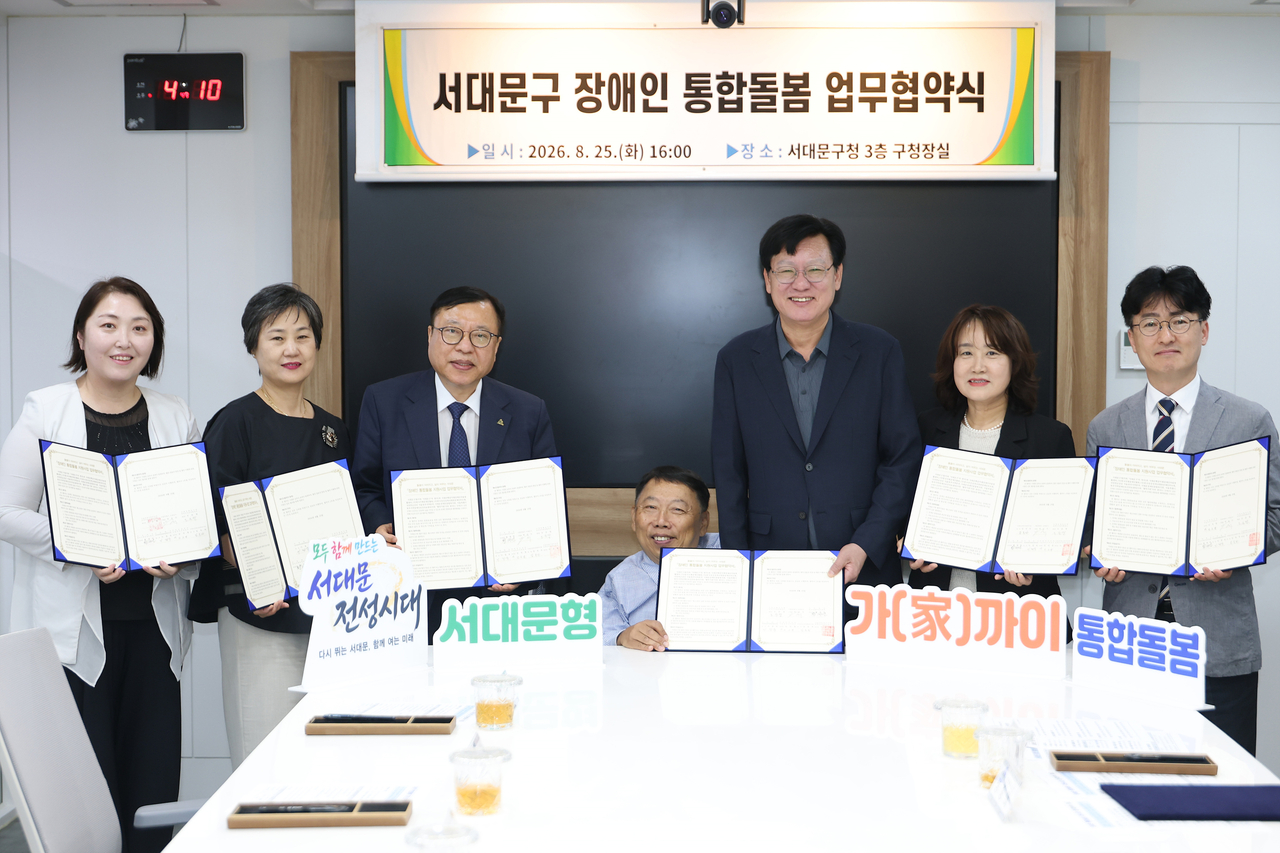
To that end, Seodaemun-gu signed a memorandum of understanding on the integrated care support project for people with disabilities on Tuesday afternoon at the district mayor's office with six organizations: the Seoul Northern Region Disability Health and Medical Support Center, the National Pension Service Seoul Northern Regional Headquarters, the Seodaemun Disability Comprehensive Welfare Center, the Korea Association of Persons with Physical Disabilities, the Korea Parents' Association for Persons with Severe and Multiple Brain Lesion Disabilities, and the Seodaemun Haetssal Arae Disability Independent Living Center.
Under the agreement, the participating organizations will cooperate on identifying and referring people with disabilities in need of care, linking medical, health and welfare resources, sharing information on eligible individuals, and providing expert assessments of functional status and service needs.
Once eligible residents are identified, the district will draw up individual support plans and coordinate the necessary services. The National Pension Service will conduct comprehensive assessments of functional status and service needs and provide expert opinions. Public health centers and the disability health and medical support center will offer community-based rehabilitation and health accompaniment services. Disability welfare centers, independent living centers and disability organizations will use their field networks to identify and refer eligible residents and connect them with local resources.
Another defining feature of the disability integrated care model is its approach of prioritizing public services first, then filling remaining gaps with Seodaemun-gu's own specialized programs.
The district can draw on a total of 64 public and private services, including 24 in health and medical care — such as home medical centers and visiting nursing — seven in health management including outreach health programs, 17 in long-term care and support including long-term care home benefits and the Care SOS service, as well as residential environment improvements and various other welfare resources.
On top of these, 11 specialized programs under the district's "Gakkai Integrated Care Package" will be linked to care needs that statutory services alone cannot meet.
Specifically, the package includes home visit medical and traditional Korean medicine consultations, disability health primary care, oral health management, and pharmacist home medication support; expert outreach for customized exercise programs, community reintegration and accompaniment for discharged hospital patients, and daily living support such as meal assistance; and residential environment improvements.
The approach involves comprehensively assessing each person's health status, living conditions and care needs, drawing up an individual support plan, and coordinating all necessary services in an integrated way.
Seodaemun-gu has participated in the Ministry of Health and Welfare's integrated medical, long-term care and disability support project since March 5 this year. Building on the MOU, the district plans to more actively incorporate the voices of people with disabilities and their families, and to proactively identify and connect services suited to each person's disability type and individual care needs.
The district also plans to draw more fully on the field experience and expertise of disability organizations and medical, health and welfare institutions, and to continue identifying and linking community resources and district-specific specialized programs to address care needs that existing systems cannot meet.
A representative of the Korea Parents' Association for Persons with Severe and Multiple Brain Lesion Disabilities said people with severe brain lesion disabilities and their families had long faced the burden of having to seek out medical, care and welfare services separately. "We hope this agreement will lead to integrated care where people with disabilities and their families can feel real change, with the services they need continuously connected through the community," the representative said.
Seodaemun-gu District Mayor Park Woon-ki said it was important to go beyond simply expanding integrated care to include people with disabilities and to actively find and connect each individual with the services they truly need. "We will bring together the field experience and expertise of disability organizations and medical and welfare institutions to build a tight-knit integrated care system where people with disabilities can lead healthy and dignified lives in the places they call home," Park said.
seouldream01@heraldcorp.com