Interview with Lee Su-young, CEO of Morpheus Studio
'AI gets you to 85 — you need people to reach 100'
'Don't be afraid; think about how AI can help you'
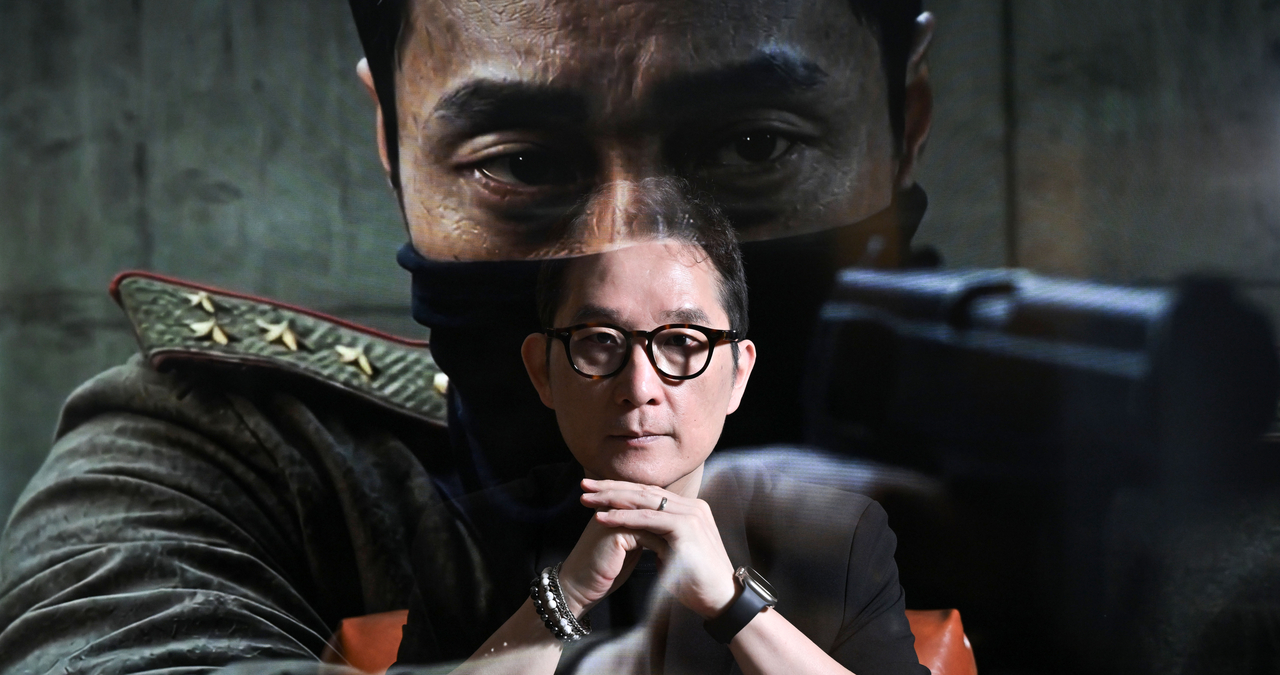
AI is reshaping every corner of industry, and video content — broadcast, drama series, advertising, film — is no exception. Yet even as producers have raced to adopt the technology, audiences have been slow to warm to it. Awkward movement, unnatural expressions, an uncanny color palette: the simple fact that something was "made by AI" has kept viewers at arm's length.
The SBS drama series "Agent Kim Reactivated" shattered that assumption. It was only ten days after the show aired that audiences learned a three-minute sequence had been produced entirely with AI — and by then they had already accepted it without question. The technology was indistinguishable to the naked eye, and the seamless execution was enough to bring down the wall between AI-generated content and the public. "Agent Kim Reactivated" proved that when a story is told well, the boundaries of technology become irrelevant.
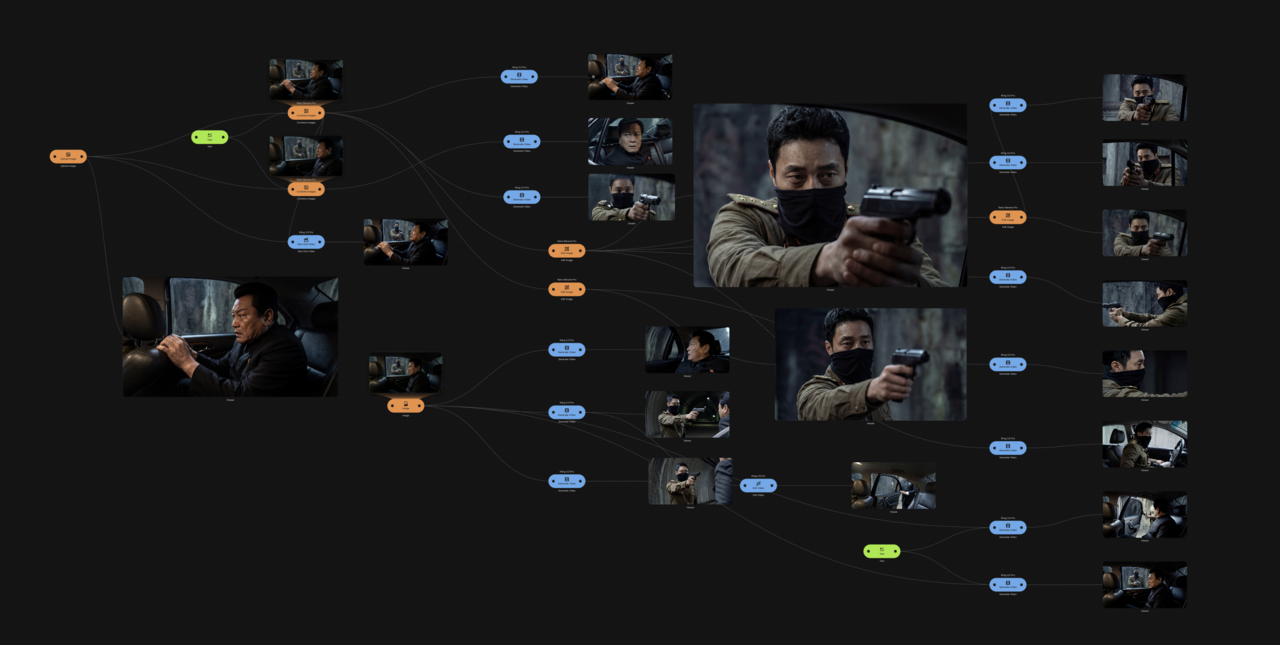
The sequence was built on AICRON, a platform that chains together more than 150 AI models to produce video content. The workflow is straightforward: a user opens a blank canvas, calls up a text node — a square input box — and types a prompt describing the desired scene. That node feeds into an image-generation node, which produces a still image within seconds. Connecting a video-generation node then animates the still into a short moving clip. Even a first-time user can complete the process in minutes. An era has arrived in which all you need to do is snap the right nodes together, like assembling building blocks.
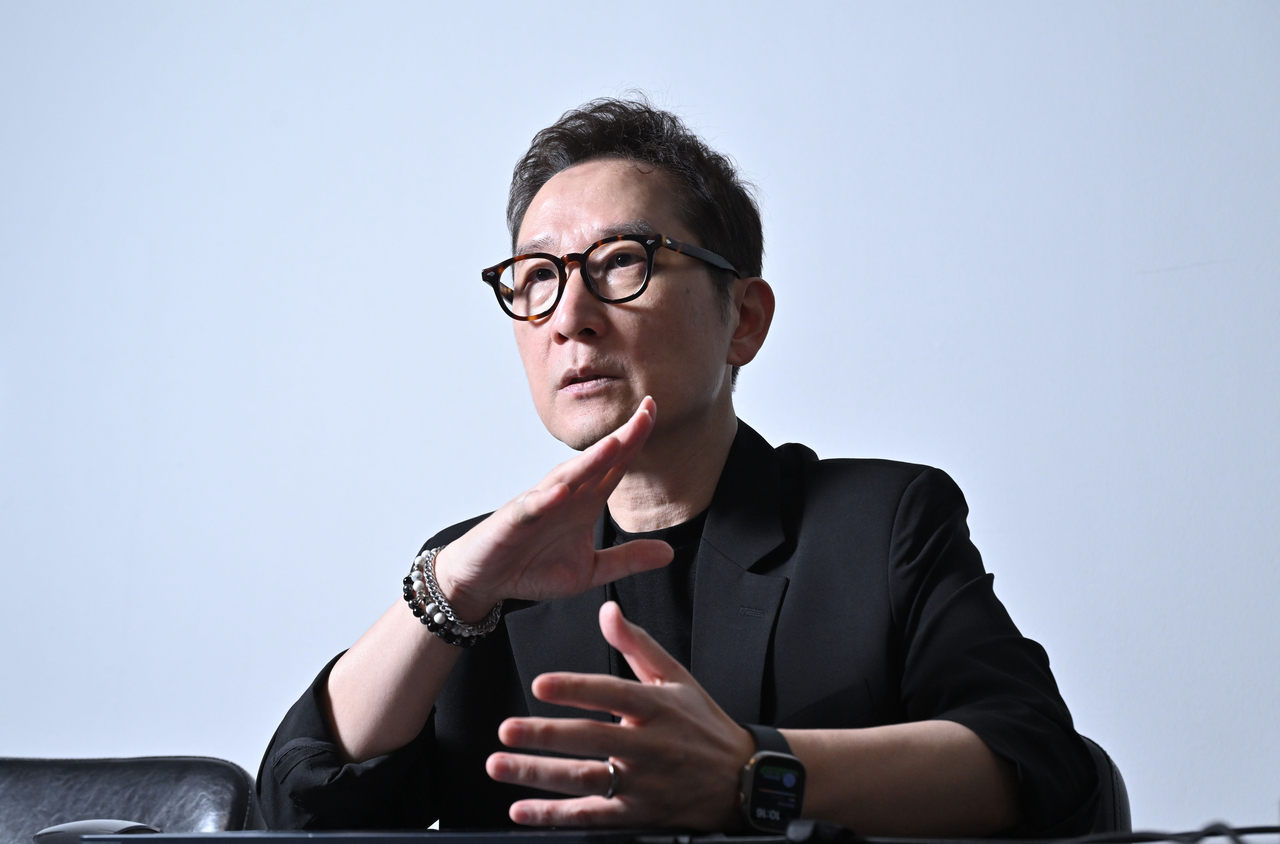
Behind AICRON is Lee Su-young, who spent 23 years as a VFX producer in film and drama before founding Morpheus Studio, absorbing the grammar of post-production through hands-on experience. The Korea Herald sat down with Lee at the studio's Mapo-gu office to hear about life on the AI-era production floor.
Morpheus Studio received the pitch for the "Agent Kim Reactivated" AI project in December last year. Ryu Jae-hwan, the studio's deputy CEO and a VFX supervisor with Grand Bell Awards and Blue Dragon Film Awards credits, led the project. Replacing a full three-minute sequence — one carrying both combat and emotional beats — entirely with AI was uncharted territory. "At the time, we weren't sure AI could convincingly replicate a live-action feel," Lee said.
The production team made the call anyway, and Morpheus delivered with AICRON, earning the crew's trust. Lee attributed the sequence's warm reception to a simple truth: "Viewers judge a work by how entertaining it is, not by whether AI made it."
He added that the sequence's structure helped. "It was completely self-contained — it didn't sit directly against a live-action scene, so there was no pressure from a texture transition," he said. "Viewers enjoy the narrative and the story, not each individual shot, and when something is entertaining they don't pay much attention to technical details."
Since "Agent Kim Reactivated," the public's resistance to AI content has visibly softened. Broadcasters and production companies are falling over one another to announce AI production systems. But the mood on actual sets tells a different story.
"The decision to produce that three-minute block entirely with AI was a success," Lee said, "but when I ask other production teams whether they could make the same call, most say they couldn't." The sticking point is trust — or rather, a lack of confidence in managing the risk.
Lee said the pace of change he witnesses from inside the industry far outstrips what the public perceives. "AI is advancing at a staggering rate, but people only see the very last sliver of that progress," he said. "Beneath every scene that makes headlines, far more people are testing this technology, experimenting with new ways to make films and dramas."
For Lee, a veteran of the video industry, the decision to step into the new territory of an AI platform came from a feeling that he simply could not hold out any longer.
"I had survived the Chinese content ban, the OTT onslaught, COVID — but with AI I genuinely felt I couldn't hold on," he said. "I decided I had to start making something with AI before AI swallowed me." That resolve led him to found Morpheus Studio in 2019; AICRON launched officially in February. Every member of the team has more than 20 years of experience in the VFX industry.

The company's philosophy is clear: complete a production from start to finish using AI. "Switching CG work to AI does not dramatically cut production costs," Lee said. "It trims maybe 5 to 10 percent off casting, location and special-effects expenses. The AI scenes in 'Agent Kim Reactivated' saved the equivalent of five days of shooting production costs — that is where the value lies."
As platforms and tools have multiplied, the barrier to producing AI video content has fallen. But making high-quality content is a different matter. "People assume AI work is just a single mouse click," Lee said. "But even for 'Agent Kim Reactivated,' it took three months to produce three minutes. Once you move into territory where quality standards are high — advertising, drama — it becomes an entirely different problem."
After "Agent Kim Reactivated," Lee turned down every proposal that amounted to asking him to deliver a 100 million won ($72,300) production for 5 million won. "Not everything expensive is good, but nothing good is cheap," he said.
On that point, Lee repeatedly stressed that no matter how far AI advances, "there will always be a person at the end of it." AI is penetrating many stages of production — scripting, shooting, directing, visual effects — but ultimately, he said, what separates quality content from the rest is real-world experience and craft.

"There is something commonly called domain know-how — the insight into a craft that comes from spending at least 10 to 20 years in a field," Lee said. "It is a sense internalized through personally experiencing success and failure." He continued: "When a beginner uses AI to produce something that scores 85, the fine work needed to reach 100 ultimately falls to a person. Picking the best frames from thousands of cuts and assembling them into a coherent piece absolutely requires experience and an understanding of visual grammar."
Asked what direction Korea's AI production ecosystem should take, and what mindset creators should bring to AI as a tool, Lee was direct. "You have to keep studying what AI can do and stay genuinely curious about it," he said.
He acknowledged that predicting exactly how AI will reshape the video market is not easy, but said he wants to embrace the change and move forward alongside working professionals. "Rather than opposing it outright or harboring resentment, I hope people will ask themselves, 'How can AI help me?' That curiosity is what I'd encourage," he said.
balme@heraldcorp.com