Gangbuk-gu jeonse ratio hits 63.8%, highest in 81 months
Land transaction permit zone, owner-occupancy rules drain jeonse supply
Young renters, newlyweds risk being pushed out of Seoul
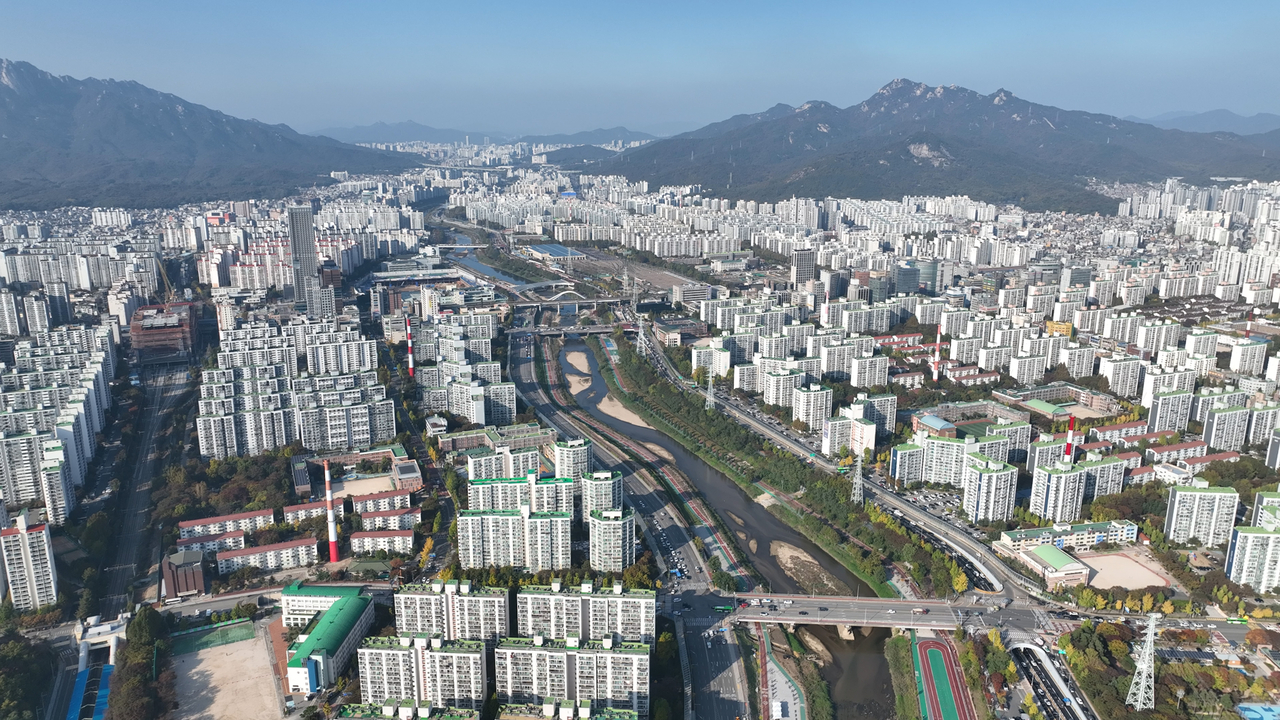
The jeonse-to-sale-price ratio in Seoul's northeastern districts of Nowon-gu, Dobong-gu and Gangbuk-gu — collectively known as "Nodo-gang" — has climbed back to levels last seen during the property boom of the Moon Jae-in administration, as a sharp drop in jeonse listings has pushed rents higher. Experts warn that soaring jeonse prices in neighborhoods that have long served as an entry point to homeownership for young people and newlyweds could accelerate an exodus of tenants out of Seoul.
Gangbuk-gu jeonse ratio at 63.8%, highest since November 2019
According to KB Real Estate, the jeonse ratio for apartments in Gangbuk-gu stood at 63.8% in August, the highest reading since November 2019 — an 81-month peak. It is the first time since the height of the property price surge that the ratio has crossed the 63.5% threshold.
Nowon-gu and Dobong-gu are following a similar trajectory. As of July, their jeonse ratios stood at 56.2% and 61.3%, respectively — the highest levels in roughly six to seven years, since March 2020 for Nowon-gu and September 2019 for Dobong-gu. Both edged down slightly in August, to 56.0% and 61.1%, but remain at levels comparable to those seen during the Moon administration.

The Nodo-gang area has long served as a key housing ladder for young people and newlyweds, offering relatively affordable prices and an abundant supply of residential complexes. Jeonse prices spiked temporarily around 2020 amid the broader property boom and the introduction of the three-part lease reform law — which introduced contract renewal rights, rent increase caps and a lease reporting system — but the market subsequently stabilized and continued to supply jeonse and monthly-rent listings.
That supply dried up sharply after Seoul was designated a land transaction permit zone last October, imposing owner-occupancy requirements across the city. Jeonse listings in the area have all but vanished, with landlords effectively able to name their price.
Per-square-meter jeonse prices have also risen faster than the Seoul average. In Nowon-gu, the average jeonse price per 3.3 square meters reached 19.67 million won ($14,200); in Dobong-gu, 16.99 million won; and in Gangbuk-gu, 20.25 million won. All three districts posted annual gains of 12 to 16 percent, outpacing the citywide average increase of 10 percent.
Jeonse listings near zero in major Nodo-gang complexes: just one 59-square-meter unit at SK Bukhansan City
Jeonse listings in large apartment complexes across northern Seoul have become extremely scarce. Mia Newtown SK Bukhansan City in Mia-dong, Gangbuk-gu — a complex of 3,830 units — has only eight jeonse listings on the market, with just one available in the 59-square-meter size range most sought after by newlyweds.
Changdong Jugong Complex 3 in Dobong-gu, with 2,856 units, has only seven jeonse listings, while Wolgye-dong Hyundai Apartments in Nowon-gu, a 1,281-unit complex, has just one.
Anxiety is growing among tenants in the area. A 36-year-old office worker surnamed Oh, who is searching for a jeonse home ahead of his wedding, said people are lining up to view available units and that contracts are sometimes signed before he can even finish a viewing. A civil servant identified only by the surname C, who has a school-age child, said the owner-occupancy requirement left no choice but to switch to monthly rent. "The housing cost burden has become too heavy," the civil servant said.
Experts say the contraction in jeonse supply caused by sales-market regulations will make it difficult for jeonse prices to fall over the next five years.
Yoon Ji-hae, head of the research lab at Real Estate R114, said jeonse prices will continue to rise as scarcity grows, even as tenants try to stay in their neighborhoods despite higher costs. "Even tenants with a strong desire to remain in Seoul may be inevitably pushed out of the city as they find themselves unable to afford the surging housing costs," she added.
hss@heraldcorp.com