Bank of Korea governor attends Jackson Hole for first time in role
Won has built immunity to external shocks, Shin says
Fed Chair Warsh's speech carries significant signal for September FOMC
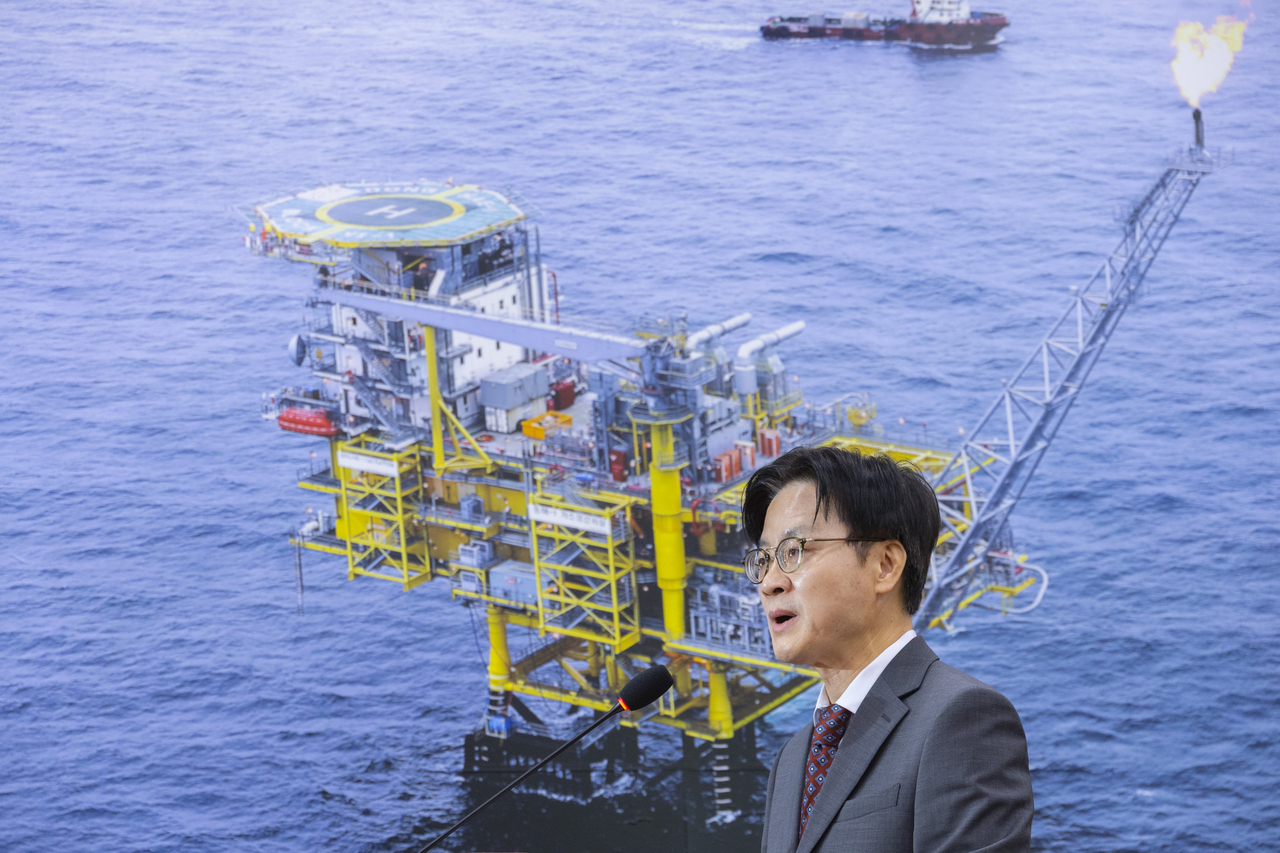
![Bank of Korea Governor Shin Hyun-song speaks at a press conference following a Monetary Policy Board meeting at the Bank of Korea in Jung-gu, Seoul, on Thursday. [Yonhap]](https://wimg.heraldcorp.com/news/cms/2026/08/30/news-p.v1.20260830.a97afee9a1c649128ffbe2fba8f757f3_P1.jpg)
Bank of Korea Governor Shin Hyun-song said the won has built sufficient immunity against external shocks, and that South Korea can comfortably absorb the currency impact of its large-scale investment commitments to the United States.
Shin made the remarks Friday (local time) while speaking with reporters on the sidelines of the Economic Policy Symposium in Jackson Hole, Wyoming.
Attending the Jackson Hole conference for the first time as BOK governor, Shin pointed to the central bank's preemptive benchmark interest rate hikes and said South Korea is "quite well prepared for any kind of shock" and has managed to stabilize the exchange rate to a meaningful degree.
He cited the recent trend of the won strengthening against the dollar even as the dollar index — which measures the greenback against six major currencies — has risen. "I think the won has now developed a degree of immunity," he said. The won-dollar rate closed at 1,372.5 won on Friday in the Seoul foreign exchange market, its lowest closing level in 13 months since July 24 last year, when it stood at 1,367.2 won.
Shin said that while South Korea is an advanced economy, the exchange rate carries outsized significance due to the trauma of the Asian financial crisis and similar episodes. "It has become more than just a relative price reflecting trade conditions — it has come to encompass all indicators," he said.
He added that the exchange rate is "a particularly important variable" in South Korea, describing it as "a symbol of confidence in the monetary regime," and said the Bank of Korea, as the central bank, pays close attention to anchoring stability in the foreign exchange market.
Shin identified SK hynix's American depositary receipt listing proceeds and an expansion of export companies' dollar-selling volumes as short-term factors behind the won's recent strengthening.
Asked whether South Korea's commitment to invest up to $20 billion annually in the United States could weigh on the won-dollar rate, Shin drew a clear line. "It was agreed upon within a range we can fully manage," he said.
He noted that under the MOU, South Korea agreed to invest "up to" $20 billion per year in the United States. "We would invest up to $20 billion, but if our circumstances do not allow it, we could invest less — or not at all," he said.
He added that returns from managing South Korea's foreign exchange reserves — which stood at $427 billion as of July — would alone be sufficient to cover the commitment.
Shin also offered a detailed analysis of the speech by Federal Reserve Chair Kevin Warsh, which drew considerable attention at this year's Jackson Hole symposium.
"Looking at Chair Warsh's speech, he painted a very big picture and incorporated, to a meaningful degree, the elements the market had been calling for," Shin said. "This carries a significant signal for the September FOMC meeting."
Unlike Warsh, who has opposed the use of dot plots, Shin said he is "not that negative" about South Korea's own version — the K-dot plot, introduced relatively recently. He said he plans to conduct a comprehensive review with Monetary Policy Board members one year after its introduction.
On the Federal Reserve's monetary policy direction and its implications for the BOK, Shin stressed the central bank's room for independent action. "Just because the United States raises interest rates does not mean we must do the same," he said. "Of course, if the US keeps raising rates, the conditions for conducting monetary policy will change and we would need to reassess at that point — but we are not mechanically adjusting to match the interest rate differential."
hongi@heraldcorp.com