Trade ministry handles US investment talks, but climate ministry oversees KEPCO
Bureaucratic turf war looms after last year's government reorganization split the two
![An aerial view of Government Complex Sejong [Government Complex Management Headquarters]](https://wimg.heraldcorp.com/news/cms/2026/08/30/news-p.v1.20260825.eae372734361448c805e9bd8572370cc_P1.png)
Questions are emerging over which government ministry would take charge if South Korea moves to jointly acquire a stake in Westinghouse Electric Company, the nuclear power firm owned by a Canadian private equity fund, following reports that the US government has proposed such a deal to Seoul.
The ambiguity stems from a government reorganization last October that split nuclear energy responsibilities across two ministries. The Ministry of Climate, Energy and Environment now oversees most operations of state energy companies — including Korea Electric Power Corporation and Korea Hydro & Nuclear Power — except for nuclear exports, while the Ministry of Trade, Industry and Energy is leading investment negotiations with Washington. Officials warn the split could trigger a subtle turf war between the two ministries.
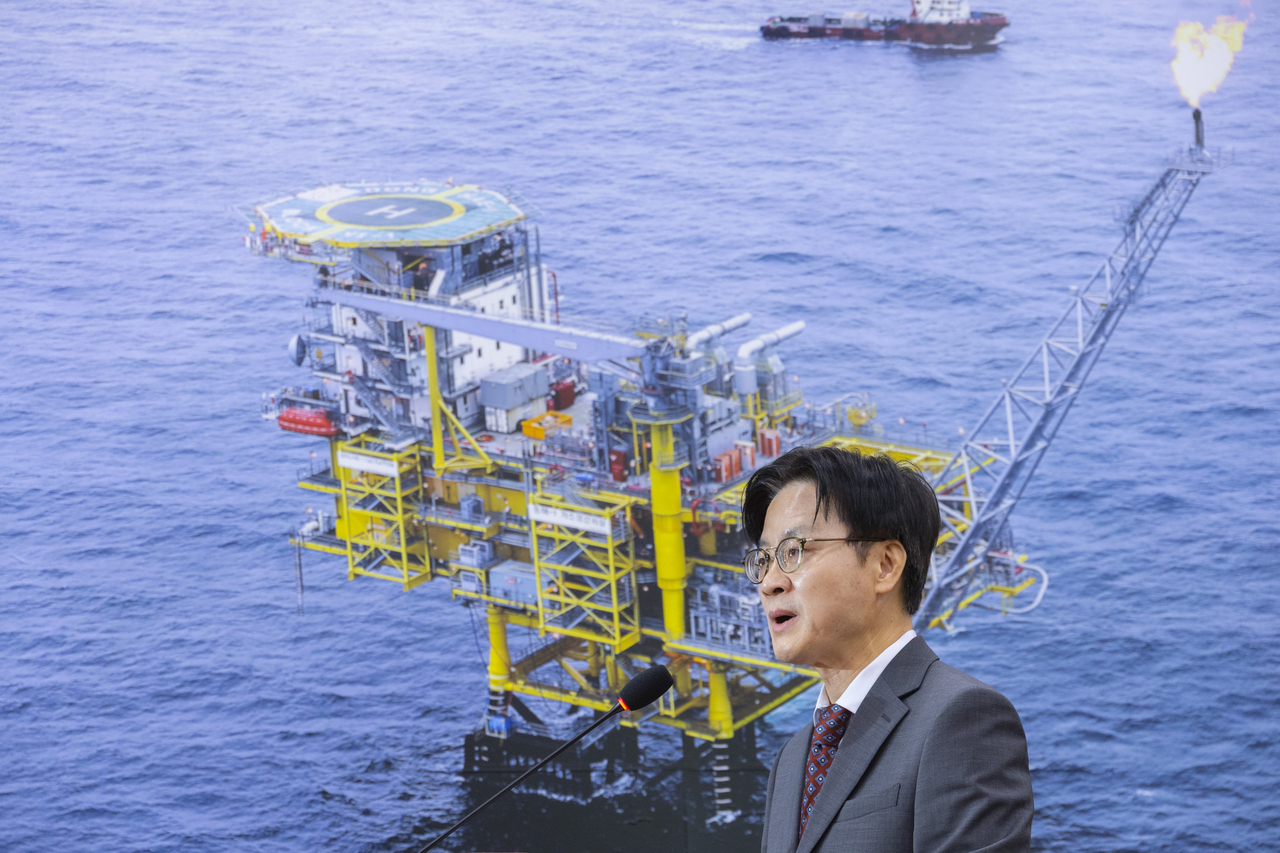
According to energy industry and government sources, Trade Minister Kim Jung-kwan received the proposal from the US side during a recent trip to Washington.
The Ministry of Trade, Industry and Energy officially denied the report, but industry insiders say the proposal is plausible given that the Donald Trump administration has declared a "nuclear renaissance" and moved to rebuild the US nuclear industry. Nuclear affairs officials have consistently accompanied Kim on his US trips.
Korea Electric Power Corporation has in particular received a proposal from the US side to invest in a Westinghouse stake and is reviewing specific investment structures and financing arrangements, sources said.
Under the envisioned structure, South Korean companies would secure a Westinghouse stake in exchange for participating in US nuclear construction projects. A plan to channel part of South Korea's $200 billion US investment commitment into the deal is also under discussion, sources said.
Founded in 1957, Westinghouse has come up for sale three times — in 2005, 2017 and 2022 — as it struggled financially, with South Korean firms including Korea Hydro & Nuclear Power and Doosan mentioned as potential buyers each time.
Japan's Toshiba eventually acquired the company, and by 2024 the controlling shareholder had changed to Cameco, the world's largest uranium mining company, based in Canada. Westinghouse is headquartered in Pennsylvania, but its largest shareholder is Brookfield Renewable Partners, a Canadian private equity fund.
Brookfield became the majority shareholder when it acquired the financially troubled Westinghouse in 2018. It sold a 49 percent stake to Canadian uranium producer Cameco in 2022 but retained 51 percent. Analysts say the company has since prioritized near-term profitability under private equity ownership.
The US government struck a partnership with Westinghouse shareholders in October last year to pursue $80 billion worth of nuclear plant construction in the United States. In exchange for providing regulatory approvals and financial support, the US government can demand a stock market listing if Westinghouse's asset value exceeds $30 billion and would receive a 20 percent stake in the listed company.
Westinghouse holds competitive strengths in core nuclear technology and early-stage design, but its capacity to directly build nuclear plants is relatively limited. The prevailing interpretation is that the US government is ultimately seeking to leverage South Korea's capital and construction capabilities.
Korea Hydro & Nuclear Power and Korea Electric Power Corporation signed a 50-year long-term agreement with Westinghouse in January last year committing to pay more than 1 trillion won ($724 million) in royalties and service purchases per nuclear reactor exported, while in effect giving up independent entry into advanced markets such as Europe.
If a Westinghouse stake investment goes ahead, the central question will be whether the royalty burden and overseas business restrictions under the existing agreement can be renegotiated to any meaningful degree.
Which ministry would take the lead on the acquisition is also drawing attention. The Trade Ministry currently serves as the channel for US negotiations, but the Climate Ministry is responsible for Korea Electric Power Corporation.
Trade Minister Kim Jung-kwan passed the civil service exam in the 36th cohort and served as a policy aide to the deputy prime minister at the Ministry of Economy and Finance before moving to nuclear firm Doosan Enerbility in 2018. He returned to public service last year after a seven-year absence. Given his background at a nuclear company, the prevailing view in government circles is that he will not relinquish control over negotiations related to the Westinghouse stake acquisition.
"The Westinghouse stake acquisition by Korea Electric Power Corporation is being handled by the Trade Ministry because it is a US investment issue, but ultimately the Climate Ministry will have to sort it out," a government official in Sejong said. "It is ultimately a case that shows the government reorganization was not done properly."
oskymoon@heraldcorp.com