Bold governance experiment at state-run agency draws attention as citizen auditors number one-tenth of total staff
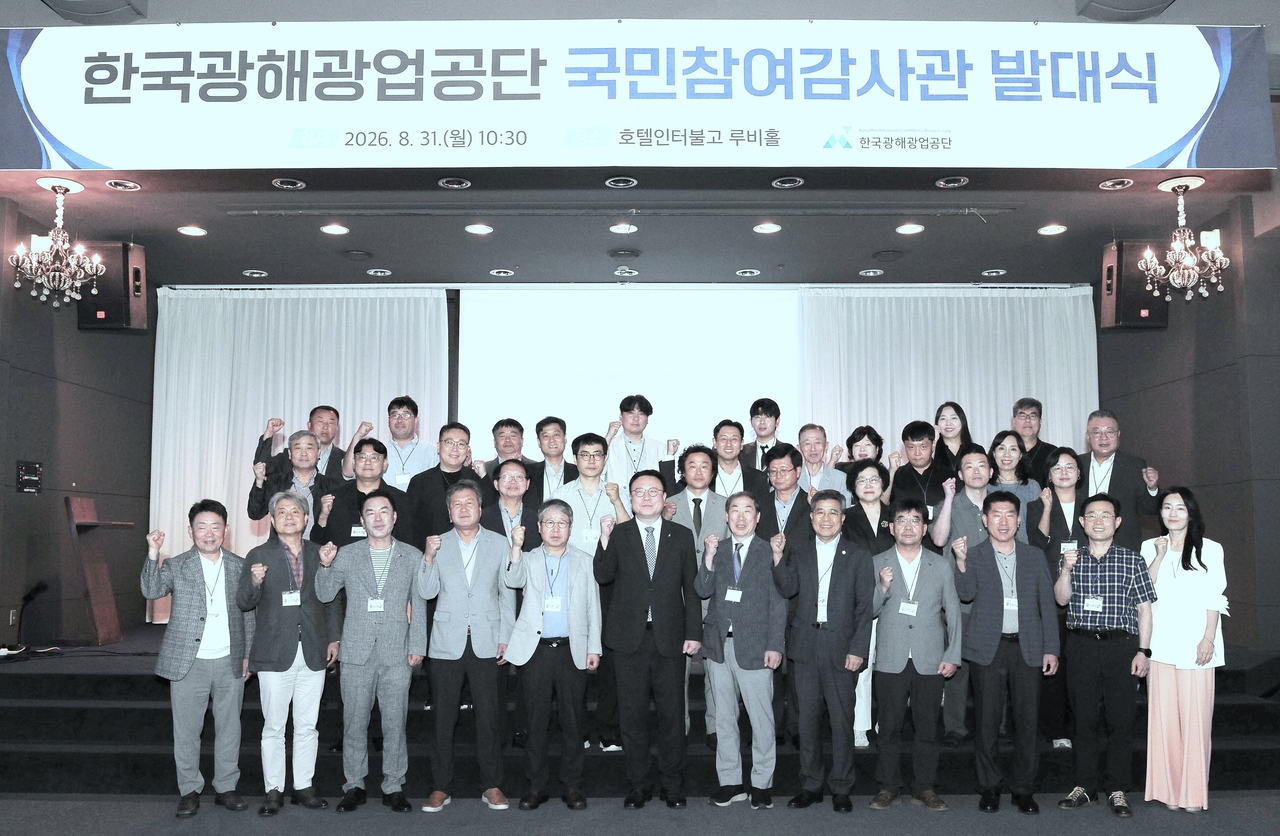
The Korea Mine Rehabilitation and Mineral Resources Corp., a state-run agency with roughly 600 employees, has drawn widespread attention for recruiting more than 60 public auditors through an open application process — a corps equivalent to one-tenth of its workforce — in a bid to promote management transparency and forward-looking development.
The move marks the launch of an unusually large-scale citizen participation initiative, rarely seen among public enterprises and quasi-governmental bodies.
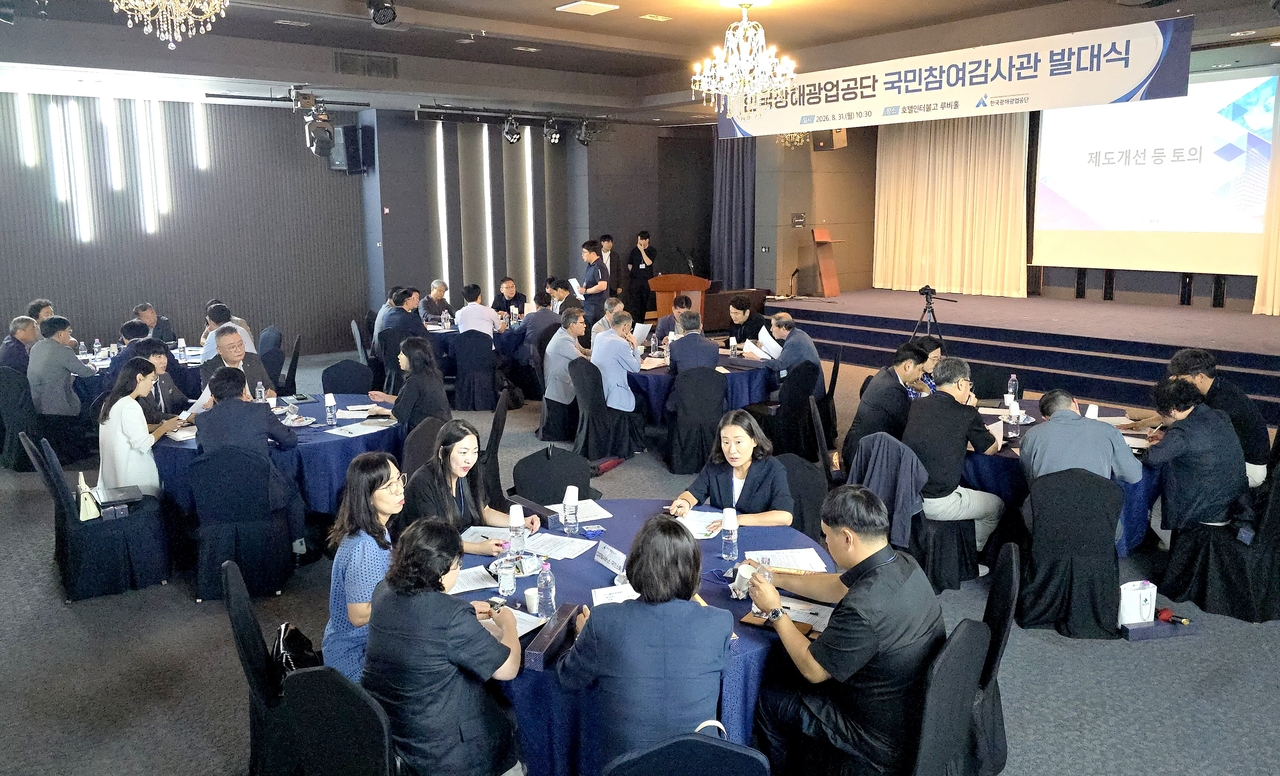
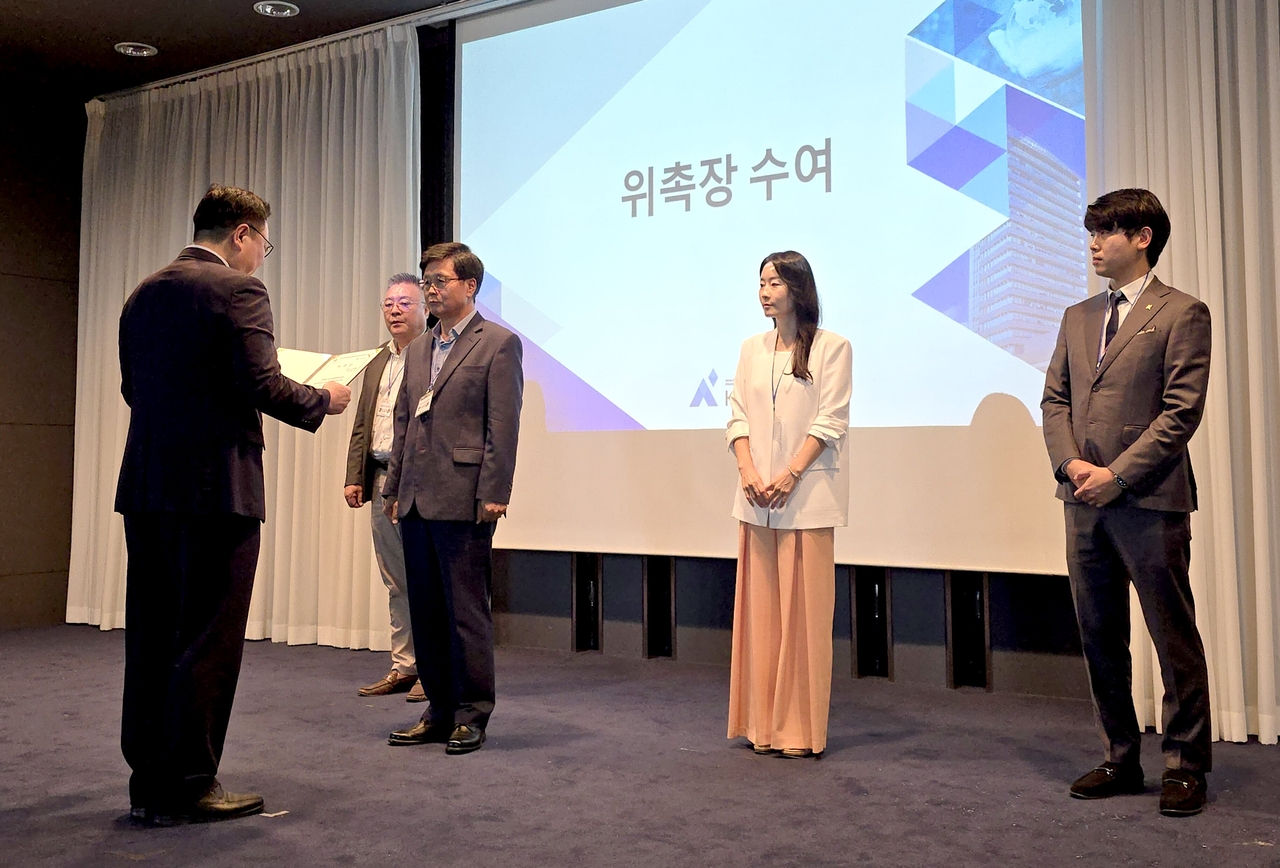
The agency's audit office held an inaugural ceremony for the public participation auditors at the Interbulgo Hotel in Wonju on Monday, formally opening what it called a new era of citizen-led oversight.
The Korea Mine Rehabilitation and Mineral Resources Corp. manages mine damage, fosters and supports the mineral resources industry, and works to revitalize mining-region economies while securing a stable supply of mineral resources. Of late, the agency has been stepping up its efforts in the national energy sector and institutional development, including pursuing participation in overseas projects expected to benefit South Korea over the medium to long term.
The public participation auditor system is a participatory advisory mechanism through which members of the public and outside experts can flag inconveniences, vulnerabilities and areas for regulatory improvement they have experienced while using the agency's services or visiting its sites. The system was established to ensure that on-the-ground risks and public demand for oversight — difficult to grasp from an internal perspective alone — are systematically reflected from the earliest stages of audit planning.
The newly appointed auditors, selected through open recruitment, launched into vigorous discussions by field immediately after receiving their appointment certificates — with such genuine engagement that the moderator had to announce the closing time several times. They left the impression of people ready to open a new chapter in the agency's management, offering both constructive ideas and pointed critiques.
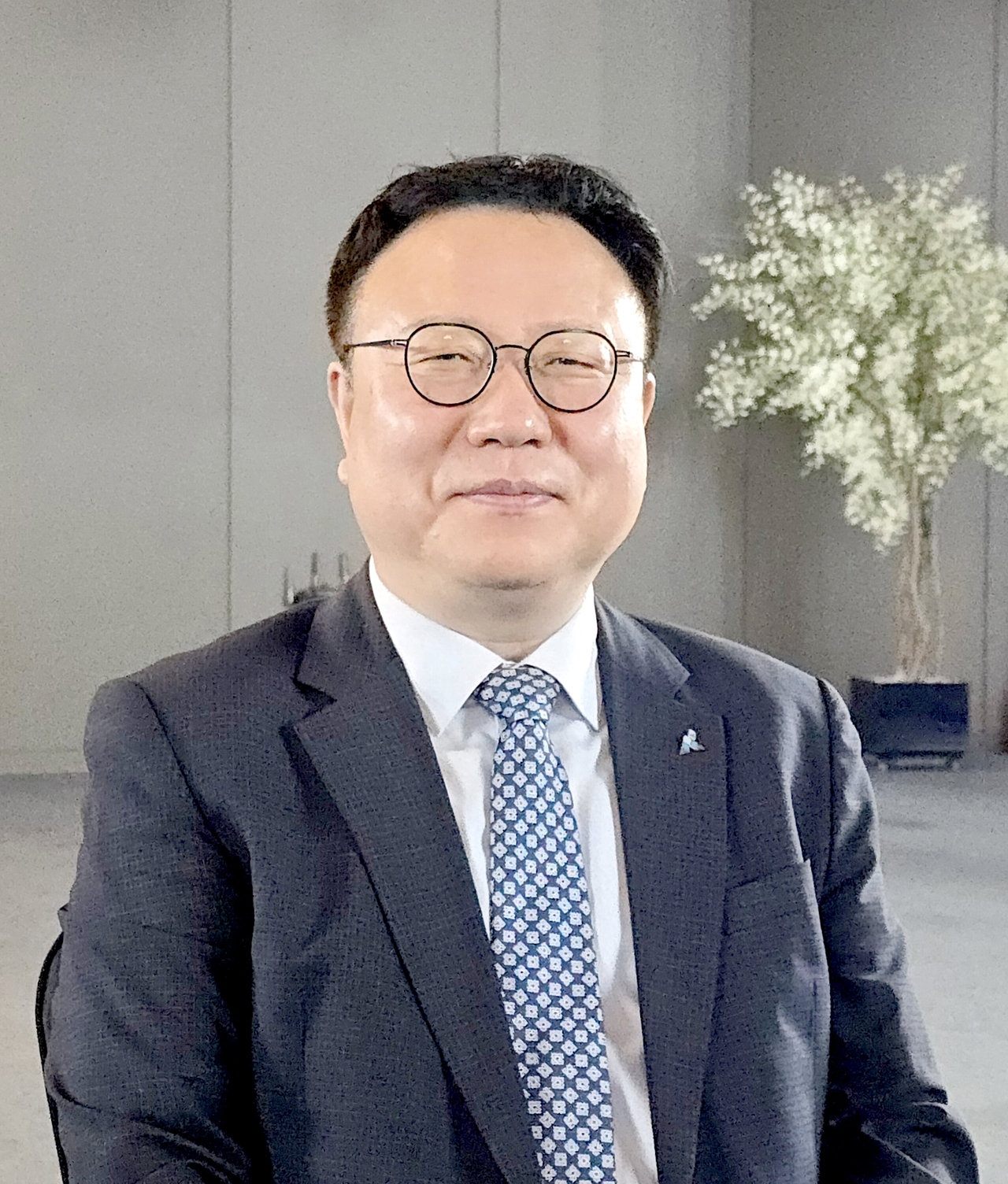
Kim Jun-seop, the standing auditor responsible for implementing the system, yielded all the prominent seats to the public auditors and sat in a corner of the venue, quietly listening to their discussions.
Through open recruitment, the agency appointed a total of 63 public participation auditors across eight fields: mine damage prevention and environmental management, critical minerals and resource security, overseas resource development and international cooperation, mine safety and industrial safety, regional promotion and alternative industries, corporate financing and subsidy support, fair contracting and ethical integrity, and digital services and public communication.
"Because our agency operates on taxpayers' money, we will listen fully to what our public auditors tell us — reflecting the public's perspective and the detailed voices from the field — and translate that into genuine regulatory improvements and transparent auditing," said Kim Jun-seop, standing audit committee member at the Korea Mine Rehabilitation and Mineral Resources Corp. "We will strengthen a self-audit framework centered on prevention and improvement in partnership with the public, and work to establish this system as a model for state-run enterprises." He added that the agency would devote every resource it has to supporting the public auditors in their work.
Going forward, the public participation auditors will propose audit focus areas for the agency's projects, monitor vulnerable sectors, offer recommendations for regulatory improvement, and identify inconveniences and risks from a public perspective.
The auditors work without pay — receiving only reimbursement for field-visit transportation and audit report preparation — yet they embraced the role for the sense of purpose it offers, and their faces showed visible pride as they received their appointment certificates.
Recommendations submitted by the public participation auditors will undergo review by the audit office and be used to inform audit environment analysis, annual audit planning, the identification of focus areas for targeted audits, internal control checks and monitoring of vulnerable sectors.
abc@heraldcorp.com