County approves second basic plan to address population decline
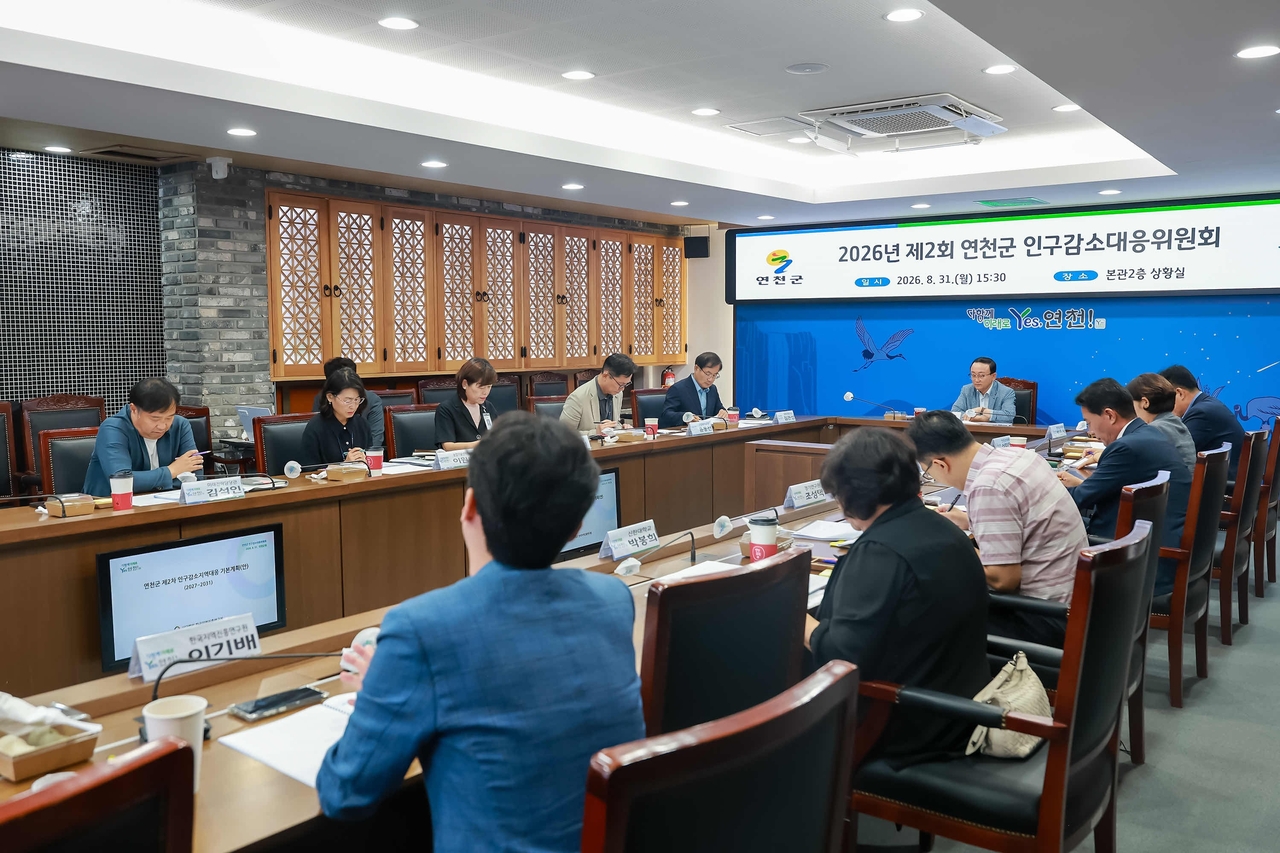
Yeoncheon-gun held its second population decline response committee meeting of 2026 at the county office on Monday, approving a five-year basic plan to address population decline from 2027 to 2031.
The meeting was chaired by County Chief Kim Deok-hyeon and attended by committee members including county assembly lawmakers and specialists in higher education, research and welfare.
The basic plan is a statutory requirement under Article 6 of the Special Act on Support for Population Decline Areas, which mandates that designated population-decline municipalities draw up five-year plans. The projects outlined in the plan will feed into annual implementation schedules and investment plans for the local extinction response fund, translating into concrete population-decline countermeasures.
The second basic plan sets out a vision of Yeoncheon as "a settlement city where everyone thrives today and dreams of tomorrow together." Its four strategic pillars are: realizing an inclusive society that embraces the lives of all generations; improving the living environment to support safe and convenient daily life; building a foundation for new future growth and a locally circulating economy; and strengthening local content to promote stays and exchanges. The plan encompasses 35 action tasks across these four strategies.
The second plan focuses less on identifying new projects and more on reframing existing, high-feasibility initiatives through a population-policy lens to sharpen their execution. The approach addresses shortcomings identified in a review of the first plan (2022–2026) — namely an overloaded project list and low execution rates — by placing feasibility, executability and effectiveness as the top criteria.
The lifestyle population policy is designed in stages, moving beyond simply attracting visitors toward repeat visits, extended stays, local spending and community ties that ultimately lead to permanent settlement. Rather than competing with neighboring municipalities for residents, the county aims to guide people who have experienced Yeoncheon into establishing a second home there or naturally transitioning into permanent residents.
The plan also includes 13 projects to be funded through the local extinction response fund. Allocated at 12 billion won ($8.76 million) per year over five years — totaling 60 billion won — the funding is concentrated on resident-centered programs such as a rural basic income-linked project, integrated care services, an education innovation ecosystem and a solar income village initiative.
At the meeting, committee members raised a range of suggestions, including assessments that reflect improvements to the educational environment and student distribution, closing care gaps for people with developmental disabilities, expanding the range of merchants accepting local currency, refining performance indicators for individual projects, and quantifying the population-inducing effects of each initiative.
Yeoncheon-gun said it will incorporate the feedback into its annual implementation plans on a phased basis.
The county also plans a major overhaul of its performance management system. Rather than tracking only project expenditures or whether facilities have been completed, it will use eight core indicators combining quantitative measures — permanent population, net in-migration, lifestyle population and employment rate — with qualitative ones such as resident happiness and intention to remain. Underperforming projects will be adjusted following quarterly and semi-annual reviews and an annual self-assessment, while strong performers will receive priority funding in the following year.
"Population policy now requires a scientific, multidimensional approach grounded in data," County Chief Kim said. "Each project in this plan must be able to explain which age group's outmigration it prevents and how much inflow it generates — and that becomes the basis for persuading the central government to secure national funding."
He added that the county's first priority is to build a local structure capable of retaining residents on its own, so that the population growth sparked by the rural basic income program does not remain a temporary phenomenon.
pjh@heraldcorp.com