
Unrecovered fraud from 2024 and 2025 projects totals 59.8 billion won
Fake contracts, family dealings fuel repeat subsidy abuse
This year's subsidy budget hits 125.7 trillion won, putting recovery management in focus
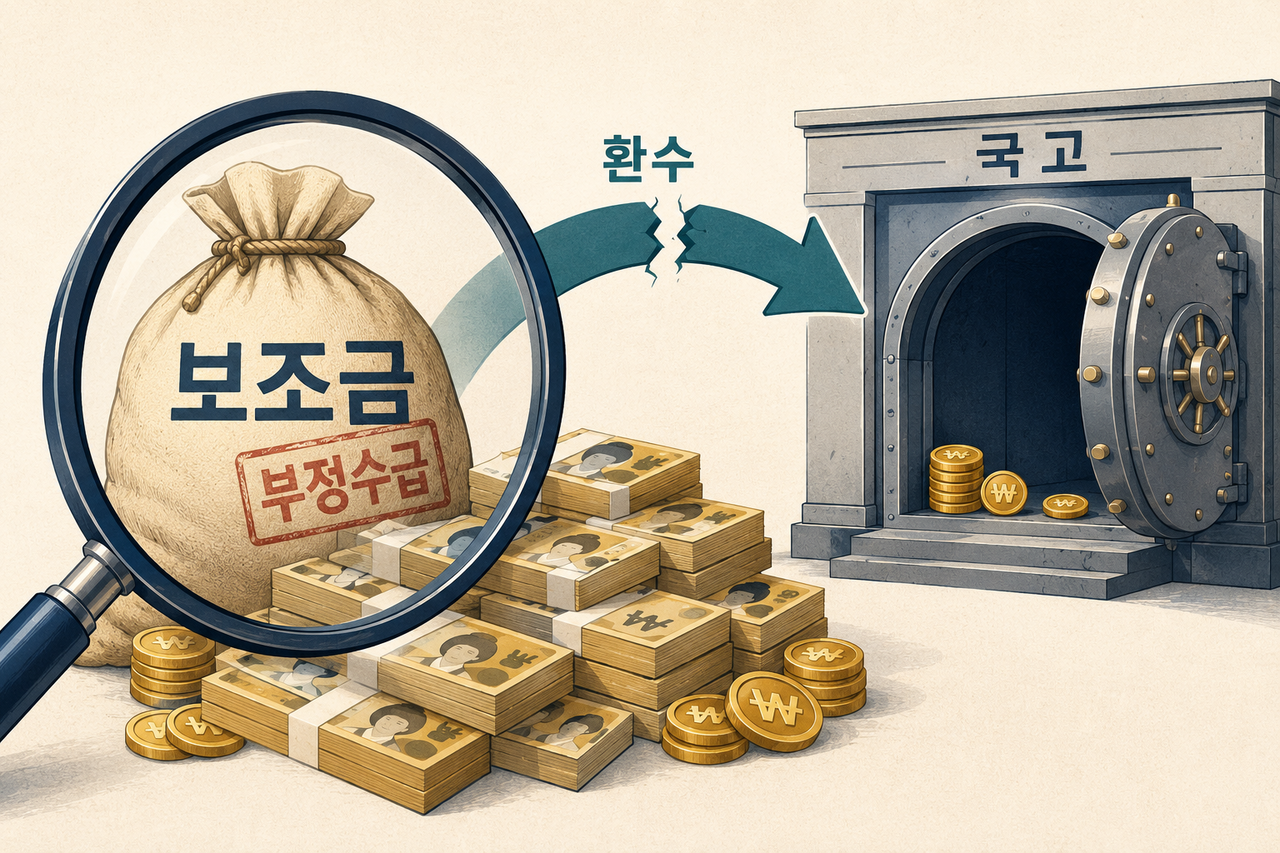
The government has failed to recover more than half the money it identified as fraudulently obtained national subsidies, data show.
Of the 49.7 billion won ($36.3 million) in fraudulent subsidy payments detected under 2025 projects, only 21.4 billion won — 43 percent — was clawed back. With this year's national subsidy budget surpassing 125 trillion won, calls are growing for stronger post-detection recovery systems to ensure flagged funds are actually returned.
According to data the Ministry of Planning and Budget submitted to the National Assembly Research Service in July, the government detected 49.7 billion won in fraudulent subsidy payments under 2025 projects and recovered 21.4 billion won. The recovery rate stood at 43.1 percent, leaving 28.3 billion won unrecovered.
The 2024 project year fared little better, with the recovery rate falling below 50 percent. Of 62.4 billion won detected, only 30.9 billion won — 49.5 percent — was recovered, leaving 31.5 billion won outstanding. Combined, the two project years account for 59.8 billion won in unrecovered funds. The figures reflect project-year performance data included in the materials submitted in July.

Meanwhile, the subsidy budget itself has been growing rapidly.
This year's national subsidy budget reached 125.7 trillion won, up 13.4 trillion won, or 11.9 percent, from last year's 112.3 trillion won. Subsidies' share of the total budget also rose from 16.7 percent to 17.3 percent. As the scale of support expands, so does the importance of systems to prevent fraud and recover improperly disbursed funds.
Fraudulent methods vary widely, from exploiting commercial contracts to conducting transactions among family members.
A separate government review of 2025 inspection results found that contract-related fraud — including split contracts and fake agreements involving shell companies — accounted for 647 cases, or 65.2 percent of the 992 total violations detected. Family-linked transactions, such as dealings with employees' immediate relatives, made up 112 cases, or 11.3 percent. These inspection figures are tallied by detection year and use a different accounting basis than the project-year recovery statistics cited earlier.
Large-scale fraud was also uncovered in past pandemic relief subsidies for small businesses.
A 2023 internal ministry review found 31.89 billion won in fraudulent claims under the COVID-19 relief subsidy program for small businesses. However, the publicly available data did not separately disclose how much of that amount was recovered.
The government currently uses the integrated national subsidy management system "e-Naradoum" and a fraud-detection system to identify suspicious cases. The systems analyze data on family transactions, payments to people who have left the country or died, and canceled tax invoices, then route flagged cases to self-inspections by the relevant ministries or joint on-site reviews.
The critical challenge lies in what happens after detection. Recovering fraudulently obtained funds and imposing sanctions are both necessary to reduce the financial incentive for abuse — which is why tracking recovery progress matters as much as tallying the number and value of detected cases.
The National Assembly Research Service said the government needs to distinguish between cases where recovery proceedings are still under way and those where collection is unlikely — for instance due to a debtor's bankruptcy — and develop responses tailored to each situation.
The service also said pre-payment verification is essential. It said the government should strengthen systems to prevent fraud before it occurs — by checking for duplicate or overlapping support and verifying eligibility at the application stage, and by monitoring transactions and payment records in real time during program execution.
fact0514@heraldcorp.com





