'Four Innovation Strategies for SME Exports' unveiled
Goal of 2,900 small giants with over $10 million in annual exports
New 'Global Scale-Up 500' program to fast-track high-potential firms
Emerging market presence to expand in India, Singapore and beyond
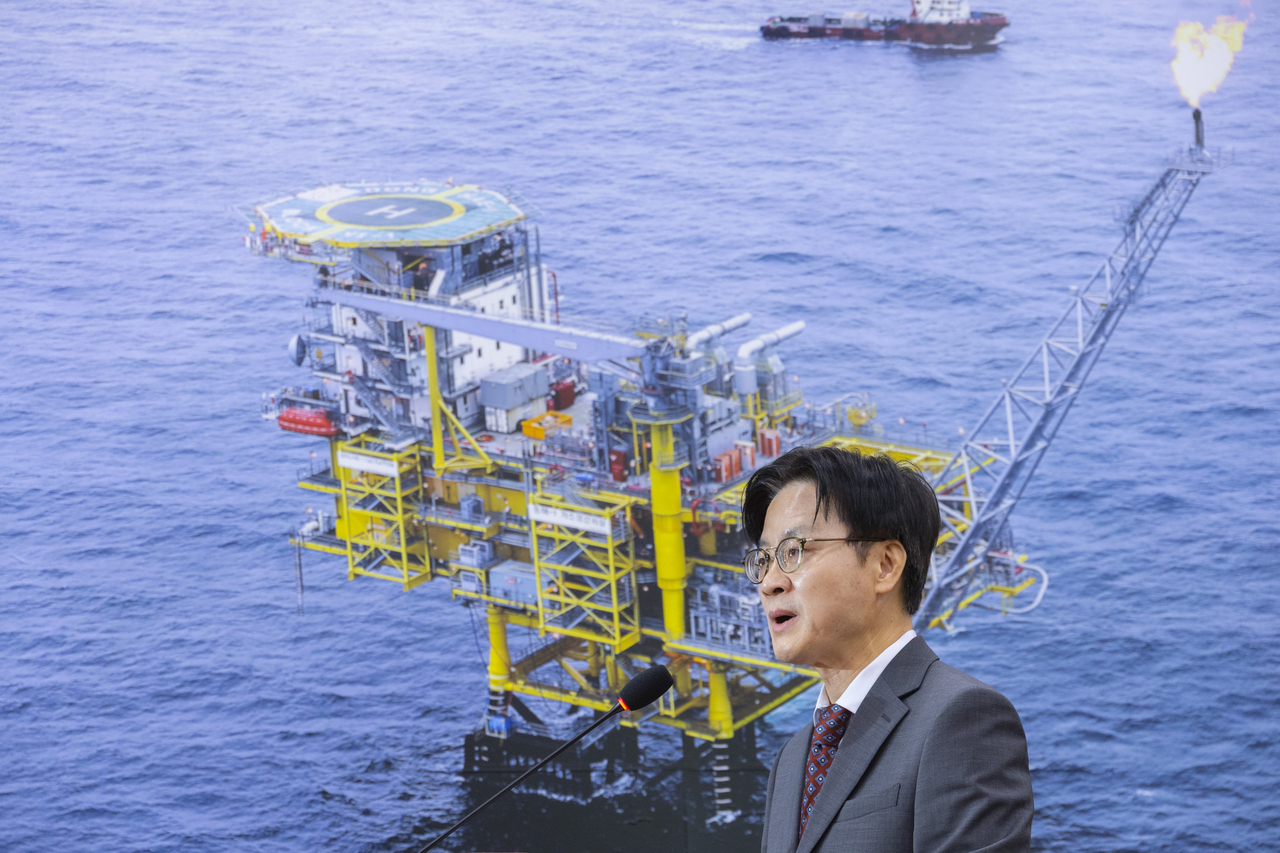
![Noh Yong-seok, first vice minister of the Ministry of SMEs and Startups [Ministry of SMEs and Startups]](https://wimg.heraldcorp.com/news/cms/2026/09/03/news-p.v1.20260901.ab065da3726e407385f83b0997523b95_P1.jpg)
The government plans to raise small and medium-sized enterprise exports from $120 billion last year to $180 billion by 2030. The number of exporting SMEs is set to grow from 98,000 to 112,000 over the same period, while the number of small but strong companies with annual exports of at least $10 million is targeted to rise from 2,279 to 2,900.
The Ministry of SMEs and Startups said Thursday it discussed the "Four Innovation Strategies for SME Exports" with relevant ministries at the 13th National Policy Coordination Meeting, chaired by the prime minister. SME exports reached a record $64 billion in the first half of this year. The government said K-beauty and online exports have emerged as new growth engines, boosting the dynamism and diversity of South Korea's overall export base.
The government has set an average annual growth target of 9.0 percent, surpassing the 4.6 percent average annual growth rate recorded over the past three years. The plan envisions reaching the existing national policy target of $150 billion in SME exports ahead of schedule by 2028, then pushing further to $180 billion by 2030.
To achieve this, the government will overhaul its export support framework across four areas: companies, products, countries and policy. Key priorities include accelerating the growth of high-potential firms, broadening the base of exporting companies, identifying promising export items in consumer and industrial goods, opening up emerging markets, and upgrading the export support system from a business perspective.
'Global Scale-Up 500' to broaden exporter base
The government will launch "Global Scale-Up 500," a program to intensively nurture high-potential exporters. It will develop customized export roadmaps for companies with strong growth potential and bundle multiple support programs over multiple years based on those roadmaps. The government also plans to move away from the current system requiring annual reapplications, instead automatically selecting companies that meet set targets for the following year's support.
Shim Jae-yun, director general for global growth policy at the Ministry of SMEs and Startups, said at a briefing Wednesday that the ministry is working out the details of forming a pool of 800 high-growth candidates — drawn from innovative companies in new growth sectors as well as through recommendations and open calls — and selecting 200 of them as an initial cohort. The "automatic selection" mechanism, under which companies that meet the previous year's targets are re-selected for support the following year, is also being pursued.
The scope of export support will also expand beyond marketing to cover supply chains and overseas market entry. The government will add a raw-material sourcing menu to the export voucher program and broaden the pool of specialized agencies that provide services needed for establishing and operating overseas subsidiaries. Cross-ministry coordination on support programs will also be strengthened.
A separate program called "Export ON 2000" will be operated to bring more first-time exporters into the fold. It will provide tailored support to 2,000 companies, including young entrepreneurs, small business owners, regional firms and companies attempting to re-enter export markets after previous setbacks.
Young entrepreneurs will receive help gaining overseas market experience and preparing for exports, while small business owners with differentiated products and brands will be assisted in entering foreign markets through online platforms. SMEs in regional key industries will receive support for joint overseas expansion, and companies that have previously failed at exporting will be offered diagnostic assessments of their failures to help them try again.
The government's push to broaden the exporter base aims to spread the growth momentum in SME exports to a wider range of companies. The target is to increase the number of exporting SMEs from 98,000 last year to 112,000 by 2030.
![Shim Jae-yun, director general for global growth policy at the Ministry of SMEs and Startups, holds a pre-briefing on the "Four Innovation Strategies for SME Exports" in Seoul on Wednesday. [Ministry of SMEs and Startups]](https://wimg.heraldcorp.com/news/cms/2026/09/03/news-p.v1.20260903.9958f60f63e6437ca408f0e5f7fff247_P1.jpg)
Beyond K-beauty: diversifying into fashion and food
The government is also pursuing product diversification. In consumer goods, it aims to replicate K-beauty's success across other sectors. The government identifies K-beauty, food, fashion and lifestyle products as the four most promising consumer goods categories. Items with high growth potential — including fashion, food and beauty device products — will be identified and nurtured as next-generation "K-brand strategic items."
The government will also tap the overseas distribution networks and connections held by retail and media companies. The Ministry of SMEs and Startups is supporting joint overseas expansion of strategic export items with Musinsa, E-mart and Lotte Mart, and is also collaborating with CJ Olive Young on overseas market entry. The ministry plans to extend such partnerships to convenience store overseas networks and other channels going forward.
"We see K-beauty, food, fashion and lifestyle products as the four promising consumer goods categories," Shim said. "Beauty is currently showing overwhelmingly strong numbers, but we are focused on making sure other categories also produce meaningful figures."
Cross-ministry cooperation will be strengthened to address the difficulties consumer goods companies face during the export process, including logistics, intellectual property and certification. Support for related industries essential to consumer goods growth — such as manufacturing, finance and branding — will also be expanded.
In the industrial goods and technology sector, the government will separately identify "K-Tech strategic items" with high growth potential, taking into account overseas industrial policies and changes in supply chains and technology. It will support local proof-of-concept testing and product and technology upgrades through collaboration with large domestic and foreign companies, and will link support from trade show participation through to the financing and consulting needed to fulfill export contracts.
Expanding into India and Singapore, with AI to find buyers
The government is also accelerating its push into emerging markets, aiming to convert bilateral cooperation channels established through summit diplomacy into concrete export opportunities for SMEs.
In India, the government plans to build a comprehensive overseas base offering hub, exhibition and warehouse space, with integrated support for manufacturing, proof-of-concept testing, investment and talent through links with local institutions, venture capital firms and universities. The government is reviewing plans to expand the functions and scale of the Korea SMEs and Startups Agency's existing Global Business Centers. In Brazil, it will expand K-beauty's online and offline presence and strengthen cooperation with local regulatory authorities.
In Singapore, the government will establish a startup-focused hub, exploring an expansion of functions similar to those of its existing startup support base in Silicon Valley. A global venture fund, K-VCC, will also be created in Singapore. In Europe, permanent K-brand pop-up stores will be set up, while in Mongolia the government will leverage local convenience store networks and other distribution infrastructure.
An AI-powered export support system will also be built. The Korea SMEs and Startups Agency's online export platform GoBizKorea will be revamped to introduce features that recommend tailored support programs and overseas buyers based on each company's needs. AI will also be used to help overseas buyers find domestic products and companies that match their requirements.
The government will also pursue a unified announcement system for export support programs and simplify application documents. A permanent grievance reporting center will be established to respond to rapid changes in the global trade environment, and the data policy foundation will be strengthened through analysis of imports and service exports. Legislation to provide a legal basis for SME overseas expansion policy — a dedicated act to promote SME overseas advancement — will also be pursued.
"SME exports have been hitting record highs recently, but in an environment of continued uncertainty in the global trade landscape, it is more important than ever to solidify the base and growth foundation for SME exports," said First Vice Minister of SMEs and Startups Noh Yong-seok. "We will concentrate our policy efforts to help SME exports leap from the existing national target of $150 billion to $180 billion by 2030."
boo@heraldcorp.com