
Xiaomi makes IFA debut with CyberOne humanoid robot
Refined robotic hand technology on display
Unitree, Agibot — the two dominant players — exhibit at IFA Next hall
Panda- and dinosaur-shaped robots draw crowd attention
Industry sees 2030 as inflection point for robot demand

IFA 2026, Europe's largest consumer electronics fair, wraps up Tuesday (local time) in Berlin, Germany.
Chinese humanoid robots commanded attention throughout this year's show, drawing large crowds to their exhibition booths.
Xiaomi, making its IFA debut this year, brought its humanoid robot CyberOne to the fair. Agibot and Unitree — the two companies that have established a duopoly in the global humanoid robot market — also greeted visitors with their robots on the exhibition floor.
The IFA Next hall, where robotics companies gathered, was in effect filled with Chinese firms. Both Agibot, which topped global humanoid robot shipments in the first half of this year, and Unitree, last year's leader, set up booths.
According to global market research firm Smart Analytics Global (SGA), Agibot shipped 8,400 humanoid robots in the first half of the year to claim the top spot, while Unitree ranked second with 5,900 units. SGA forecasts annual humanoid robot shipments will reach 60,000 units this year before climbing to around 500,000 by 2030.
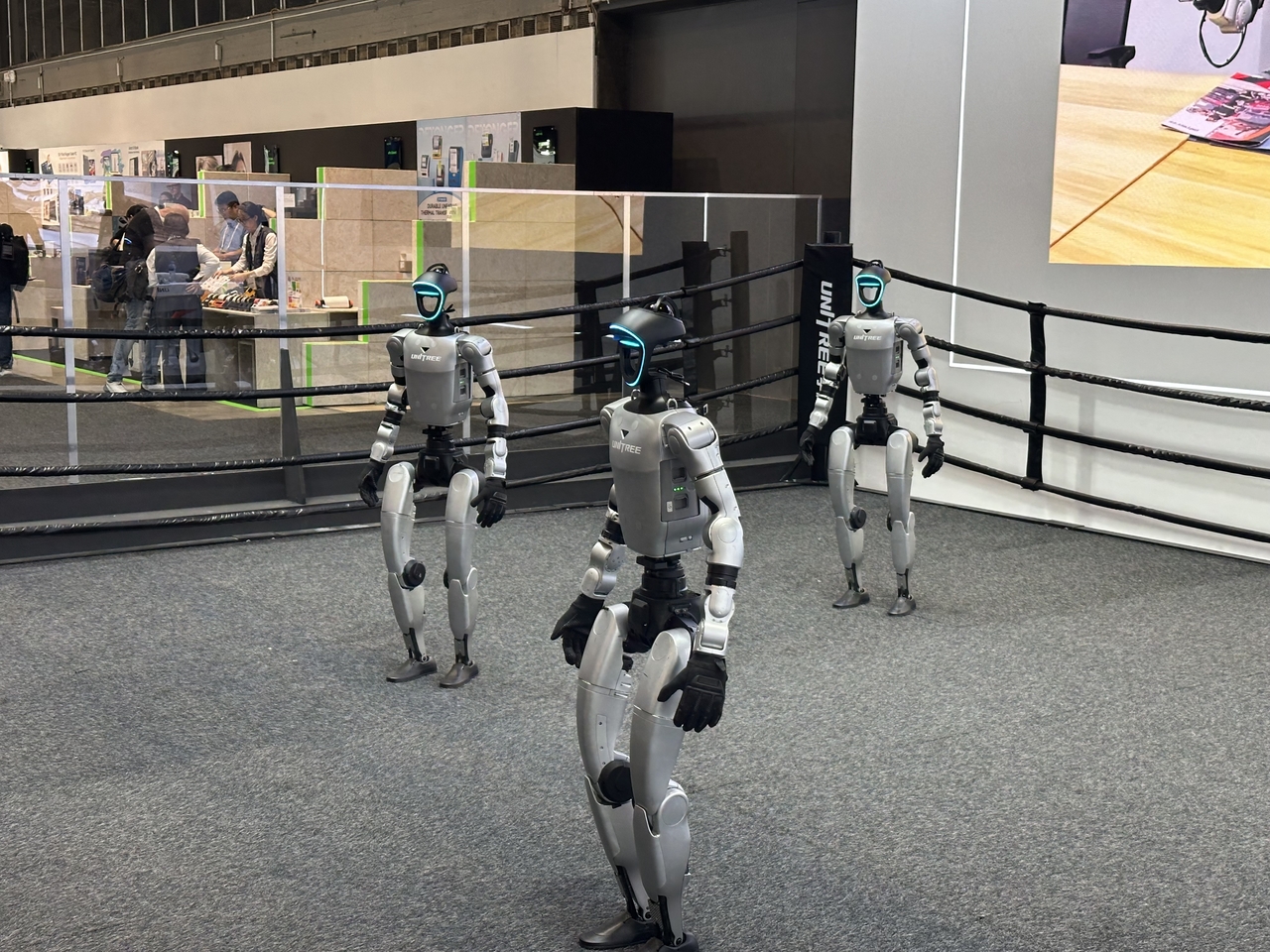
Unitree exhibited its H1 model, previously showcased at a Chinese humanoid robot combat competition. The company's first general-purpose humanoid robot stands about 180 centimeters tall and is capable of 360-degree depth perception. A high-performance quadruped robot dog also greeted visitors at the booth.
Agibot entered its compact humanoid robot, the X2 Ultra. The robot suffered an embarrassing moment on Saturday, however, when it lost its balance and fell during the "Robot on the Runway" event.
Xiaomi, attending IFA for the first time, drew crowds by placing its electric vehicles and humanoid robots front and center. CyberOne in particular caught visitors' eyes with its ability to move its finger joints freely — a capability that stood out compared with other robots on display. The robot played rock-paper-scissors with visitors and formed finger hearts, interacting with the crowd. Xiaomi says the robot's hands are equipped with enhanced tactile sensors and precise movement controls that enable human-level dexterity.
Xiaomi has already integrated humanoid robots into its manufacturing process, deploying CyberOne as an "intern" on its electric vehicle production line to handle nut-fastening tasks. The robot's task success rate improved from 90 percent to 98 percent over roughly four months.
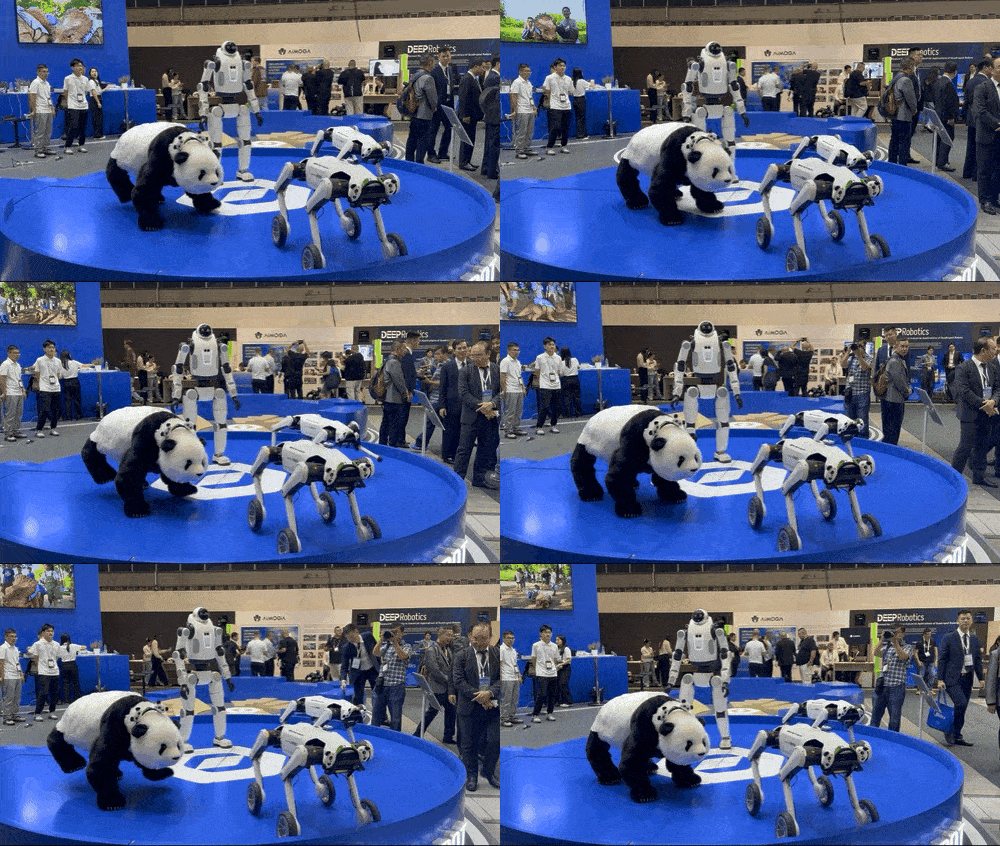
Several robots also attracted attention through their charming looks. Chinese startup Zeros, which designs robots for outdoor use, exhibited its W1 companion robot, which resembles the animated character WALL-E. Dobot unveiled its panda robot "Pandabo" at IFA and put it up for sale at 2,999 euros ($3,480). The company's other dinosaur-shaped robot was on sale for 15,999 euros.
Among Korean companies, LG Electronics showed off "LG CLOi'd," which it had unveiled at CES in the United States earlier this year. The robot stood at the entrance of the LG Electronics booth, conducting an AI orchestra and drawing visitors' attention. CLOi'd runs on wheel-based autonomous driving technology.
Analysts note, however, that the aggressive robot push from Chinese companies still leans more toward showcasing future technology than deploying it in actual industrial settings. The industry expects 2030 to mark an inflection point for humanoid robot demand, with analysts predicting that robots will move beyond industrial use and begin entering homes in earnest.
Baek Seung-tae, head of LG Electronics' Home Solution business division, said at a press briefing that "there will be a lot of trial and error before robots are deployed in homes," adding that "LG Electronics plans to first apply humanoid robots inside its factory in Tennessee in the United States and its smart factory in Changwon."
jeongwan@heraldcorp.com





