Nike, which dominated the global sneaker market for half a century, is losing its grip. The company has leaned too heavily on aging hits like the Air Jordan and Air Max, alienating younger shoppers with designs seen as outdated. Analysts say Nike's insistence on a direct-to-consumer sales strategy, which has since faltered, has compounded its decline.
Young consumers' growing preference for newer, premium brands — captured in the jab "who wears Nike anymore" — is making things even harder for the sneaker giant.
Weighed down by weak earnings and a sinking share price, Nike will ultimately be dropped from the S&P 100, an index of blue-chip US stocks, for the first time in 18 years. Its share price has plunged 78 percent from its peak, wiping out roughly 296 trillion won ($220 billion) in market capitalization. The collapse was severe enough to trigger Nike's removal from the index.
Nike will exit the S&P 100 before the New York Stock Exchange opens on Sept. 21.
Forbes, the US business magazine, described the removal as a sign that "investors have entered a capitulation phase, completely resetting their expectations for Nike." The magazine added that "those buying in at current price levels are not banking on a return to past glory — they are simply hoping for modest earnings improvement, rather than betting against the pessimism spreading across the market."
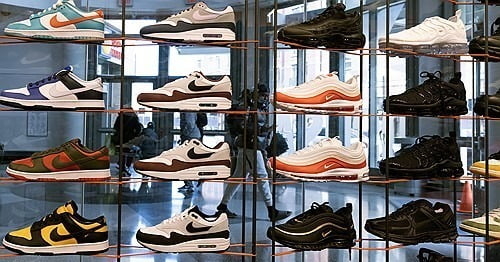
As Nike's retail missteps, reliance on old hits and failed celebrity marketing piled up, rivals such as Hoka, On, Salomon and New Balance moved quickly to fill the gap.
Emerging brands took over the shelf space Nike left behind. As shoppers got more chances to try on and encounter these newer names in stores, the exposure only strengthened the rivals' brand recognition and sales base.
Nike's product strategy also worked against it. The company has faced criticism for overusing classic lines like the Air Jordan and Air Max. Once a symbol of innovation, Nike is now falling behind newer players in the race to develop running shoe technology and design.
Shifting tastes among young consumers have made things even tougher for Nike. Where wearing a big-name brand was once fashionable, choosing something different now signals individuality. "Not wearing a major brand's products is now considered cooler," an industry official said.
Nike is working to rebuild its wholesale distribution network and overhaul its sales channels in a bid to bounce back, but progress on product innovation and earnings recovery remains slow.
park@heraldcorp.com